Skip to content

Mangrove Snapper Fishing Tampa Bay: Full Moon Adventure Ends With a Cooler Full of Fish
Tampa Bay snapper fishing report
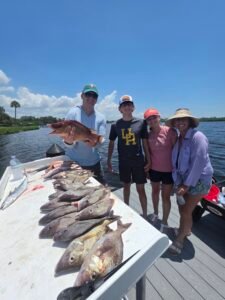
There are days on the water when everything goes exactly according to plan, and then there are days that remind you why experience matters more than any forecast ever could. June 29 was one of those days.
When I stepped onto the dock at the Little Manatee River before daylight, the first thing I noticed wasn’t the weather app on my phone—it was how still everything was. The river looked like a sheet of glass. The mangroves reflected perfectly off the surface, and there wasn’t enough wind to ripple the water. If you didn’t know better, you’d think it was going to be one of those effortless charter days.
Of course, fishing has a way of humbling you.
The weather was beautiful, but we were fishing directly on a full moon, which isn’t usually my favorite moon phase. I’ve had some incredible days during a full moon, but I’ve also had plenty where fish fed hard all night and turned into picky eaters after sunrise. That’s why I rarely lock myself into one plan. Instead, I let the fish tell me what they want.
That mindset paid off in a big way.
A Family Vacation Centered Around Fishing
Several months before this trip, Eric reached out after finding my YouTube channel. His family was coming to Florida from Ohio, and there was one thing they all agreed on—they wanted fresh fish for dinner.
Not just one species.
They wanted a true Gulf Coast experience.
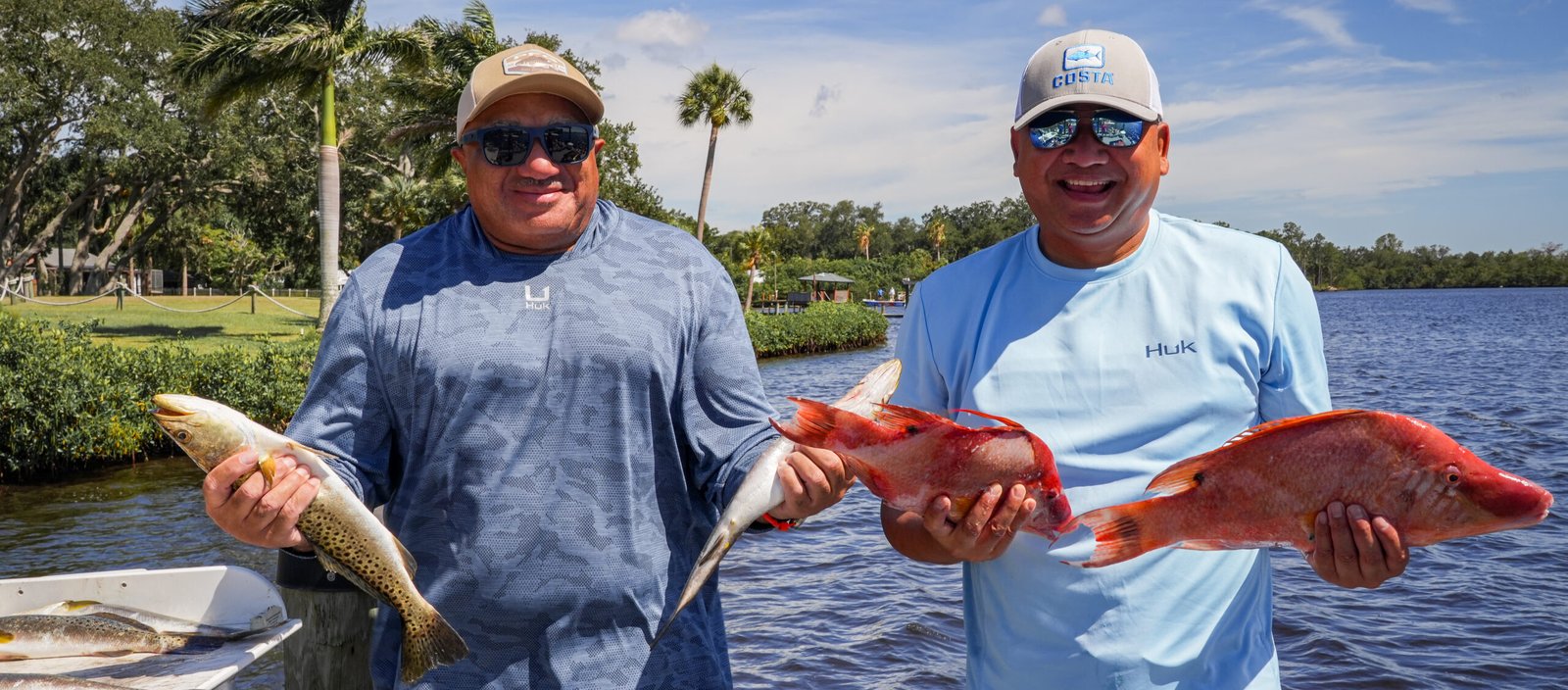
Mangrove snapper topped the list, followed by hogfish, grunts, and whatever else decided to cooperate offshore. Those are the trips I enjoy the most because the expectations are simple. Catch fish, make memories, and send everyone home with a cooler full of fillets.
As daylight broke over the Little Manatee River, my mate Jesse and I loaded the last few rods onto the boat. Jesse has been helping me more recently, and it’s been great having someone beside me who enjoys the work just as much as I do. Good mates don’t just untangle lines or net fish. They help create an experience, and Jesse did exactly that throughout the day.
Summer Heat Was the Real Opponent
The forecast called for almost no wind, but it also came with a warning.
The UV Index was 11, and meteorologists were expecting near-record temperatures across the Tampa Bay area.
People often ask what the hardest part of guiding during the summer is.
Honestly?
It’s usually not the fishing.
It’s managing the heat.
When temperatures climb into the mid-90s with Florida humidity, staying ahead of dehydration becomes just as important as choosing the right fishing spot. Before we ever left the dock, everyone had plenty of water, sunscreen, and lightweight clothing. I knew we’d need every bit of it by afternoon.
Every Successful Charter Starts With Fresh Bait
If you’ve read many of my fishing reports, you’ve probably noticed one pattern.
We almost always catch our own bait.
Fresh bait simply catches more fish.
Lately, Tampa Bay has been covered with clouds of newly hatched fry bait. Tiny pilchards have flooded the grass flats around Port Manatee, and while they’re perfect for mangrove snapper, they’ve created one frustrating problem.
Traditional cast nets.
For weeks, we’d been fighting what fishermen call a Christmas tree. Tiny bait would become hopelessly tangled throughout the mesh, forcing us to spend valuable fishing time picking every single bait loose.
I finally decided enough was enough.
This trip was the first real test of my new 10-foot Drop Out with 3/16-inch mesh.
The difference was immediate.
After locating the bait by watching birds and subtle flickers on the surface, we tossed a few handfuls of Tropical Purina Fish Food into the water. Within minutes, the bait began gathering behind the boat.
Three throws.
That’s all it took.
Every bait dropped cleanly from the smaller mesh.
No Christmas tree.
No wasted time.
Sometimes it’s the smallest adjustments that end up making the biggest difference over an entire season.
Trusting the Electronics
Originally, we planned to head straight offshore after loading the livewell. Instead, I made one quick decision that completely changed the morning. A nearby channel edge has been producing excellent mangrove snapper lately, and it was only a few minutes from where we caught bait. As we idled over the structure, I watched my Garmin electronics carefully.
The screen lit up almost instantly.
Fish weren’t glued to the bottom.
They were already rising into the water column.
That’s one of the most encouraging things you can see as a captain because it usually means fish are actively feeding rather than simply resting on the structure.
Rather than dropping baits immediately, we started a light chum slick using some of the tiny fry bait we’d just caught. Within a few minutes, more fish appeared. Now it was time.
Four Rigs, One Experiment
I enjoy learning something on every trip.
Instead of handing everyone identical rods, I rigged each angler a little differently.
One Carolina rig.
One knocker rig.
One freelined pilchard.
One light jig.
People ask me all the time which rig is “the best.”
The truth is, there isn’t one answer.
Current changes.
Fish change.
That’s why experimenting is so valuable.
Oliver was the first one to find out.
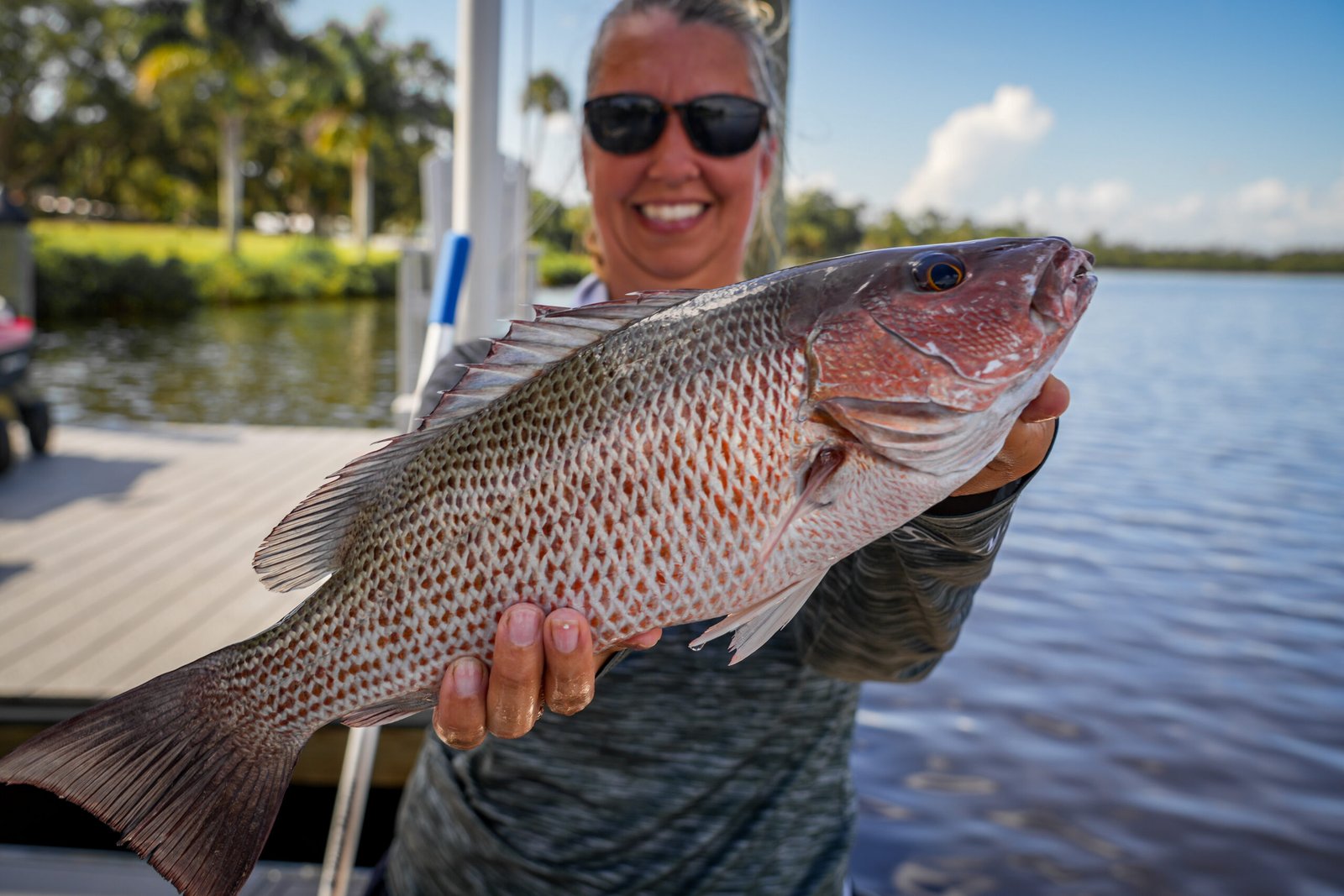
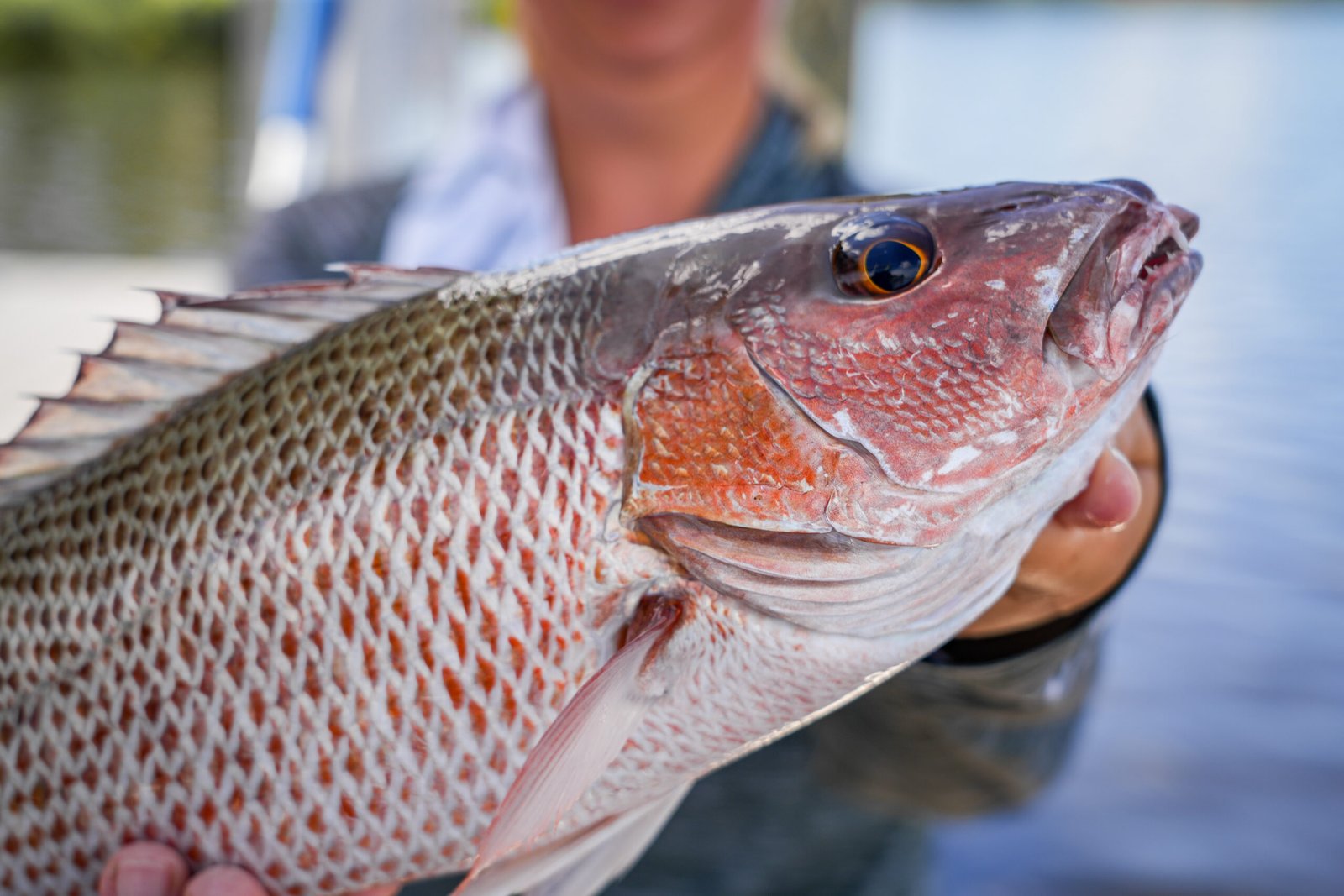
His rod loaded up almost immediately, and after a short fight, a beautiful 16-inch mangrove snapper came over the rail.
That’s about as good a start as you could ask for.
Then Stella decided it was her turn.
One thing that made me smile throughout the morning was hearing another little girl named Stella on the boat. My own daughter’s name is Stella, and it’s not exactly common.
This Stella could fish.
She rattled off three or four snappers before Mom and Dad even got their first fish.
Watching kids light up after catching quality fish never gets old.
Bigger Bait, Bigger Possibilities
Even though we had plenty of fry bait, I wasn’t completely satisfied.
Tiny pilchards are excellent for snapper.
Not everything else.
Before heading offshore, we stopped near the Skyway Fishing Pier, where larger pilchards have been holding.
Two quick throws later, we had several dozen healthy three to four-inch greenbacks swimming in the livewell.
We also jigged a handful of pinfish.
Now we had options.
One thing I’ve learned over the years is never to leave fish to find fish unless you’re improving your odds.
Having multiple bait sizes dramatically increases your chances once you reach offshore structure.
Offshore Action Heats Up
After roughly a thirty-minute run into the Gulf, we arrived at our first offshore number.
The first memorable fish never actually made it to the boat.
One of the anglers hooked a nice grouper that was steadily making its way toward the surface when, out of nowhere, an enormous barracuda exploded from below.
In one violent strike, it bit the grouper almost completely in half.
Everyone on the boat just stared.
Moments like that remind you how wild offshore fishing can be.
The first stop produced several mangrove snapper, undersized grouper, and plenty of action, but something just didn’t feel right.
I’ve learned not to force a bite.
If the fish aren’t doing what they should be doing, I move.
The Spot That Made the Day
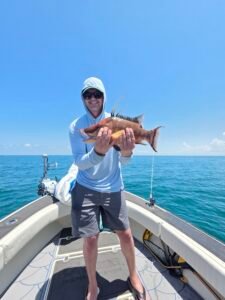 Eventually, we settled over one of my favorite pieces of hard bottom in about 35 to 40 feet of water.
The Gulf had that emerald-green color every offshore captain loves seeing.
The bottom machine showed scattered hard structure, bait, and fish stacked tightly along the ledges.
Then everything changed.
For the next forty-five minutes, it was absolute chaos.
Every rod stayed bent.
Keeper mangrove snapper.
Quality grunts.
Hogfish.
Spanish mackerel.
Gag grouper.
Red grouper.
One after another.
The box filled quickly, and more importantly, everyone on the boat was catching fish. That’s exactly what you hope for when a family books a charter while they’re on vacation.
Knowing When Enough Is Enough
Eventually, the Florida sun reminded us who was really in charge.
Stella began feeling the effects of the extreme heat.
Could we have stayed longer?
Probably.
Should we have?
No.
One lesson guiding has taught me is knowing when to end on a high note.
The fish box was full.
Everyone was smiling.
There was no reason to push through dangerous heat just to catch one or two more fish.
We pointed the bow back toward Tampa Bay and enjoyed the hour-and-a-half ride home.
Back at the dock, Jesse and I cleaned the day’s catch while talking about everything that had happened.
The Flushmaster Pro made flushing the Suzuki quick and easy, while Starke products handled the fish slime, blood, and salt that always seem to find every corner of the boat after a productive offshore trip.
Final Thoughts
Trips like this remind me why I love guiding.
The fishing was excellent, but what I’ll remember most is watching a family from Ohio experience something completely different from what they’re used to back home.
Watching Oliver boat the first snapper.
Watching Stella go on a hot streak.
Seeing everyone’s reaction when that barracuda attacked the grouper.
Those are the moments people remember long after the fillets are gone.
If you’re planning a Tampa Bay Offshore Fishing Charter, summer continues to offer outstanding opportunities for mangrove snapper, hogfish, grunts, grouper, Spanish mackerel, and a wide variety of reef species. The heat can be intense, but with an early start, fresh bait, and the willingness to adjust your strategy, the rewards can be exceptional.
Whether you’re visiting Florida on vacation or you’re a local looking to put fresh seafood on the table, I’d love the opportunity to show you what Tampa Bay has to offer.
Visit SaltyScalesCharter.com to book your next Tampa Bay offshore fishing charter and experience one of Florida’s premier fisheries firsthand.