 Skip to content
Experience the Best Tampa Bay Hogfish Charter This Fall and Winter
By Capt. Joshua Taylor
If you ask most anglers what the best-eating fish in the Gulf is, you’ll hear a lot of different answers. Grouper. Snapper. Mahi. But after spending more than 35 years fishing the waters of Tampa Bay, my answer has become pretty simple—hogfish.
Not only are they one of the best-tasting fish you’ll ever put on the dinner table, but they’re also one of the most rewarding fish to catch on light tackle. That’s what surprises many people. While hogfish are commonly associated with scuba divers and spearfishermen, very few anglers realize just how effective—and exciting—it is to target them with hook and line.
Over the last five years, I’ve spent countless days refining my approach to catching hogfish around Tampa Bay and the Gulf of America. What started as an occasional opportunity has become one of my favorite specialty charters of the year. Every fall, as the water begins to cool, these incredible fish move into predictable areas where anglers have an excellent opportunity to catch them.
Booking a Tampa Bay Hogfish Charter ensures that you have a chance to experience the thrill of catching hogfish while enjoying the beautiful waters of Tampa Bay.
If you’re looking for a unique offshore experience, a Tampa Bay Hogfish Charter should be at the top of your list. With expert guidance, you’ll learn the best techniques to target these incredible fish.
Why Book a Tampa Bay Hogfish Charter?
There are plenty of offshore species to target around Tampa Bay, but hogfish offer something different.
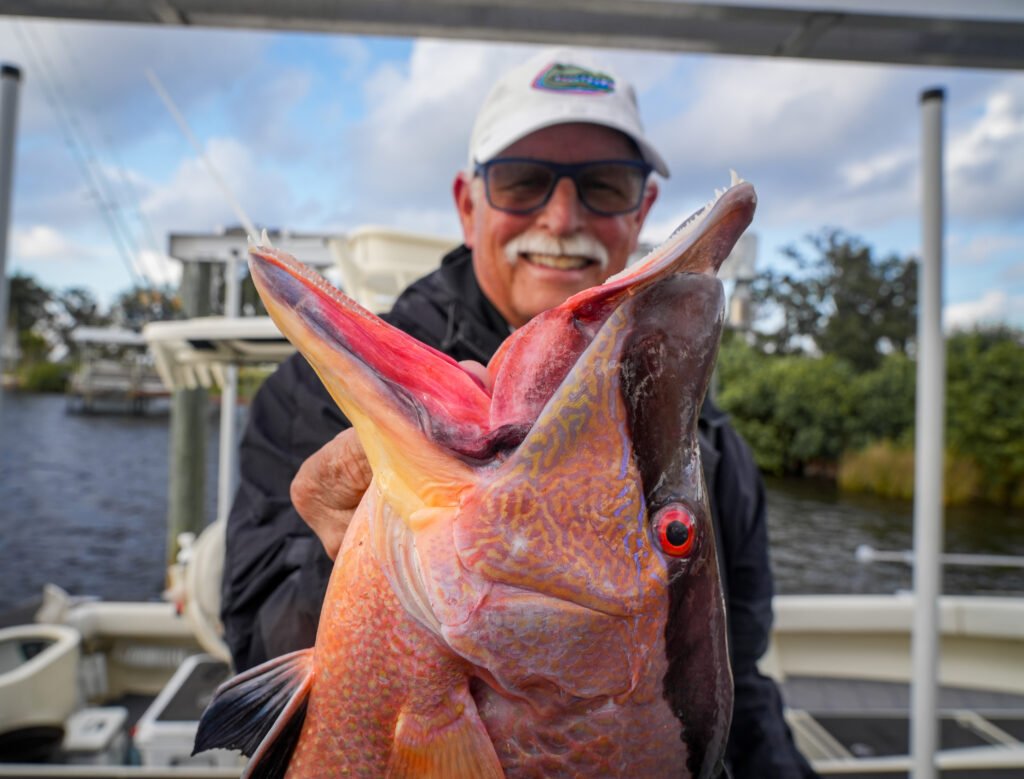
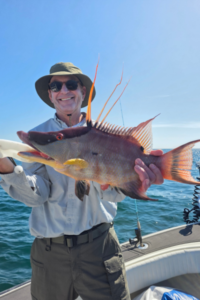
First, they’re absolutely gorgeous fish. Their vibrant pink, orange, yellow, and white coloration makes them one of the most beautiful reef fish in Florida waters.
Second, they’re incredibly fun to catch.
Unlike grouper that bulldog toward the bottom or mangrove snapper that dart into structure, hogfish fight with a unique twisting motion. Once hooked, they begin what many anglers call a “pinwheel,” using their wide, flat bodies to create tremendous resistance in the water.
On light spinning tackle, a five- or six-pound hogfish can surprise just about anyone. Perhaps the biggest reason clients specifically request these trips is that catching hogfish on hook and line is still relatively uncommon. Many anglers spend their entire lives fishing offshore without ever landing one.
That makes every catch feel like an accomplishment.
When Is the Best Time to Catch Hogfish in Tampa Bay?
While hogfish can be caught throughout much of the year, I strongly prefer targeting them from late October through January.
As the first cold fronts move across Florida, water temperatures begin dropping, and hogfish become much more accessible. They move into shallower offshore waters and begin staging around natural hard bottom and limestone ledges as they prepare for their spawning season.
These months consistently provide the best combination of:
- Shorter offshore runs
- Comfortable weather
- Calm seas
- Higher catch rates
- Better-sized fish
Another advantage is that we can often stay within Florida state waters, typically fishing depths between 30 and 50 feet, rather than making long offshore runs.
For clients, that means more time fishing and less time running.
Where We Catch Hogfish
 Many anglers are surprised to learn that hogfish occasionally make their way inside Tampa Bay.
The problem is that most of those fish are juveniles. If you’re looking for quality keeper hogfish, we’ll head just outside the bay where miles of productive habitat await.
The Gulf of America is filled with perfect hogfish structure, including:
- Natural limestone ledges
- Hard-bottom areas
- Rock piles
- Live bottom
- Artificial reefs
- Natural reefs
These areas provide exactly what hogfish need—small crustaceans, shrimp, crabs, and sandy areas where they can root around looking for food.
One thing I’ve learned over the years is that sometimes moving the boat only a few feet makes all the difference. Rather than anchoring directly over structure, I often position the boat just off the hard bottom and fish the surrounding sand where hogfish naturally feed.
The Best Tackle for Hogfish
One mistake many anglers make is bringing tackle that’s simply too heavy. I actually prefer downsizing.
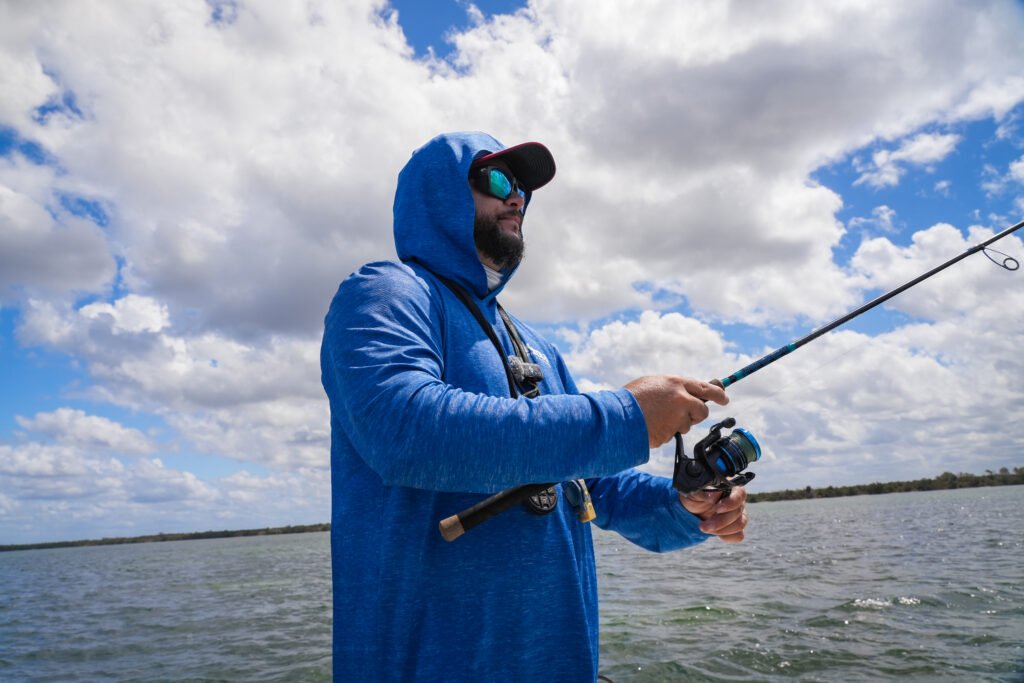
My favorite setup consists of:
- Okuma Cedros or Selina 4000 spinning reel
- Okuma SRT Medium Heavy Fast Action rod
- 15-pound braided line
- 20-pound fluorocarbon leader
This combination provides incredible sensitivity while still offering enough backbone to land quality fish. Because hogfish often bite very lightly, being able to detect subtle taps makes a tremendous difference.
It also makes fighting them far more enjoyable. Rather than simply winching fish to the surface, every hogfish becomes a genuine battle on balanced light tackle.
My Favorite Hogfish Rig
There are two rigs I use more than any others.
The first is a simple knocker rig, consisting of:
- 1–2 oz sliding sinker
- 20lb fluorocarbon leader
- 2/0 circle hook or J-hook
The second is a 1–2 ounce jig head.
Both presentations keep the bait exactly where hogfish feed—right on the bottom. Fresh or frozen shrimp is by far my favorite bait.
While fiddler crabs and sand fleas will also produce fish, frozen shrimp consistently catch the most hogfish on my charters. Although they’ll occasionally eat live pilchards or greenbacks, shrimp remains the clear winner.
How We Target Hogfish
Finding the right bottom is everything. Using Garmin side imaging and detailed mapping, I locate productive limestone ledges, rock piles, and hard-bottom areas before positioning the boat precisely where I want it.
My Power-Pole MOVE trolling motor allows me to hold the boat quietly without constantly anchoring. Once positioned, clients lower their bait to the bottom. The key is patience. Hogfish don’t usually slam the bait like a grouper.
Instead, you’ll often feel subtle pecks before the rod slowly begins loading. Rather than jerking immediately, I prefer lifting the rod steadily until pressure builds and the hook finds the corner of the fish’s mouth.
Because hogfish have relatively soft mouths, I always recommend landing larger fish with a net instead of swinging them over the gunwale.
Expect Plenty of Bonus Species
One thing clients love about these trips is the incredible variety of fish.
While targeting hogfish, it’s common to catch:
- Mangrove Snapper
- Gag Grouper
- Red Grouper
- Lane Snapper
- Vermilion Snapper
- Grunts
- Porgies
- Triggerfish (seasonal)
Some days, the bycatch is almost as exciting as the hogfish themselves.
It’s not uncommon to head home with a mixed box of fresh Gulf fish.
Is Hogfish Good to Eat?
Without question.
In my opinion, hogfish ranks among the very best fish swimming in Florida waters.
The fillets are:
- Mild flavored
- Firm textured
- Snow white
- Virtually free of bloodline
They’re excellent:
- Blackened
- Fried
- Grilled
- Pan-seared
- In fish tacos
- Baked with butter and herbs
It’s one of those fish that rarely needs much seasoning because the natural flavor speaks for itself.
Why Fish With Capt. Joshua Taylor?
When you book a Tampa Bay hogfish charter, you’re fishing with someone who has spent decades learning these waters.
I’ve been fishing Tampa Bay for more than 35 years and have dedicated the last five years specifically to refining my hook-and-line approach for hogfish.
Every trip includes:
- USCG Licensed & Insured Captain
- Premium Okuma rods and reels
- Live and frozen bait
- Professional fish cleaning
- High-end electronics
- Local knowledge built from thousands of trips
- Instructions for anglers of every skill level
Beyond guiding, I’ve helped millions of anglers improve their fishing through educational content that’s generated over 40 million YouTube views.
Whether it’s your first offshore trip or your hundredth, my goal is the same—to help you catch fish while teaching techniques you can use for years to come.
Frequently Asked Questions
How far offshore do we fish?
Most hogfish trips stay within Florida state waters, generally less than nine miles offshore.
How long are the trips?
I recommend either a 6-hour or an 8-hour offshore charter for the best chance of targeting hogfish and other reef species.
Do I need a fishing license?
No. Your Florida fishing license is included with every charter.
Are these trips kid-friendly?
Absolutely. Hogfish are an excellent species for families because the tackle is light and the action can be steady.
Can we keep the fish?
Yes. Any legal hogfish can be kept, and I’ll professionally clean and bag your catch before you leave.
Book Your Tampa Bay Hogfish Charter
If you’ve never caught a hogfish on hook and line, you’re missing one of the most enjoyable offshore fishing experiences Florida has to offer.
Cool weather, calm seas, light tackle, and some of the finest table fare in the Gulf make these trips something anglers look forward to every fall. Whether your goal is filling the cooler with fresh fillets or simply checking a new species off your bucket list, a Tampa Bay Hogfish Charter offers an unforgettable day on the water.
Late October through January is my favorite time to target hogfish, and availability fills quickly once the cooler weather arrives. If you’re ready to experience one of the most unique offshore fishing trips Tampa Bay has to offer, book your hogfish charter today, and let’s go catch one of the Gulf’s most prized fish. Checkout this video on two great rigs to catch more hogfish:
