 Skip to content

Tampa Bay Fishing Report September 24, 2026: Tough Grouper Bite Turns Into Redfish Action
 Fishing around Tampa Bay became noticeably tougher this week as a front began moving into the area. Thursday, September 24, was one of those days where everything looked right on paper, but the fish simply didn’t cooperate the way we expected.
My clients, Tyler and Jake, were hoping to spend the morning targeting mangrove snapper and grouper inside Tampa Bay, so that was our original game plan. Conditions at the start of the trip looked excellent. We had light winds, beautiful weather, very little weekday boat traffic, and a major feeding period that seemed like it should help produce a good bite.
We also had plenty of quality live bait.
Despite all of those factors lining up, the deeper-water snapper and grouper bite proved to be extremely difficult. We eventually had to make a significant adjustment, abandon the original plan, and move inshore.
Fortunately, that decision helped turn the day around.
Plenty of Live Bait Around Tampa Bay
Our first priority at daylight was getting the livewell loaded.
We were able to catch a good mixture of pinfish, pilchards, and Spanish sardines, giving us several different options for both grouper and mangrove snapper.
The Spanish sardines have been especially prevalent around Tampa Bay recently. We’re seeing a lot of them around channel markers and similar areas where bait tends to concentrate.
Having several types of live bait onboard is always beneficial because fish can become surprisingly selective.
One day they may crush pilchards.
The next day they may prefer a pinfish.
Sometimes a Spanish sardine is what finally gets a stubborn fish to eat.
With a livewell full of healthy bait, I felt confident we had what we needed to put together a productive morning.
The bait wasn’t the problem.
Working Tampa Bay Rock Piles for Grouper and Snapper
Once the bait was secured, we started working several rock piles inside Tampa Bay.
These pieces of structure can produce some excellent fishing. Mangrove snapper frequently stack up around rock and hard bottom, while grouper use the same areas for cover and ambush points.
We started bouncing from one piece of structure to another.
And another.
And another.
By the time we were finished, we had probably worked approximately 10 different rock piles inside Tampa Bay.
The frustrating part was that we were locating fish.
The fish simply would not cooperate.
Normally, when you have good bait, moving water, favorable weather, and fish sitting on structure, you can eventually find a presentation that produces.
Thursday was different.
Downsizing to 20-Pound Leader
When fish become finicky, especially mangrove snapper, one of the first adjustments I make is downsizing the tackle.
We tried several different rigging options throughout the morning.
That included a light knocker rig, a Carolina-style rig, and even a jig head fished along the bottom.
We also dropped down to approximately 20-pound leader in an attempt to make the presentation as natural as possible.
Mangrove snapper can become extremely leader-shy, particularly when fishing clear water or areas receiving substantial fishing pressure. Sometimes dropping leader size can completely change the bite.
Not on this trip.
We gave the fish different baits.
We changed rigs.
We lightened the leader.
We moved from rock pile to rock pile.
We knew fish were present on some of these areas, but they simply didn’t want to feed.
After spending several hours trying to make the grouper and snapper bite happen, I decided it was time to change the entire plan.
Knowing When to Change the Fishing Plan
One of the biggest mistakes anglers can make is staying committed to a pattern simply because that was the original plan.
If the fish aren’t cooperating, sometimes you have to leave.
That’s especially important on a fishing charter because we have a limited amount of time to find productive water.
I would rather make a major adjustment and hunt for another bite than spend an entire trip waiting for stubborn fish to suddenly turn on.
So we pulled away from the deeper rock piles and headed toward the inshore mangrove shorelines.
That ended up being the best decision we made all morning.
Incoming High Tide Brings the Mangroves to Life
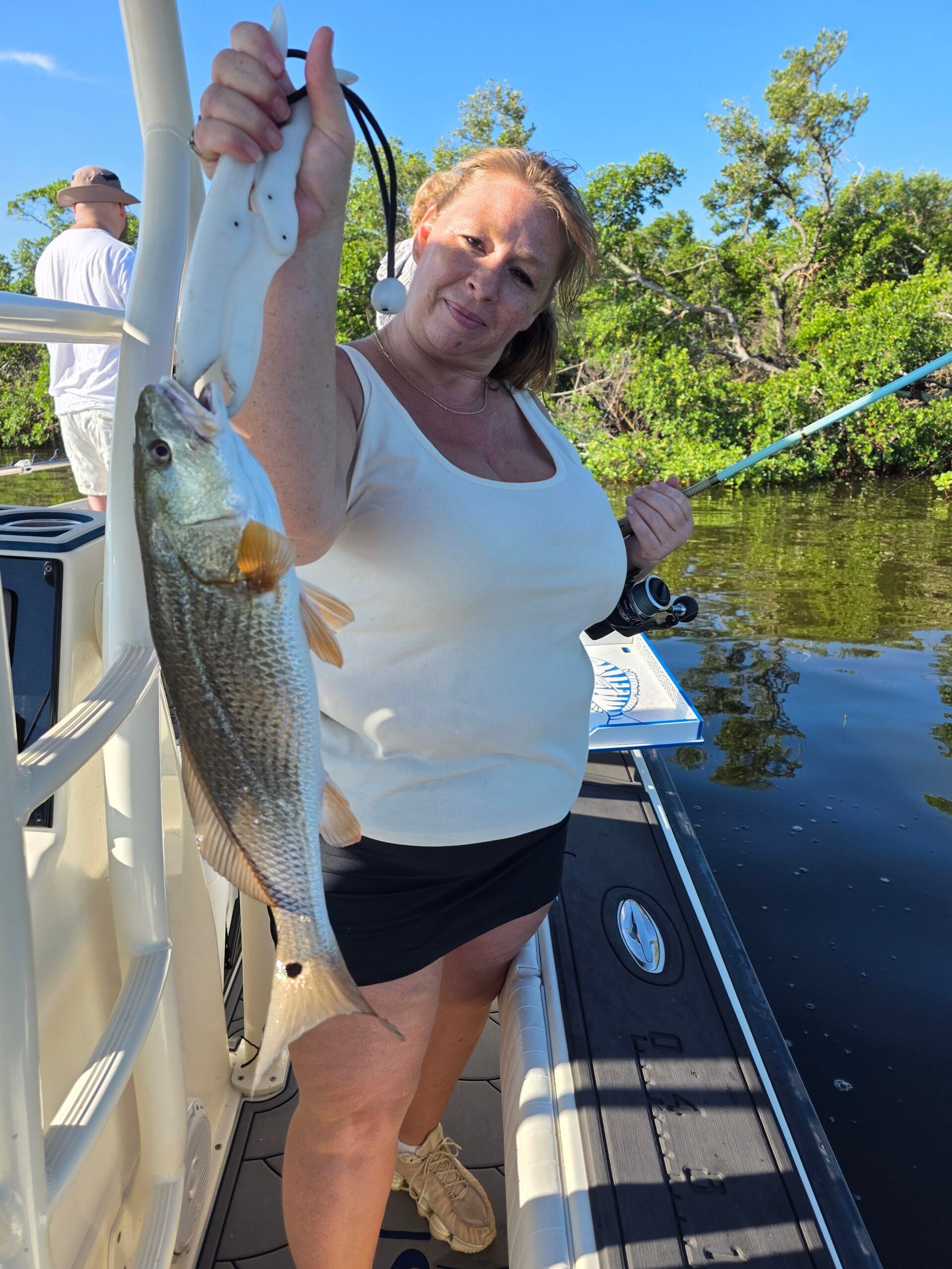 Once we got back into the mangrove areas, conditions immediately looked more promising.
We still had a high tide that was slowly trickling in, and we had some good current moving through the area.
That incoming water can be extremely productive around Tampa Bay mangroves.
As the water rises, bait pushes farther toward the shoreline. Redfish and snook often move right along with it, using the mangrove roots and overhanging branches as ambush points.
We began chumming the shoreline and getting some bait activity going around the mangrove trees.
Almost immediately, the area began looking different from what we had experienced earlier in the morning.
There was life along the shoreline.
We could see bait moving.
There was current.
And most importantly, we started getting bites.
Live Spanish Sardine Produces the First Redfish
We rigged a live Spanish sardine on a jig head and worked it near the bottom along the mangrove shoreline.
It didn’t take long.
The first good bite resulted in a redfish measuring approximately 21 inches.
After struggling for several hours to get the deeper-water fish to cooperate, seeing that first redfish come into the boat was a welcome sight.
Tyler and Jake then started getting additional opportunities.
Several more redfish followed, with most of the fish falling somewhere in approximately the 17- to 22-inch range.
A lot of these were smaller juvenile reds, often referred to as rat reds.
Once we started catching fish in that size range, I had a feeling there were probably quite a few of them around.
Redfish of similar size will often school together, and we could actually see some activity as the fish began popping and chasing bait near the shoreline.
Juvenile Snook Join the Action
The redfish weren’t the only predators using the mangroves.
We also caught a couple of juvenile snook mixed in with the reds.
The smaller snook appeared to be chasing the same bait and taking advantage of the incoming tide.
That’s one of the things I enjoy most about fishing Tampa Bay.
You can start the morning targeting grouper and mangrove snapper around deeper structure and, a few hours later, be pitching live bait underneath mangroves for redfish and snook.
Being able to make that adjustment can save a difficult fishing day.
Staying Mobile Produces More Bites
We didn’t have a tremendous amount of time remaining after making the move inshore, so we continued moving.
We worked several different mangrove bushes and stretches of shoreline rather than spending too much time in any single area.
Some spots produced a couple of bites.
Others produced additional redfish.
We also had a few break-offs.
Overall, though, the inshore fishing was considerably better than the grouper and snapper bite we experienced earlier in the trip.
The biggest factors appeared to be the incoming water, good current, active bait, and fish positioning tight to the mangroves.
Once we found the right combination, Tyler and Jake were able to put several fish in the boat and turn what had started as a frustrating morning into a much better trip.
Pre-Front Conditions Made Fishing Tough
One thing that stood out about Thursday was how quickly fishing conditions seemed to change ahead of the approaching front.
Everything looked good when we started.
Light wind.
Good bait.
Very little boat traffic.
A favorable feeding period.
Fish on the structure.
But sometimes fish respond to changing weather before anglers notice much difference on the surface.
The grouper and snapper seemed particularly affected.
That’s one of the reasons I don’t like judging a fishing day entirely by the weather forecast, tide chart, or feeding-period prediction.
Those things can help us plan, but the fish ultimately determine whether they’re going to cooperate.
Thursday was a perfect example.
Instead of continuing to force a pattern that wasn’t producing, we adapted.
Tampa Bay Fishing Outlook
With the front moving through, I’m hoping the fishing improves considerably once conditions stabilize.
Sometimes it takes a little time after a significant weather change for fish to settle back into predictable feeding patterns.
We have an offshore trip planned for Monday, and I’m looking forward to seeing whether the grouper bite improves after the front.
The positive takeaway from Thursday is that redfish and juvenile snook are still providing opportunities along Tampa Bay’s mangrove shorelines, particularly when you have good moving water.
Live bait also remains plentiful, with pilchards, pinfish, and Spanish sardines all available.
If you’re heading out, I would definitely keep several options open.
Don’t become so committed to grouper, snapper, redfish, or any other single species that you’re unwilling to change the plan.
Let the conditions and the fish tell you what to do.
Final Days of the September Gag Grouper Season
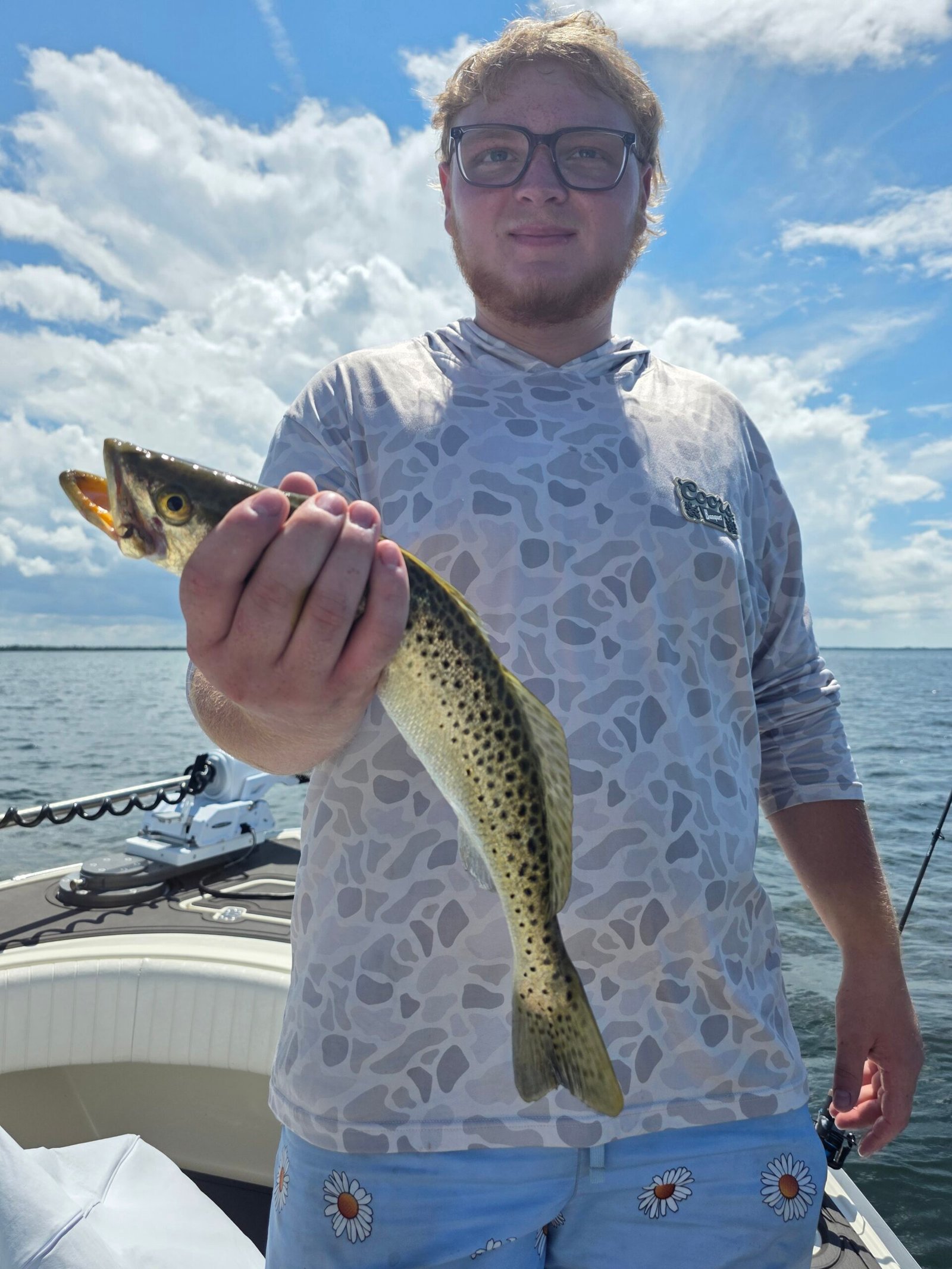 We’re also getting extremely close to the end of the September gag grouper season, with the season closing September 30.
If you’ve been wanting to get out and attempt to put a few grouper in the boat before the closure, there isn’t much time remaining.
We’re going to continue fishing hard and adjusting our strategy based on conditions.
Some days that means running from rock pile to rock pile looking for grouper.
Other days it may mean switching gears and heading toward the mangroves for redfish and snook.
That’s part of fishing Tampa Bay.
Conditions change quickly, and being willing to adapt can make the difference between spending the day waiting for something to happen and actually finding feeding fish.
Book Your Tampa Bay Fishing Charter
If you’d like to get out on the water with us, visit SaltyScalesCharter.com to check availability and book your Tampa Bay fishing charter.
Depending on the season, tide, weather, and current fishing conditions, we can target species such as gag grouper, mangrove snapper, redfish, snook, trout, tarpon, Spanish mackerel, and many other species found throughout Tampa Bay.
Every trip is different, and Thursday was a good reminder that you can’t always force the fish to follow your original plan.
You have to stay mobile, pay attention to what the water is telling you, and be willing to change tactics.
That’s exactly what we did.
The grouper and snapper weren’t cooperating, so we moved inshore, found moving water around the mangroves, and put Tyler and Jake on redfish and snook.
Sometimes adapting is the difference between a tough fishing trip and a successful one.
Till next time, guys, I’ll see you on the water.
Capt. Joshua Taylor
Salty Scales Fishing Charters
Tampa Bay, Florida