 Skip to content

Tampa Bay Fishing Report October 6th – Before the Storms
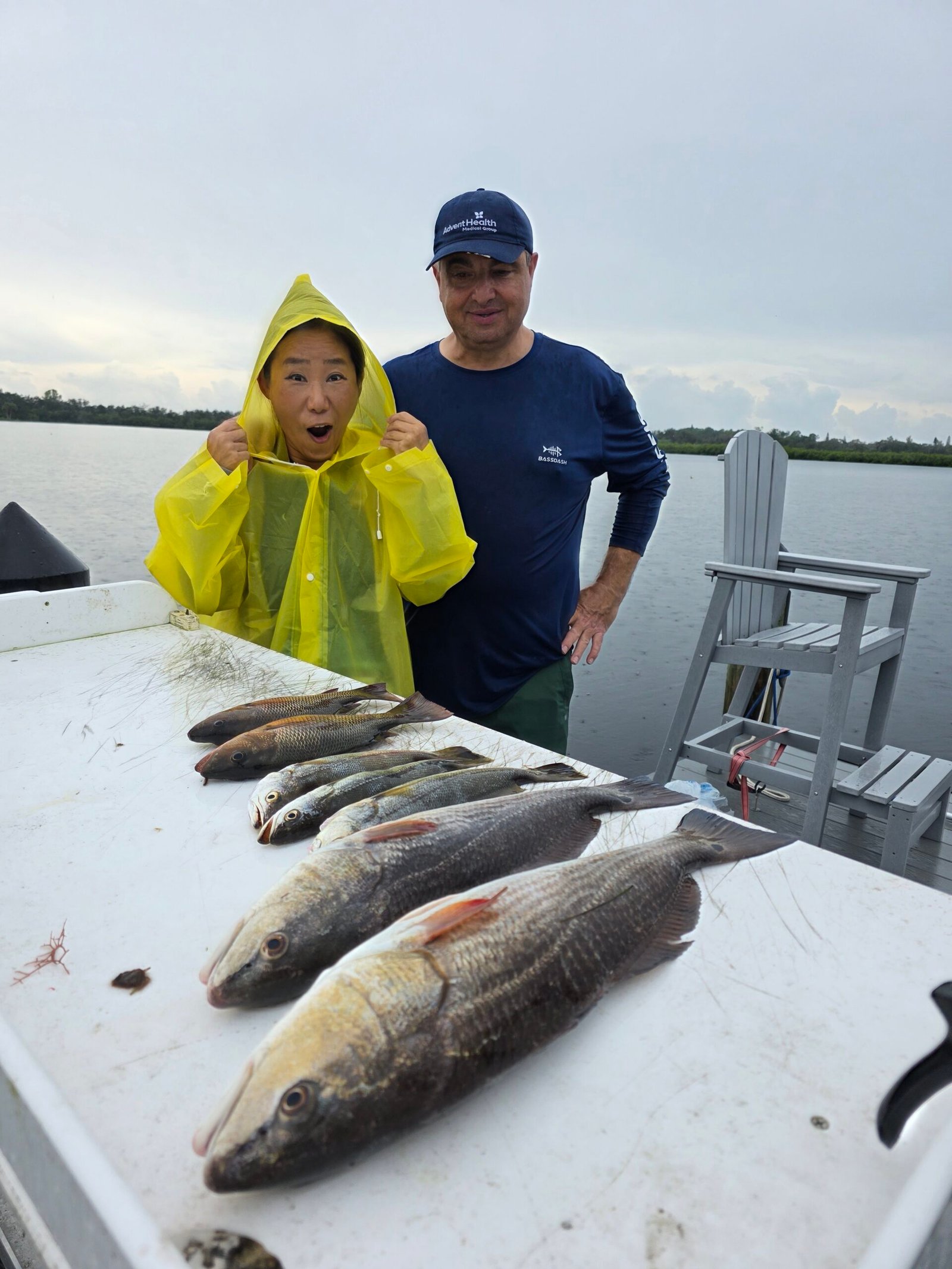 Sometimes the weather forecast makes you question whether you should even leave the dock.
That was exactly the situation leading into our October 6 Tampa Bay fishing charter. For the past few days, the forecast had been calling for rain, thunderstorms, and lightning, and I had been watching the weather closely, trying to decide whether some of my scheduled trips needed to be moved.
Fortunately, I didn’t cancel today’s trip.
The fishing turned out to be phenomenal.
The National Weather Service forecast for Coastal Manatee called for mostly cloudy skies, scattered thunderstorms, showers becoming widespread during the afternoon, and a 90% chance of precipitation. Winds were forecast around 5 mph out of the southeast early, becoming southerly later in the day.
One detailed NWS forecast even had precipitation beginning around 8 a.m.
That sounds ugly on paper, especially when you’re running a fishing charter. But forecasts don’t always tell you exactly what the conditions will look like at a specific place and time on Tampa Bay.
When we headed out this morning, conditions were actually very manageable. The sky was heavily overcast, but the wind was extremely light and the bay was calm. We continued watching the radar throughout the charter and stayed prepared to move back toward the Little Manatee River if thunderstorms began developing around us.
That weather window gave us exactly what we needed.
Today’s Port Manatee Tide and Feeding Periods
The tide was another reason I felt good about the morning bite.
At Port Manatee, the morning low occurred at approximately 4:11 a.m. at 1.55 feet, followed by a strong incoming tide that climbed to a 10:29 a.m. high of approximately 2.41 feet. The water then began falling toward the afternoon low around 5:36 p.m.
That put us fishing during one of my favorite situations for Tampa Bay inshore fishing: moving water leading into a late-morning high tide.
The solunar timing lined up nicely as well. Nearby Manatee River solunar data placed the primary morning major feeding period from approximately 9:05 a.m. until 11:05 a.m. The minor periods were approximately 2:51–3:51 a.m. and 4:20–5:20 p.m., with the second major occurring at night.
Our trip started later than I normally prefer, but the timing ultimately worked out almost perfectly.
A Birthday Tampa Bay Fishing Charter
My client Cosmo had reached out to me after fishing several times with another captain.
His concern was pretty straightforward: they had gone on several previous trips without catching many fish, and before spending money on another Tampa Bay fishing charter, he wanted to feel confident that they would have a legitimate opportunity to catch what they were looking for.
There are never guarantees in fishing, but my goal is always to evaluate the conditions, tides, bait and seasonal patterns and put my clients in the highest-percentage situation possible.
There was another important part of today’s trip.
Cosmo’s fiancée, Kim, was celebrating her birthday.
She hadn’t done a tremendous amount of fishing before, but she had three fish on her wish list:
Redfish. Snook. Speckled trout.
In Tampa Bay, catching all three during the same trip is commonly referred to as an inshore or Tampa Bay slam.
So that became our mission.
A Later Start Than Normal
Cosmo and Kim were coming from the Brandon area and weren’t able to begin quite as early as I usually like.
Our scheduled departure was around 7:30 a.m.
Typically, I prefer getting started around 6:30 a.m. because that first hour around sunrise can be extremely productive, especially during the warmer months.
At first I was a little disappointed about losing that early window.
But looking at the incoming tide and the major feeding period starting around 9 a.m., I knew we still had a very good opportunity.
We headed out of the Little Manatee River under dark, overcast skies with almost no wind.
Our first job was catching bait.
Tampa Bay Live Bait Is Everywhere Right Now
We headed toward the Cockroach Bay area and began searching the shallow flats.
Right now, the amount of bait in Tampa Bay is impressive.
We found thick concentrations of:
- Pilchards
- Threadfin herring
- Spanish sardines
- Pinfish
And when I say pinfish are everywhere, I mean there are more pinfish on some of these flats than you could ever possibly need.
Rather than immediately throwing the net, I anchored up and started chumming.
I had already prepared my normal bait mixture using Purina Tropical Fish Food mixed with jack mackerel. I’ve used this combination for a long time because it creates a strong scent trail and gets pilchards and other baitfish fired up behind the boat.
After roughly 20 minutes, we had a large ball of bait gathered behind us.
That’s when the cast net came out.
The Cast Net Setup
For today’s shallow-water bait fishing, I used a 10-foot Drop-Out cast net with 3/16-inch mesh weighing approximately 1.5 pounds per foot.
That combination works extremely well when I’m targeting smaller pilchards and mixed bait in shallow water.
The smaller mesh helps keep small bait from becoming heavily gilled in the net—the dreaded “Christmas tree” that can turn cleaning a cast net into a frustrating mess.
I made my first throw and immediately came up with a good mixture of bait.
It took roughly four throws before the livewell contained everything we needed for a two-person, four-hour charter.
With plenty of healthy bait onboard, it was time to go fishing.
Running South for Redfish and Snook
From the bait flats, we made a substantial run south.
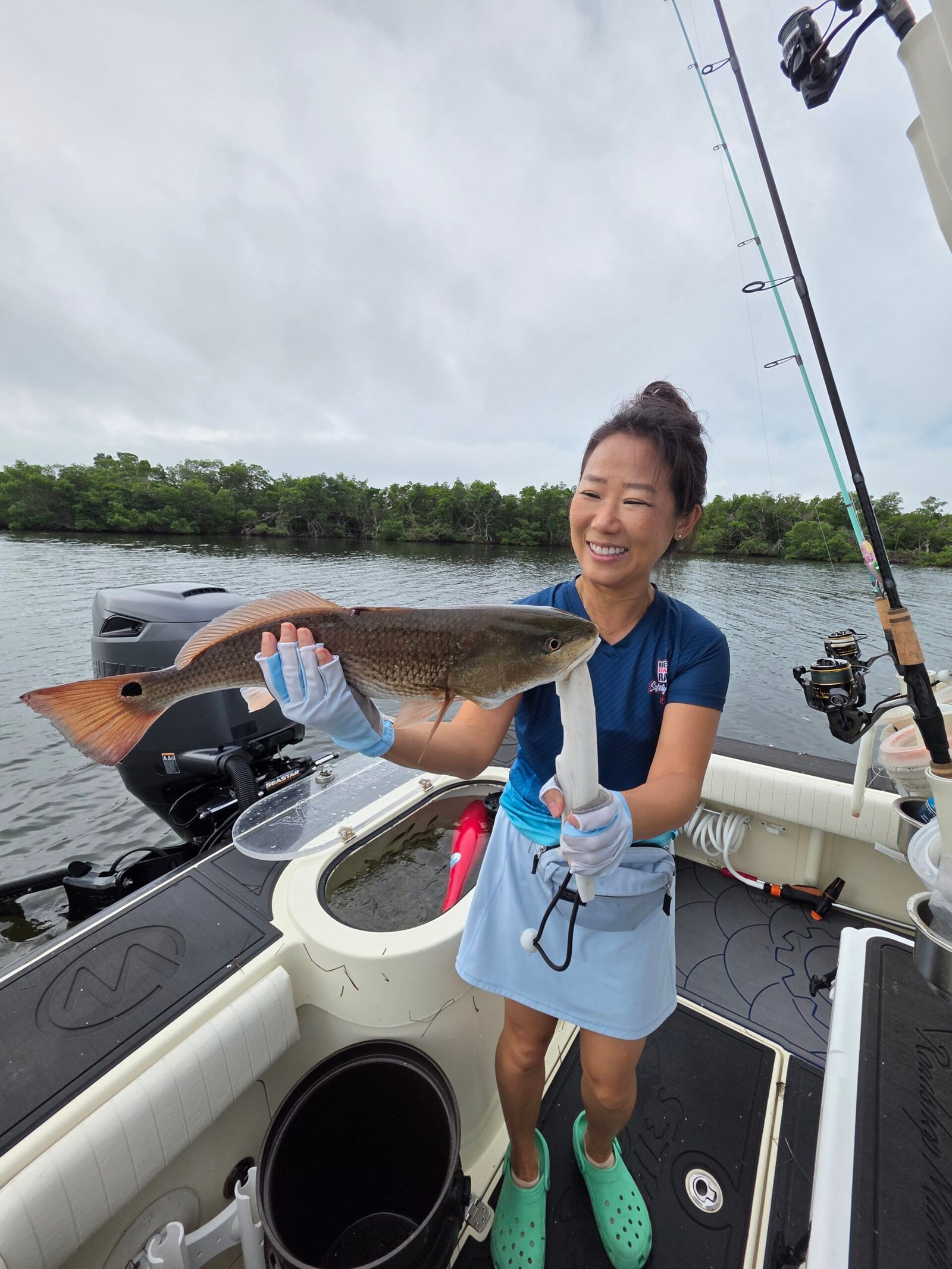 The redfish bite has been very good lately, and I had a small point in mind that I believed would produce with the incoming water.
The tide still had a couple of hours to rise before the late-morning high, and we were approaching the morning major feeding period.
We now had several positive factors working together:
- Moving water
- Incoming tide
- Quality live bait
- Overcast skies
- Light wind
- A major solunar period
That is exactly the type of combination I look for when deciding where and when to fish.
The Inshore Rigs We Used
Before the trip, I had several Tavares setups rigged and ready so we could quickly change presentations depending on the depth, current and how aggressively the fish were feeding.
One setup used a small split shot with a 20-pound fluorocarbon leader and a 2/0 Nautilus-style hook.
Another was completely free-lined with a 2/0 hook and fluorocarbon leader.
I also had a popping cork rig with 20-pound fluorocarbon and a 2/0 hook.
And finally, I had a small jig ready.
I really like using a jig when fish don’t want to chase bait near the surface. The extra weight keeps a pilchard closer to the bottom and allows me to put that bait directly in the fish’s strike zone.
That can be especially important with redfish and snook.
Sometimes the fish are aggressive and will chase a free-lined pilchard 20 feet.
Other days, you practically need to put it in front of their face.
First Stop — Immediate Action
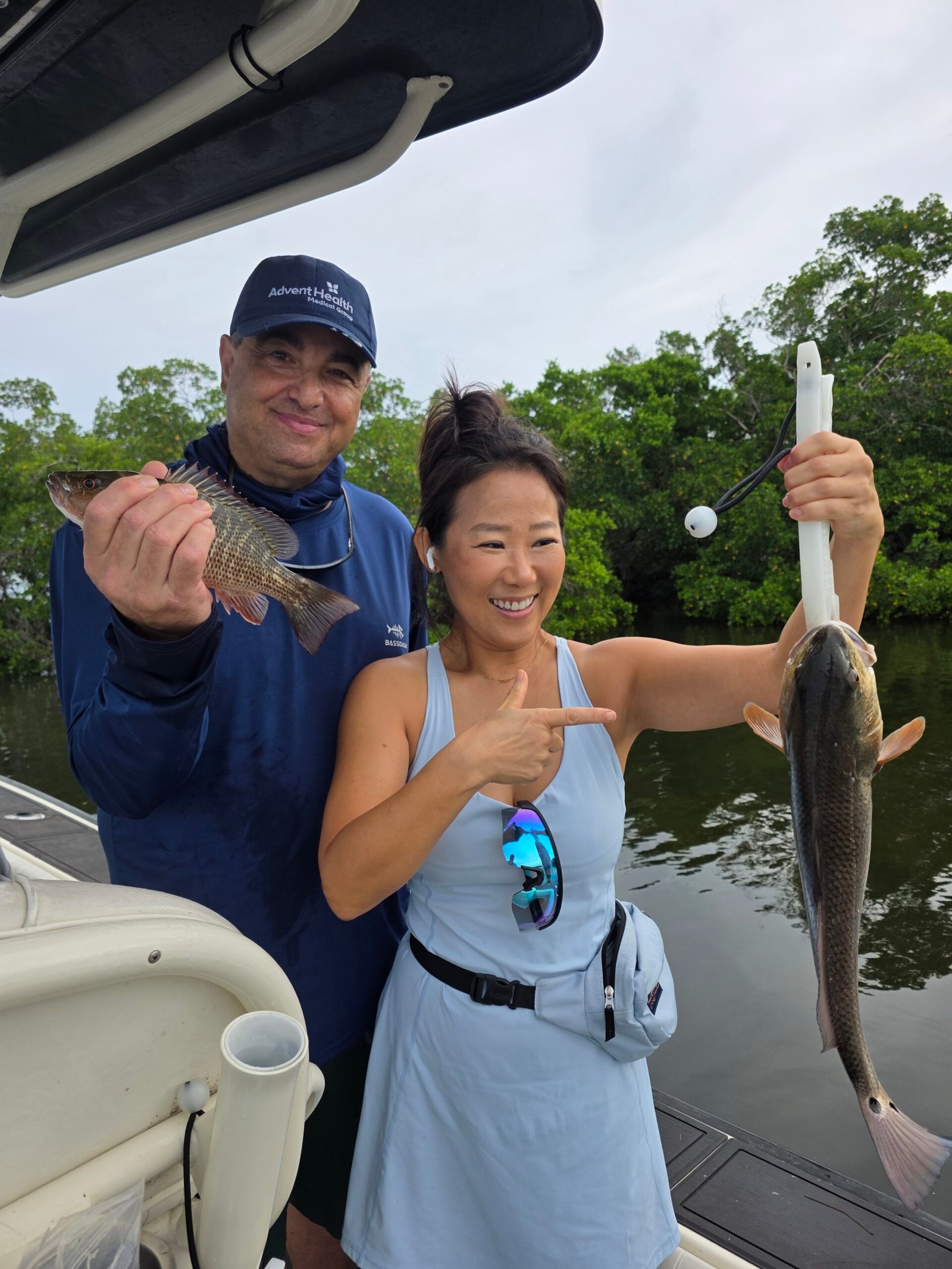 We pulled up to the first point, and I started by chumming with a few threadfins.
It didn’t take long.
Kim hooked into a big fish almost immediately.
The fish took off toward the mangroves, got into the trees, and broke her off.
We didn’t get to see exactly what it was, but judging by the way it ate and headed directly toward structure, it was a quality fish.
That first hookup told me what I needed to know.
The fish were there.
Shortly afterward, Cosmo hooked into a beautiful redfish.
Kim followed with a mangrove snapper.
Then everything started happening at once.
At one point, we had doubles going, and the first location produced multiple snook, redfish, and mangrove snapper.
For someone who had been concerned about spending money on another charter after several slow trips, Cosmo was finally seeing the kind of Tampa Bay action he had been hoping for.
Don’t Sit on a Dying Bite
Eventually, that first school began slowing down.
One mistake anglers sometimes make is staying too long because a spot produced fish earlier.
If I know fish are spread across several similar areas, I would rather leave a slowing bite and hunt for the next active group.
That’s what we did.
We rounded the corner and started working additional areas.
The pattern remained fairly consistent.
We might find two or three redfish in one location, catch them, and then need to move again.
Rather than one giant school sitting in a single place, the fish seemed scattered among several small areas.
We kept moving and kept catching.
By the end of the inshore portion of the trip, Cosmo and Kim had caught dozens of redfish along with numerous snook.
But there was still one important fish left.
The trout.
Racing the Weather for a Tampa Bay Slam
Throughout the morning, I continued checking the weather radar.
With thunderstorms still in the forecast, I didn’t want to wait until the end of the charter to hunt for Kim’s final target species.
She already had redfish and snook.
Now we needed a speckled trout to complete the Tampa Bay slam.
We moved onto the grass flats and began searching.
It didn’t take long.
DOA Shrimp Outperformed Live Bait
Interestingly, the best trout presentation wasn’t live bait.
It was a DOA Shrimp.
We fished a mixture of artificial shrimp and live pilchards, and during this particular part of the morning, the artificial bait outperformed the live bait.
Kim was also fishing a pilchard beneath a small popping cork, and that presentation produced fish as well.
Soon we had the speckled trout we were looking for.
Mission accomplished.
Redfish. Snook. Trout.
Kim had completed her Tampa Bay slam on her birthday.
That’s the kind of moment that makes a fishing charter memorable.
You Never Know What Will Eat Right Now
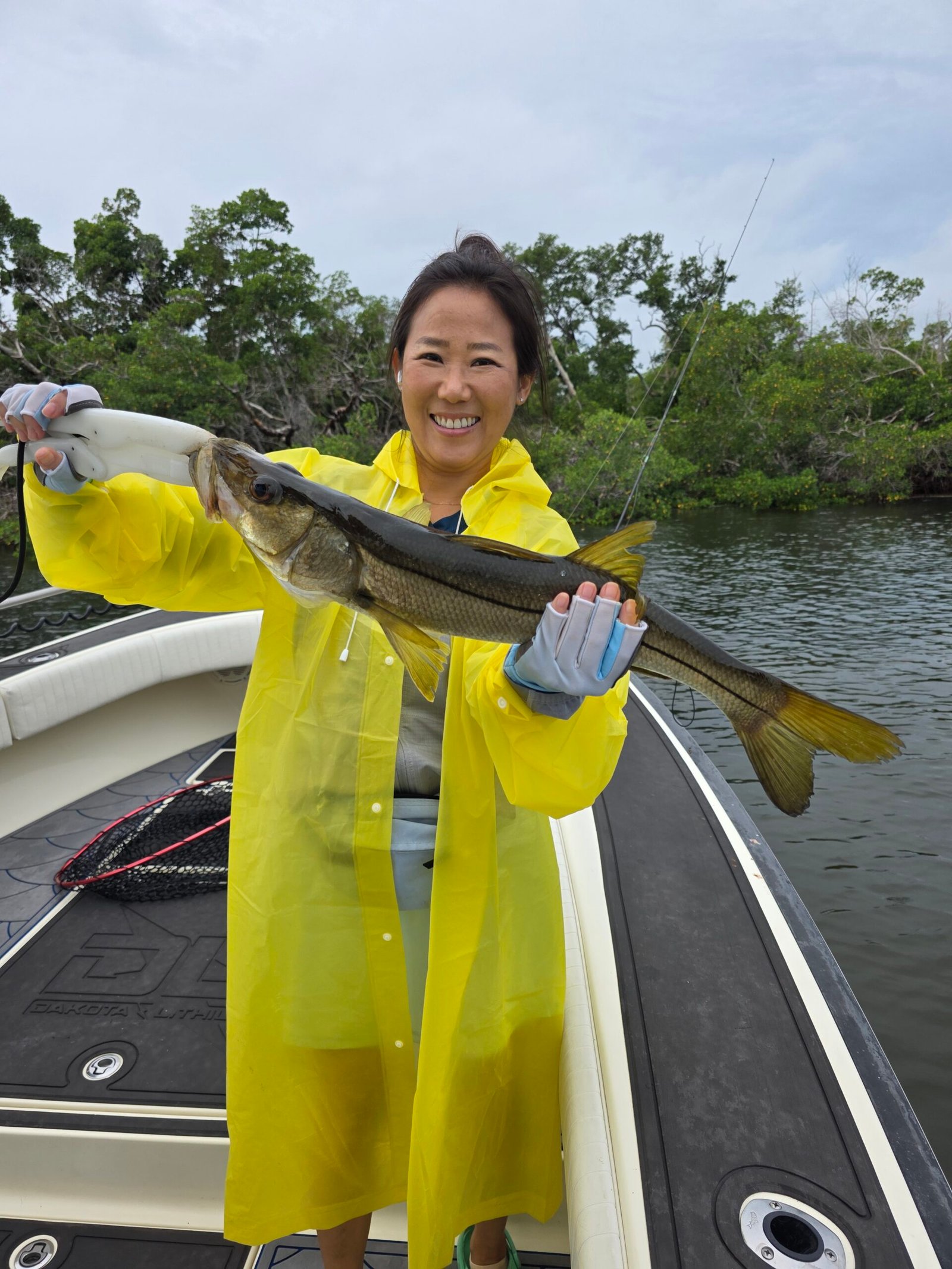 The grass flats were loaded with life.
In addition to the speckled trout, we encountered mangrove snapper and Spanish mackerel mixed into the same areas.
That’s largely because there is so much bait throughout Tampa Bay right now.
When large concentrations of pilchards, threadfin, sardines, and other forage species stack onto the flats, predators follow them.
The result is what I would describe as a Tampa Bay fishing smorgasbord.
You make a cast expecting a trout, and a Spanish mackerel eats it.
The next cast might produce a snapper.
Then a snook.
Then another trout.
That variety is one of the things that makes fall fishing around Tampa Bay so enjoyable.
Working Our Way Back North
With the primary mission accomplished, I started working us north toward the Little Manatee River.
This wasn’t because the bite had stopped.
Far from it.
I was thinking about the weather.
With thunderstorms still possible, I wanted to gradually shorten the distance between us and the ramp rather than stay far south until the last minute and potentially have weather develop between the boat and home.
We made several additional stops along the way.
Those stops produced more quality redfish and snook.
We also found silver trout in some of the deeper portions of the flats, adding yet another species to an already diverse day.
A Four-Hour Charter That Turned Into Nearly Five
Our scheduled trip was four hours, but when the fishing is good, and conditions allow, it’s hard to shut everything down exactly when the clock says the trip is over.
I gave Cosmo and Kim a little extra time.
By the time we finished, we had been fishing roughly four and a half to five hours.
We eventually headed past the Little Manatee River bridge and returned to the dock.
We took a few more pictures, talked about the trip, and wrapped up what had turned into an outstanding birthday fishing charter.
Cosmo later left me a great review, which I truly appreciate.
He started this experience simply hoping that he and Kim would finally get the kind of fishing trip they had been looking for.
They left having caught dozens of redfish, numerous snook, speckled trout, mangrove snapper, Spanish mackerel, and silver trout.
And most importantly, Kim got her birthday Tampa Bay slam.
What Today’s Trip Taught Us
There were several important lessons from today’s fishing.
First, don’t judge an entire fishing day solely by the percentage of rain shown on a weather app. At the same time, thunderstorms and lightning on Tampa Bay are serious hazards, so radar, changing wind, cloud development, and a safe route home always have to remain part of the decision-making process.
Today’s official forecast was unquestionably wet and stormy, but our actual morning window gave us calm wind, overcast skies, and very fishable conditions.
Second, moving water continues to matter.
Our best inshore fishing occurred while that tide was pushing toward the 10:29 a.m. Port Manatee high. That incoming water also overlapped almost perfectly with the morning major feeding period.
Third, don’t become married to one presentation.
Today we caught fish using free-lined live bait, split-shot rigs, popping corks, and jigs.
Then, when we switched to trout fishing, a DOA Shrimp actually outperformed the live bait.
Let the fish tell you what they want.
Finally, keep moving when the pattern tells you to move.
We didn’t find one giant school of redfish and sit there all morning. Many areas held only two or three fish. By bouncing between productive points and shorelines, those smaller groups eventually added up to dozens of redfish.
October and November Tampa Bay Fishing
This is exactly why I enjoy fishing Tampa Bay during the fall.
There is an enormous amount of bait in the system right now, and we’re seeing an excellent variety of species.
Depending on the day and where we fish, October and November can offer opportunities for redfish, snook, speckled trout, mangrove snapper, Spanish mackerel, and numerous other species.
Every day is different, and today’s mixed bag was a perfect example.
If you’re considering booking a trip, October and November are also two of my busier months, so availability can become limited.
Book a Tampa Bay Fishing Charter with Salty Scales
If you want to experience Tampa Bay fishing with Salty Scales Fishing Charters, I’d be happy to get you on the water.
Current inshore charter rates are:
- 4-Hour Inshore Fishing Charter — $600
- 6-Hour Fishing Charter — $800
- 8-Hour Fishing Charter — $1,000
Whether you’re an experienced angler, bringing the kids, celebrating a birthday, or simply hoping to catch your first redfish, snook, or trout, I’ll build the trip around the conditions and the type of fishing you’re looking for.
Visit SaltyScalesCharter.com and select the booking tab to check availability.
Today’s trip with Cosmo and Kim was a great reminder that forecasts can look intimidating, conditions can change quickly, and fishing doesn’t always follow what a screen tells us it should do.
The forecast said thunderstorms and rain.
The fish said otherwise.
And on October 6, 2026, Tampa Bay delivered one heck of a birthday fishing trip.