Skip to content

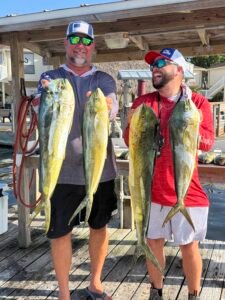 If there is one place in Florida where you can wake up with almost endless fishing options, it is Marathon.
That is why we chose Marathon for an epic guys’ trip that had been in the works for a couple of months. Eric with Semper fi Charters, Corey, who mates with Eric, JD, who fishes with me, and I headed south during lobster season. The plan was to spend time diving for lobster, enjoying the Keys and, on this particular day, heading offshore to target mahi-mahi.
I have always considered the Florida Keys one of the world’s fishing capitals.
For our mahi trip, the plan was simple: find clean blue water, find life, and hopefully find mahi right behind it.
Preparing for Mahi Fishing in Marathon
Our morning started at 5 a.m. If you are serious about offshore fishing, preparation before daylight can make a huge difference. Once you find a school of mahi, the last thing you want to do is search for a lure or tie leaders.
We rigged light spinning outfits for casting and pitching, plus larger spinning setups for trolling. We knew we would eventually make our way toward the Marathon Hump, where we also hoped to find blackfin tuna, so having several presentations ready gave us options.
One of the most important things I recommend is having pitch baits rigged and within reach.
One of my favorite artificials is a small squid-style “squib” presentation in flying-fish colors. I like adding a little weight and rigging it with a 5/0 Mustad hook. It casts well, swims naturally, and resembles the flying fish and bait mahi are already chasing.
Catching Live Pilchards Before Heading Offshore
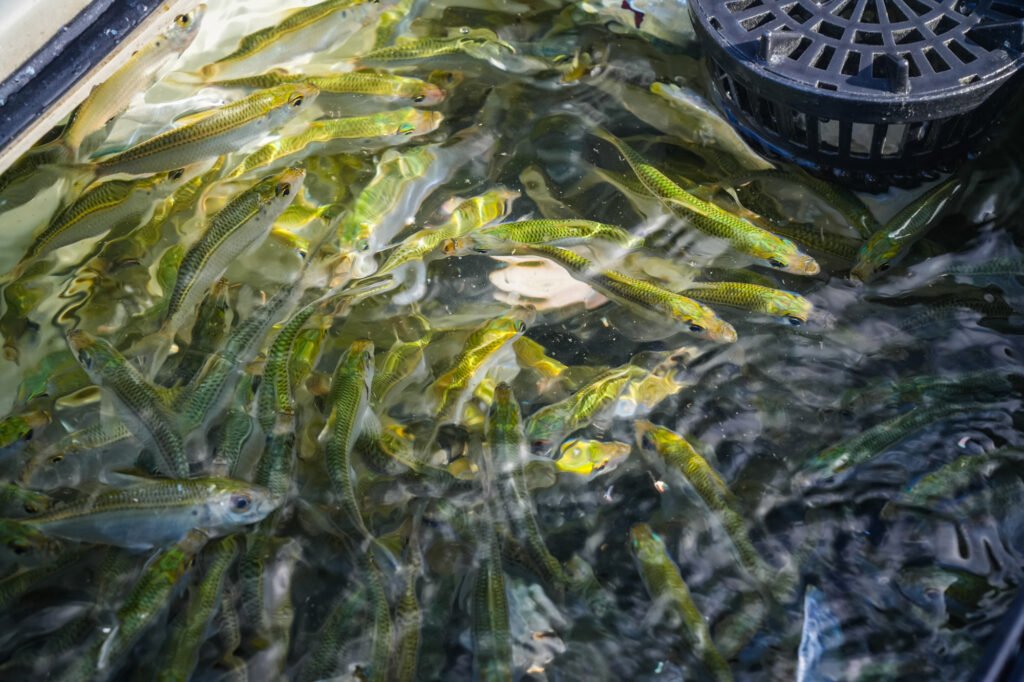
Before pointing the Avenger toward blue water, we wanted live bait.
Live pilchards are one of my favorite tools for mahi because they can completely change the attitude of a school. When mahi follow a hooked fish to the boat, throwing a handful of lively pilchards can turn curious fish into aggressive fish almost instantly.
Pablo with Slam Time Charters in Marathon helped point us toward an area where bait had been showing up. Once we arrived, we looked for flickering bait and diving birds. It did not take long before we found small pilchards breaking the surface with pelicans working over them.
Because the bait was small, I used my Dropout cast net with 3/16-inch mesh. The smaller mesh worked well and helped reduce bait getting gilled or “Christmas treeing” in the net.
After only two or three throws, we had the Avenger’s livewell blacked out.
There is an important lesson here. The water was around 91 degrees, and extremely warm water can be hard on bait. Packing a livewell too tightly can stress pilchards quickly. Take what you realistically need. We knew we could also use dead pilchards for chum if some did not survive, but healthy live bait is always the goal.
With the bait handled and rods ready, it was time to head offshore.
A Glass-Calm Run Offshore From Marathon
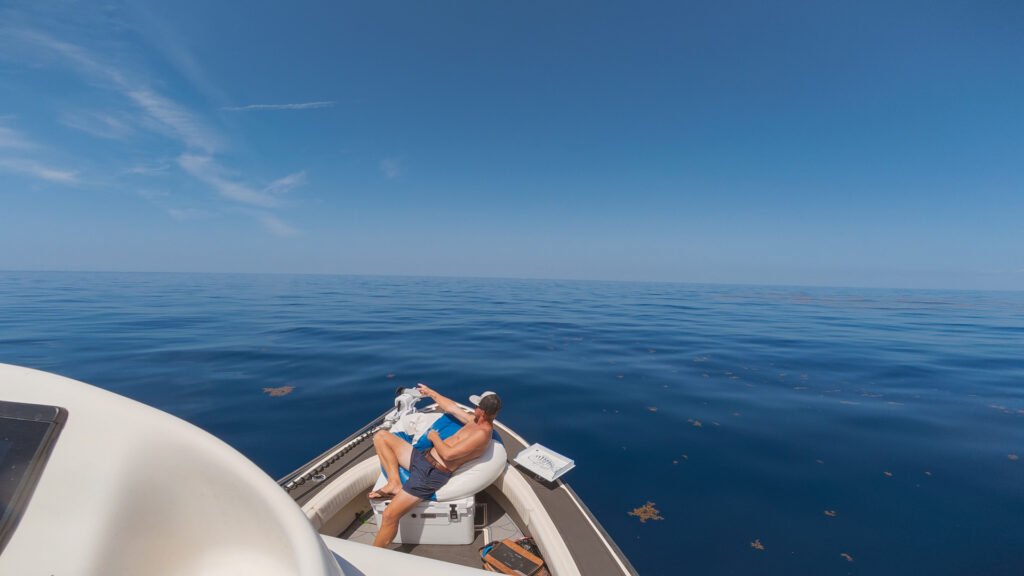
We could not have asked for better weather. The wind was around two miles per hour, and the Atlantic looked almost like glass. The Avenger cruised comfortably around 34 to 35 miles per hour as Marathon faded behind us.
When I run offshore for mahi, I am not simply driving toward a waypoint. I am constantly looking.
Mahi fishing is hunting.
The more attention you pay during the run, the more your odds improve. Some of the best opportunities are not marked on a chart. They are moving signs on the surface, and learning to recognize them is part of consistent mahi fishing.
You are watching water color, current edges, weed lines, birds, flying fish, and anything floating on the surface.
The biggest signs I watch for are sargassum weed lines, pallets, buckets, floating debris, working birds, flying fish being pushed from the water, bait showering, current rips, and visible water-color changes. A tiny floating object can sometimes hold an entire school of mahi.
Frigate birds are one of the classic signs mahi anglers look for, but do not depend on them. We did not see a single frigate bird all day and still found fish because we kept watching the other clues.
When you find promising structure, slow down. Do not automatically run right over it. Look around the boat and consider trolling past it before getting too close.
The Pallet That Changed Our Entire Day
 Our original plan was to head toward the Marathon Hump and look for blackfin tuna along with mahi. We had decided not to get distracted by every object we saw.
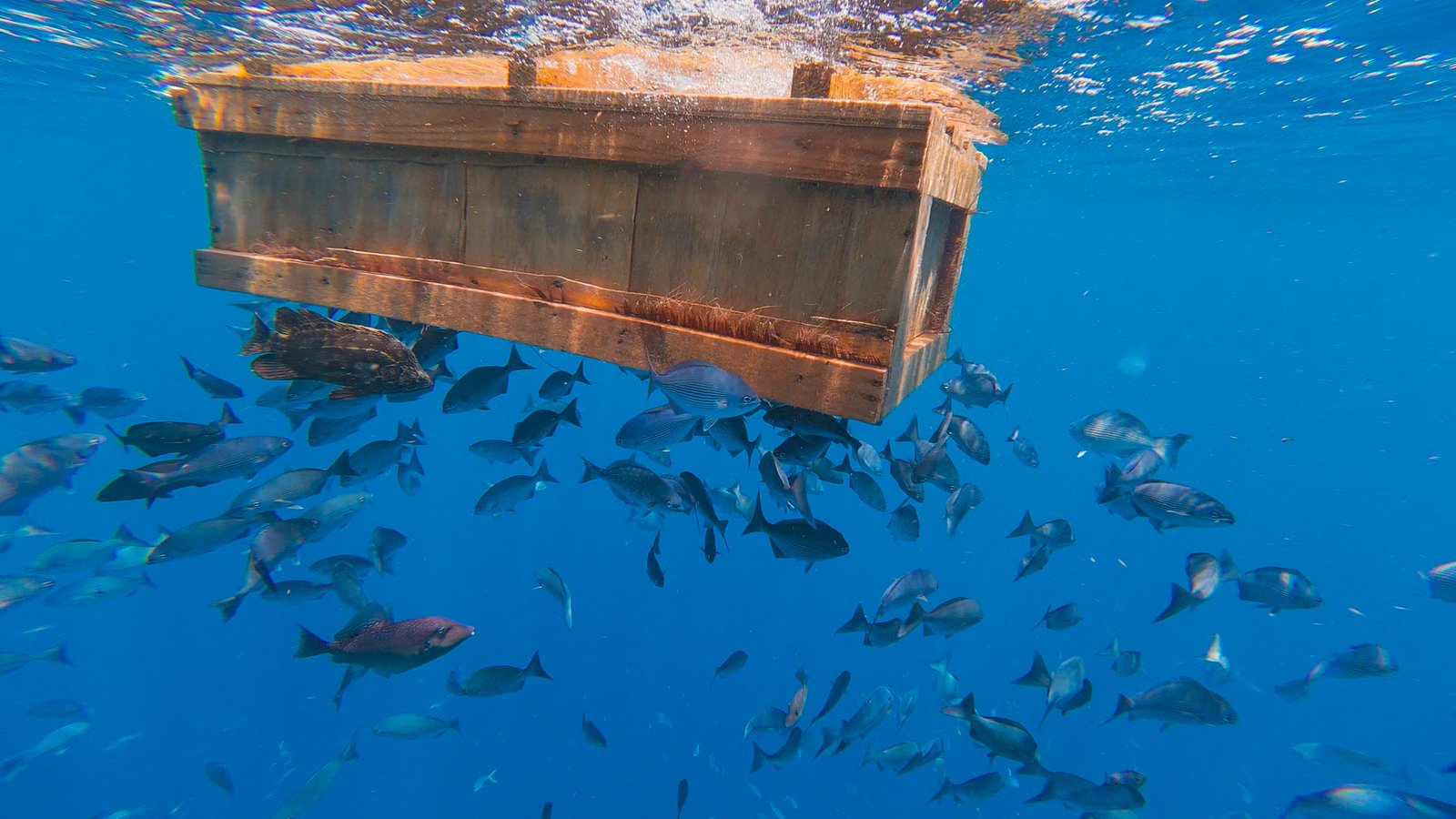
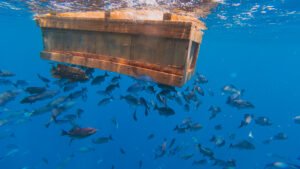
Then, about 18 miles offshore of Marathon, we spotted a floating pallet.
I had already said we were not stopping. We were going straight to the Hump.
But that pallet looked too good.
We spun around to investigate, and almost immediately the ocean showed us why offshore fishermen should never ignore a good floating structure. There were tripletail around the pallet, including a couple of good fish. We saw almaco jack and even a big wahoo.
Then the mahi showed up.
A school of good mahi came charging in, and everything changed within seconds. This is exactly what I mean when I say finding one mahi can turn into complete chaos in about 30 seconds.
How to Keep a School of Mahi Around the Boat
One of the best mahi fishing tips I can give you is not to immediately boat the first hooked fish when other mahi are following it.
When conditions allow, keep that mahi in the water beside the boat for a short time. The other fish will often stay nearby. Once you see the followers, start pitching baits and chumming.
That is where live pilchards shine.
Throw a few around the hooked fish and watch what happens. Mahi that were cautiously following can suddenly lose their minds. Competitive feeding takes over, and multiple anglers can be hooked up at once.
Have another angler standing by with a pitch bait before the first fish reaches the boat.
We used live pilchards, chunks, whole dead ballyhoo, and artificials. A D.O.A.-style bait, small squid presentation, feather jig, or other fast-moving lure can get crushed when mahi are fired up.
I also like whole ballyhoo around floating structure. Smaller jacks and other fish can destroy small pieces of bait. A whole ballyhoo gives you a larger presentation and can help get the bait in front of the fish you actually want.
Once our school fired up, it was game on. In roughly 20 to 25 minutes, we put around 15 or 16 mahi in the boat and lost countless others. At different moments, we had mahi, amberjack, wahoo, and tripletail around us.
Why a Coffin Box or Large Cooler Matters
If you plan to target mahi, have a fish-storage plan before the first fish comes over the rail.
Mahi are energetic and bloody. Once they hit the deck, they can flop everywhere and turn an organized cockpit into a mess quickly.
A large coffin box or oversized cooler makes life much easier. When a legal fish is coming aboard, and you intend to keep it, getting it directly into a properly prepared fish box keeps the cockpit cleaner and helps protect the quality of the meat.
When several anglers are hooked up simultaneously, organization matters even more. You need open deck space, rods out of the way, and a clear system for getting fish secured so the next angler can keep fighting.
My Mahi Spinning Setup
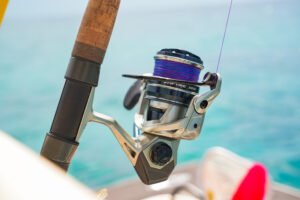 You do not need extremely heavy tackle to have fun mahi fishing, especially with school-size fish.
One setup I used was an Okuma Tesoro 4000 paired with an SRT medium-fast rod. I was fishing 15-pound-test line with a 30-pound fluorocarbon leader.
That medium-light spinning outfit makes mahi incredibly fun. You can cast a pitch bait a long distance, work small artificials effectively, and still have enough power to handle a quality fish.
The biggest thing is to have everything ready before you find the school. Tie leaders, attach hooks, prepare pitch rods, and organize trolling gear at the dock. If four mahi are swimming behind a hooked fish, you do not want two anglers sitting on the cooler tying knots.
Fishing the Marathon Hump
After the pallet bite slowed, we finally continued toward the Marathon Hump.
The Marathon Hump is one of the best-known offshore fishing areas in the Middle Keys. It sits roughly 25 to 27 miles southeast of Marathon and rises dramatically from the surrounding deep water. The combination of bottom topography and Gulf Stream current can concentrate bait and create opportunities for blackfin tuna, mahi, wahoo, billfish, and other pelagic species.
The downside is boat traffic.
It can become frustrating when boats cut across your drift or do not understand how others are fishing the current. The current itself can also be strong. On our day it was roughly three to four knots.
Trying to sit perfectly still and Spot-Lock in that flow is not always the best approach. Instead, understand your drift. Set up so your live bait or lure moves naturally with the current. Watch where your line is going and how surrounding boats are drifting.
We spent some time looking for blackfin tuna but did not connect.
Instead of forcing a bite that was not happening, we went back to hunting.
Mahi Fishing Weed Lines in the Florida Keys
Before reaching the Hump, we had noticed a substantial weed line, so we returned to investigate it.
Sargassum is one of the most important things to understand when learning how to catch mahi in the Florida Keys. It creates a floating ecosystem. Small fish and other marine life use it for shelter, which attracts predators.
Not every weed line holds mahi, but a good weed line deserves attention.
We spotted mahi busting around the weeds and put out popper-style trolling lures and feather jigs. We picked up several more mahi and encountered plenty of almaco jacks.
Later, we saw hundreds of birds working in the distance. When we reached them, small flying fish were being pushed across the surface. We trolled through the activity and picked up a couple more small mahi.
Keep following the life.
That was the pattern throughout our entire day.
What Can You Catch Offshore of Marathon?
Mahi fishing in Marathon may be the target, but offshore Marathon is never a one-species fishery.
Depending on season, depth, and conditions, anglers may encounter mahi-mahi, blackfin tuna, wahoo, sailfish, amberjack, and other offshore species. The Florida Keys are also well known for deep-water swordfish opportunities.
On this trip alone, one floating pallet produced mahi, tripletail, almaco jack, and a wahoo encounter. Later, weed lines and bird activity produced additional mahi and amberjack.
The biggest mistake you can make offshore is becoming so committed to one waypoint that you stop paying attention to what the water is showing you.
If birds are working, investigate them. If a weed line looks alive, work it. If a pallet is covered in bait, give it a pass.
The fish do not know what you wrote on your game plan the night before.
The Ride Back to Marathon
After several hours of running, trolling, casting, and searching, we took time to enjoy where we were. We jumped in the water, explored, and cooled off.
Eventually we pointed the Avenger back toward Marathon. Because conditions were so calm, the ride home was easy. We turned on some music, relaxed, and watched the deep blue water slowly give way to the shallower water closer to the Keys.
Before calling it a day, we spent some time around the shallow-water patch reefs.
By the time we returned to the slip, we had been on the water for a long day. We cleaned the boat, cleaned the fish, and started thinking about the next important question: how were we cooking the mahi?
Fresh Mahi: Blackened, Fried and Grilled
We took some of our fresh mahi to a restaurant and had it prepared three ways: blackened, fried, and grilled.
It was outstanding.
You also do not need as much fish as you may think. Around three pounds of fillets can feed a surprisingly large group when served with sides and prepared several ways. For us, it turned into a feast.
Fresh mahi is mild, versatile, and works with many seasonings and cooking styles. Blackened mahi gives you that spicy crust, fried mahi is hard to beat after a long day on the water, and grilled mahi lets the fish stand on its own.
I may put together a separate mahi recipe with the exact way I like to prepare it because bringing home quality fish is one of the rewards of doing the work offshore.
The Biggest Lessons From Our Marathon Mahi Trip
If I had to boil this trip down to a few lessons, the biggest would be to stay prepared and keep searching.
Have your pitch rods ready. Catch good live bait when it is available. Do not overcrowd the livewell in extremely hot water. Watch birds, weed lines, current edges, and floating debris. When you hook the first mahi, immediately look for followers. Keep a fish in the water when appropriate, throw live chum, and have another angler ready to cast.
Most importantly, do not become obsessed with one predetermined spot.
Our best mahi action did not happen at the Marathon Hump. It happened because we changed our plan for a pallet approximately 18 miles offshore that looked too good to ignore.
That one decision turned into roughly 20 to 25 minutes of nonstop action and around 15 or 16 mahi in the boat, with other species mixed in.
That is mahi fishing.
You hunt until the ocean gives you a clue, and then you capitalize on it.
Mahi Fishing Regulations in the Florida Keys
Always check current regulations before keeping mahi in the Florida Keys because rules can differ between Florida state waters and federal Atlantic waters.
Size limits, daily bag limits, vessel limits, and other requirements can change. Florida Fish and Wildlife Conservation Commission publishes state-water regulations, while NOAA Fisheries and the South Atlantic Fishery Management Council provide federal information.
Do not rely on an old article or social-media post before an offshore trip. Check the rules for the exact waters you plan to fish and make sure everyone aboard understands them before the first fish goes in the box.
Frequently Asked Questions About Mahi Fishing in Marathon, Florida
Is Marathon, Florida good for mahi fishing?
Absolutely. Marathon provides quick access to Atlantic blue water, weed lines, current edges, and offshore structure. It also puts anglers within range of the Marathon Hump. The key is not simply running to one waypoint; successful mahi fishing often comes from finding birds, bait, and floating structure.
What should I look for when searching for mahi?
Look for life. Sargassum, pallets, buckets, floating wood, birds, flying fish, bait showers, and current edges are all worth investigating. A small piece of floating structure can hold baitfish and an entire school of mahi.
What is a good bait for mahi in the Florida Keys?
Live pilchards are excellent, especially for chumming a school beside the boat. Ballyhoo, cut bait, and artificial lures also work well. Keep pitch baits rigged so you can cast immediately when a fish appears.
What tackle do you need for mahi fishing?
Medium-light to medium spinning tackle is ideal for many school-size mahi. On this trip, I used an Okuma Tesoro 4000, SRT medium-fast rod, 15-pound-test line, and 30-pound fluorocarbon leader. Heavier trolling outfits are useful when covering water.
Should you leave a hooked mahi in the water?
When other mahi are following the hooked fish and it can be done safely, keeping that fish beside the boat briefly can help hold the school. Have other anglers ready and use live chum to trigger competitive feeding.
How far offshore is the Marathon Hump?
The Marathon Hump is commonly described as roughly 25 to 27 miles southeast of Marathon. Your actual run depends on your starting point and route. Always use proper navigation equipment and make sure your boat, fuel range, and safety equipment are appropriate for offshore conditions.
Final Thoughts on Mahi Fishing in Marathon
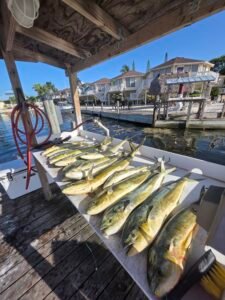
This trip was exactly why I love the Florida Keys.
We went to Marathon for a guys’ trip during lobster season with plans to dive, fish, and enjoy one of the most unique marine environments in Florida. On our mahi day, we started before daylight, loaded the livewell with pilchards, ran offshore in glass-calm conditions, and spent the day hunting blue water.
We did not find our best action because somebody handed us a magic coordinate. We found it by paying attention.
A pallet we almost drove past became the highlight of the trip. Within minutes, mahi were everywhere. We had multiple anglers hooked up, bait flying, and other offshore species circling the same structure.
Then we moved on, fished the Marathon Hump, worked weed lines, followed birds, watched flying fish, and kept exploring.
That is what makes mahi fishing in Marathon, Florida, so much fun. The search is part of the experience.
If you are planning your own Florida Keys mahi fishing trip, prepare your tackle before leaving, bring multiple bait options, keep your eyes open, and be willing to change the plan when the ocean shows you something better.
And if you are looking to fish Tampa Bay with me, visit SaltyScalesCharter.com to book a trip. We target some of the best inshore and nearshore fishing Tampa Bay has to offer, and I would be happy to get you on the water.
If you have questions about mahi fishing, offshore tackle, bait, rigging, or this Marathon trip, leave a comment on the article.
Until next time, I’ll see you on the water.