 Skip to content

How Cold Fronts Change Tampa Bay Fishing
By Capt. Joshua Taylor | Salty Scales Fishing Charters
If you fish Tampa Bay during the fall and winter, there is one weather pattern you need to understand: cold fronts.
One day it can be 80 degrees, calm and humid. Twelve hours later, a north wind is blowing across Tampa Bay, the temperature has dropped, the barometer is climbing, and the fish seem to have disappeared.
But did they really disappear?
Not usually.
They moved, changed their feeding behavior, or simply became less willing to chase a bait.
After more than 30 years of fishing Tampa Bay, I have learned that cold fronts don’t necessarily ruin the fishing. They change the fishing. Understanding what happens before, during and after a front can make the difference between an incredible day and spending six hours wondering where all the fish went.
Fishing Before a Cold Front in Tampa Bay
If I could choose one period to fish around a strong winter front, I would often choose the hours leading up to it.
Ahead of a front, barometric pressure generally begins falling, winds often have a southerly component, cloud cover increases, and Tampa Bay may still be holding relatively warm water.
This can create some incredible feeding windows.
Snook, redfish and trout may become aggressive on the flats and around mangrove shorelines. Mangrove snapper can fire up around rocks and channel edges, while Spanish mackerel, jacks and other predators may attack bait schools throughout the bay.
If there is good moving water at the same time, things can get crazy.
This is when I like having plenty of live bait in the well. Pilchards, threadfin herring and pinfish give me several different presentations depending on what we’re targeting.
For redfish and snook, a lively pilchard freelined along a mangrove edge can be hard to beat. For trout, I’ll work grass flats, potholes and deeper edges. Around structure, we can drop smaller live baits for mangrove snapper or step up to larger pinfish when grouper are around.
The important lesson is this: don’t ignore the day before a cold front just because bad weather is coming.
Some of my best feeding windows occur immediately before the weather deteriorates.
What Happens When the Front Arrives?
Once the front actually reaches Tampa Bay, everything can change quickly.
Wind may switch from south or southwest to west, northwest and eventually north or northeast. Temperatures fall. Waves build. Water gets pushed around the bay, and shallow flats can lose significant water when persistent northerly winds combine with a falling tide.
This is also where safety becomes more important than catching fish.
I’m not interested in proving how tough we are by fishing through dangerous winds, thunderstorms or conditions that make the trip miserable. Sometimes the smartest fishing decision is simply waiting for the weather window.
Once conditions stabilize, however, the challenge becomes figuring out where the fish relocated.
Why Fishing Can Be Tough Immediately After a Cold Front
This is the classic post-front shutdown that Tampa Bay anglers talk about.
You wake up to beautiful blue skies, cooler temperatures and seemingly perfect weather.
Then you go fishing and can’t buy a bite.
After a front passes, barometric pressure is often higher or rapidly rising. Water temperatures may have dropped several degrees, north winds may have displaced water from shallow areas, and baitfish may have moved.
Fish don’t suddenly stop eating altogether, but their metabolism and behavior can change.
Snook are especially sensitive to temperature changes. Rather than sitting on an exposed shallow shoreline, they may move toward deeper water, rivers, canals, docks or protected areas where the temperature is more stable.
Redfish may leave extremely shallow flats and settle into deeper potholes, channel edges and protected shorelines.
Trout can stack into deeper grass, troughs and potholes rather than spreading across an entire flat.
That’s why fishing yesterday’s waypoint isn’t always the answer.
You have to fish the conditions, not just the coordinates.
Where I Look for Fish After a Tampa Bay Cold Front
The first thing I’m looking for is protected water.
A shoreline that blocks a cold north wind can be dramatically more comfortable than an exposed flat. I also pay close attention to deeper pockets of water because even a small depth change can provide a more stable temperature.
Then I watch the sun.
That bright post-front sunshine that fishermen sometimes complain about can actually help us later in the day. Dark bottom, mud, shallow grass and protected shorelines absorb heat. Sometimes the afternoon bite is substantially better than sunrise because the water has had several hours to warm.
After a serious front, I may concentrate on deeper potholes, channel edges, residential docks, river mouths, mangrove shorelines protected from the wind, bridges, rock piles and other structure.
The pattern changes with every front.
That’s what makes Tampa Bay fishing interesting.
Best Baits and Rigs After a Cold Front
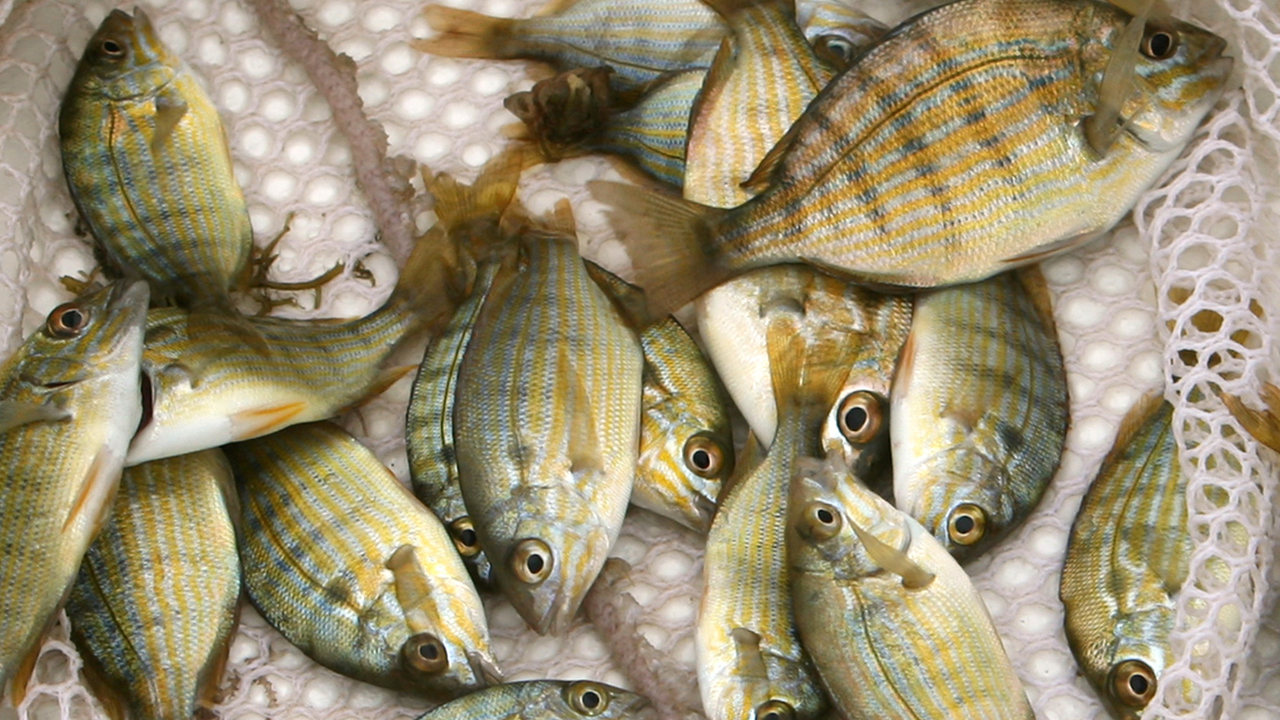 When fish become lethargic, I usually slow everything down.
Live shrimp become extremely valuable during the cooler months. Shrimp naturally match what many Tampa Bay species are already feeding on, and they don’t require a fish to chase them very far.
A shrimp on a 1/8- to 1/4-ounce jig head worked slowly along the bottom can catch trout, redfish, sheepshead, snapper and flounder.
For live pilchards or pinfish, I’ll often use a simple freelined presentation with a 1/0 to 3/0 hook and 20- to 30-pound fluorocarbon leader, depending on the species and structure.
When targeting mangrove snapper around rocks or deeper structure, one of my favorite setups is a light knocker rig. A small hook, roughly 20- to 30-pound leader and just enough weight to reach the bottom keeps the presentation natural.
Salty Scales regularly uses light knocker rigs for Tampa Bay snapper fishing, and our recent offshore trips have shown how effective lighter tackle can be when fish become cautious. Tampa Bay Fishing Charter | Salty Scales
For grouper, obviously we have to step things up. Around serious structure, I’ll move into heavier spinning or conventional tackle with significantly heavier leader.
Rod and Reel Combos for Cold-Front Fishing
For most inshore cold-front fishing, a 7- to 7’6″ medium-light, medium or medium-heavy spinning rod paired with a 3000- to 4000-size reel will handle almost everything we encounter.
I generally like 10- to 20-pound braid with 20- to 30-pound fluorocarbon leader.
That combination gives you enough strength for quality redfish and snook while still allowing a natural presentation to trout and snapper.
You’ll often see Okuma spinning reels and Salty Scales SRT rods aboard my boat. When we’re fishing offshore or dropping big live baits around grouper structure, I’ll step up to larger reels such as the Tesoro and heavier rods capable of stopping a fish before it reaches the rocks. A recent Salty Scales trip used 4000-size spinning tackle for snapper and a much heavier Tesoro 8000 setup for gag grouper, illustrating why I like carrying multiple tackle classes rather than trying to do everything with one rod. Tampa Bay Fishing Charter | Salty Scales
Don’t Forget About the By-Catch
One reason I love Tampa Bay during cold-front season is that you never really know what’s going to eat next.
You might be targeting trout and catch redfish, flounder, ladyfish or jack crevalle.
Drop shrimp around structure and you could encounter mangrove snapper, sheepshead, grunts or grouper.
Nearshore, depending on water temperature and how much bait remains in the area, Spanish mackerel, bluefish and other pelagic fish may also show up.
That’s why I don’t become overly obsessed with catching one particular species.
Sometimes the fish Tampa Bay gives you weren’t the fish you left the dock intending to catch.
When Does the Fishing Rebound After a Cold Front?
There is no exact clock.
A mild front may barely slow the fishing. A powerful front that drops water temperatures significantly and produces strong north winds may affect the bite for several days.
Generally, I’m watching for three things: stabilizing weather, warming water and returning current.
Often the second or third day after a major front can be considerably better than the first.
Sometimes all it takes is a sunny afternoon and a couple degrees of warming for fish to become active again.
We recently experienced an excellent post-front offshore trip where slightly cooler water combined with calm conditions, incoming water and favorable feeding periods. Mangrove snapper, grouper, hogfish and Spanish mackerel all participated. That’s a perfect example of why “post-front” doesn’t automatically mean “bad fishing.” Tampa Bay Fishing Charter | Salty Scales
Cold Fronts Are Part of Tampa Bay Fishing
The best Tampa Bay anglers aren’t necessarily the people with the most GPS numbers.
They’re the anglers who understand how to adapt.
A cold front might move the redfish.
It might push the snook deeper.
It might concentrate trout into potholes.
It might make shrimp more productive than pilchards.
Or it might create a phenomenal feeding window right before it arrives.
After decades of fishing Tampa Bay, that’s still one of the things I enjoy most about this fishery. Every weather change gives us another puzzle to solve.
If you’re planning a Tampa Bay fishing charter during the fall or winter, don’t worry if a cold front is somewhere in the forecast. Sometimes those changing conditions can produce some of the most interesting fishing of the season.
At Salty Scales Fishing Charters, we adjust every trip around the current weather, tides, water temperature, bait movement and what the fish are actually doing that day. Our trips include bait, tackle and fishing licenses, and we offer 4-, 6- and 8-hour Tampa Bay fishing trips as well as offshore options. Tampa Bay Fishing Charter | Salty Scales
Come fish Tampa Bay with Capt. Joshua Taylor and let’s see what the next cold front brings.