 Skip to content
By Capt. Joshua Taylor | Salty Scales Fishing Charters
Fishing Report Summary: A productive November offshore hogfish fishing charter in the Gulf of Mexico delivered hogfish, scamp grouper, red grouper, mangrove snapper, and plenty of action as the afternoon feeding window turned on.
Date: November 9, 2026
Departure: 7:00 AM, Little Manatee River, Ruskin, Florida
Fishing Location: Gulf of Mexico, approximately 15 miles offshore of Egmont Key
Depths: 35 to 75 feet, with the most consistent action around 50 feet
Primary Target: Hogfish
Other Catches: Scamp grouper, red grouper, mangrove snapper, Key West grunts, and porkfish
Boat: 25 foot Avenger Custom
Captain: Joshua Taylor
Anglers: Mary, Megan, and Aiden
November Offshore Fishing Near Tampa Bay
November is one of my favorite times of the year to head offshore from Tampa Bay, especially when hogfish are the primary target. As water temperatures begin transitioning toward winter conditions, the fishing opportunities along the Gulf Coast can be outstanding.
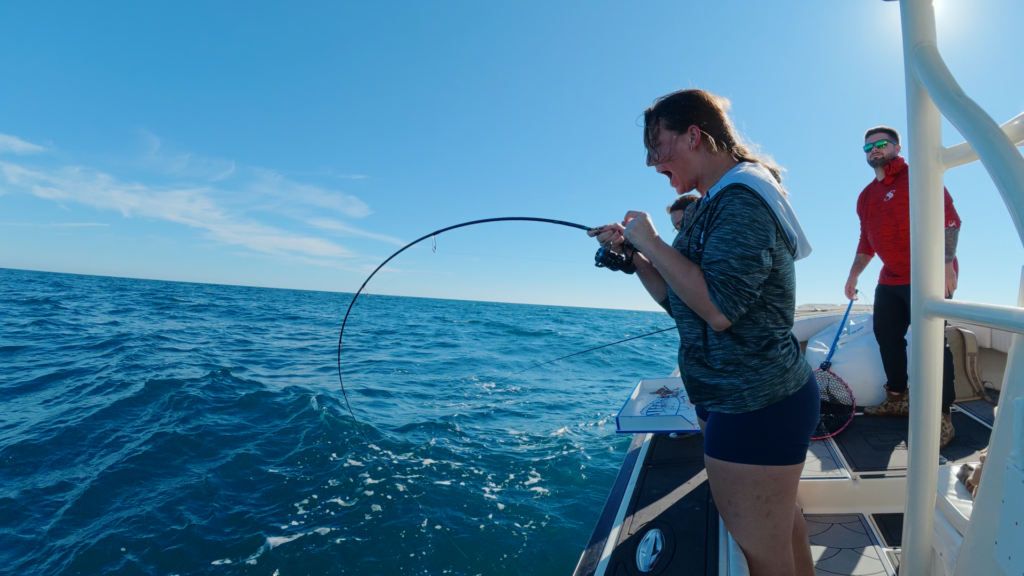
On November 9, I had Mary, Megan, and Aiden joining me for a full day offshore aboard my 25-foot Avenger Custom. Our mission was pretty straightforward. We wanted to target hogfish, put some quality fish in the cooler, and enjoy everything the Gulf of Mexico had to offer.
Mary and Megan are mother and daughter, and both were ready to spend the day fishing. We weren’t looking for a quick trip where we caught a few fish and headed home. We wanted to work different areas, try different depths, and put together a productive day on the water.
With a cold front approaching later in the week, I knew we needed to take advantage of the opportunity in front of us.
As it turned out, the hogfish bite would get better as the day progressed, and we would encounter everything from beautiful grouper to aggressive sharks and even a species of fish I had never personally caught.
By the time we headed home, our Yeti cooler was so full of fish that getting the lid closed was a challenge.
November 9, 2026: Weather, Moon Phase, Tides, and Solunar Conditions
I always like documenting the conditions surrounding a productive fishing trip. Understanding how the moon, tides, water temperature, wind, and feeding periods line up with actual fish activity gives me valuable information to compare against future trips.
November 9 provided a particularly interesting combination of conditions.
Historical Fishing Conditions
| Condition | November 9, 2026 |
|---|---|
| Moon phase | New moon, approximately 0% illumination |
| Exact new moon | 2:02 AM EST |
| Sunrise | Approximately 6:47 AM |
| Sunset | Approximately 5:41 PM |
| Moonrise | Approximately 7:08 AM |
| Moonset | Approximately 5:45 PM |
| Daytime major feeding period | 11:27 AM to 1:27 PM |
| Morning minor feeding period | 6:38 AM to 7:38 AM |
| Tampa air temperature | 64°F low, 81°F high |
| Nearshore surface water temperature | Approximately 76°F to 78°F |
| Wind conditions | Breezy and choppy early, becoming much calmer around 11 AM |
| Egmont entrance wave heights | Approximately 1.3 to 1.6 feet in the morning, decreasing through the afternoon |
| Weather pattern | High pressure ahead of an approaching cold front |
The water temperature and wave observations were recorded near Egmont Channel Entrance, not directly over our offshore fishing spots. They provide useful regional reference conditions rather than exact readings at every reef.
Egmont Key Tide Times
The following are the predicted tides for Egmont Key, Egmont Channel, on November 9.
| Time | Tide | Height |
|---|---|---|
| 5:35 AM | Low | -0.3 feet |
| 1:11 PM | High | 1.4 feet |
| 4:26 PM | Low | 1.2 feet |
| 10:35 PM | High | 2.3 fee |
All times are Eastern Standard Time. Heights are relative to mean lower low water.
Our offshore fishing day took place during the morning rising tide and around the afternoon high tide. Although offshore bottom fishing isn’t always influenced by tides in the same way as fishing the flats inside Tampa Bay, water movement is still something I pay attention to.
How the Major Feeding Period Affected Our Hogfish Bite
One of the most interesting observations from this trip was how closely our fishing success lined up with the major solunar period.
The predicted daytime major feeding window was approximately 11:27 AM to 1:27 PM, centered around 12:27 PM.
We caught fish before that period, including some nice grouper and smaller hogfish, but the bite was not especially aggressive.
Once we approached the major feeding period, the difference was noticeable.
We started catching two or three hogfish on individual stops, along with plenty of other bottom fish.
I don’t believe solunar tables guarantee a good fishing trip. There are too many other factors involved, including current, water clarity, fishing pressure, and weather. However, I have experienced enough productive feeding periods over the years to believe they’re worth paying attention to.
On November 9, the major feeding window certainly matched what we were experiencing on the bottom.
Starting Our Fishing Trip in the Little Manatee River
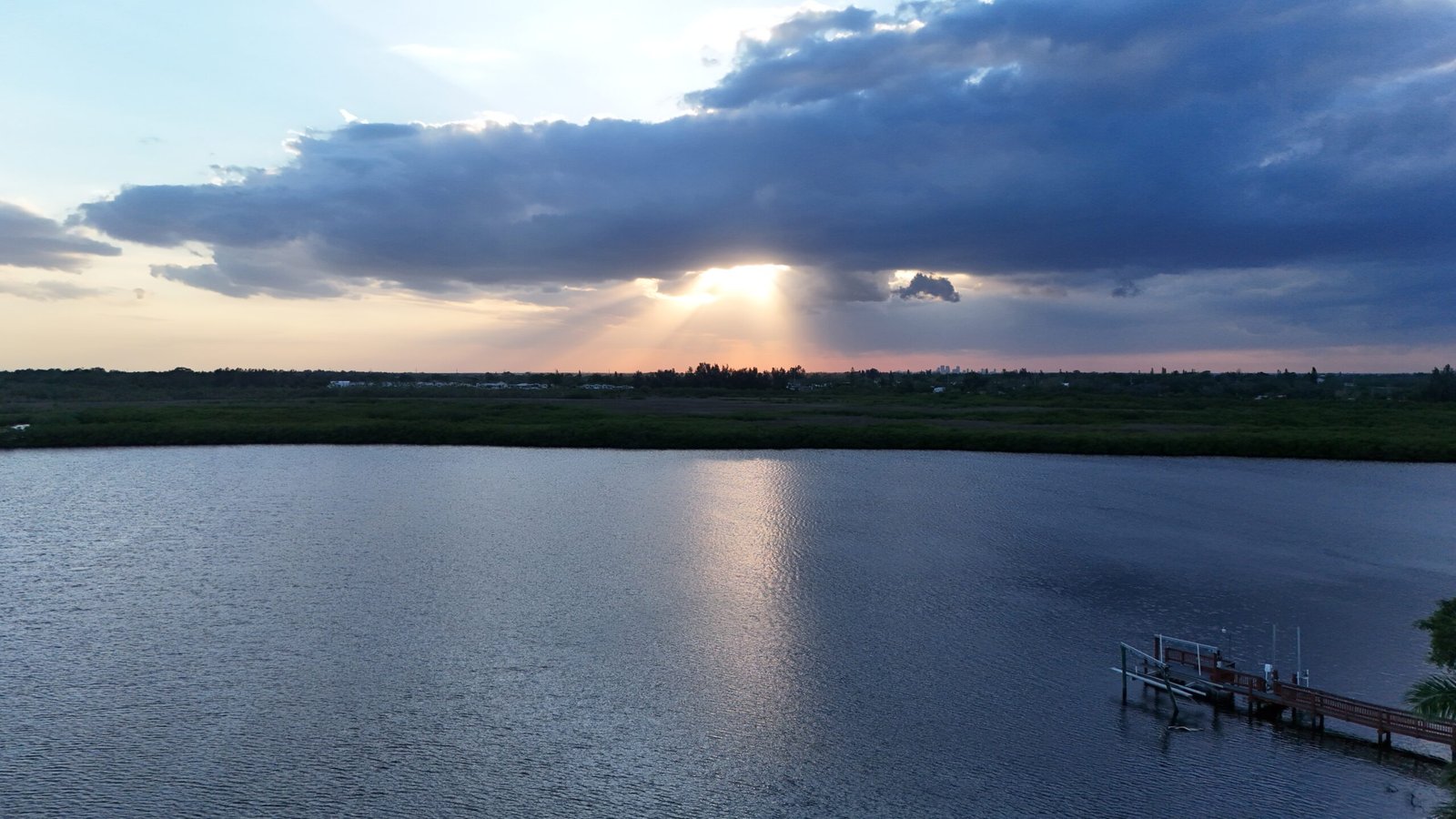
We departed the dock in the Little Manatee River at 7:00 AM.Before heading offshore, we needed to make sure we had plenty of bait.
We had already picked up both frozen shrimp and live shrimp. Shrimp is one of my favorite baits for hogfish because of how consistently it produces bites along rocky bottom and ledges.
However, I also wanted live bait available in case we encountered grouper, mangrove snapper, or other fish that might prefer a live offering.
Our first stop was a nearby pier where I could throw the cast net.
For this, I used my 10-foot dropout cast net with 3/16 inch mesh and 1.5 pounds of lead per foot.
This net has become one of my favorite tools for collecting bait.
After throwing the net, we loaded approximately 100 pilchards and threadfin herring into the livewell.
Between those baits, our frozen shrimp, and the live shrimp, I felt confident we had more than enough to cover the different fishing opportunities we might encounter.
With the bait secured, we pointed the bow toward Egmont Key and started making our way into the Gulf of Mexico.
Heading Offshore Toward Our First Hogfish Spot
Our first fishing location was approximately 15 miles beyond Egmont Key.
The offshore run aboard the Avenger Custom took about an hour, and the ride out was certainly rougher than the ride home would be.
The wind was blowing pretty well during the first part of the morning. We had some chop to contend with, but the forecast suggested conditions would improve as the day progressed.
Fortunately, that’s exactly what happened.
By approximately 11:00 AM, the wind started laying down, and the Gulf became increasingly comfortable.
This was particularly important because my plan involved covering water.
When I’m targeting hogfish, I don’t always want to anchor on one location for the entire day. Sometimes the better approach is to fish several pieces of structure, catch the active fish, and keep moving.
That was the strategy we followed.
Breaking in Custom RainShadow Fishing Rods
One thing I was especially excited about on this trip was getting to try out some brand new custom fishing rods.
A custom rod builder named Stephen had recently built me several beautiful rods using RainShadow blanks.
These rods were something special.
They featured an all-purple design, matching purple Fuji guides, purple Fuji reel seats, and some beautiful exotic cork.
The attention to detail was impressive, and I couldn’t wait to put them to work.
There’s something satisfying about fishing equipment that’s been built specifically with performance in mind, especially when it also looks as good as these rods did.
Of course, a new fishing rod isn’t officially broken in until you put a good bend in it.
Our goal was to make that happen with some healthy Gulf of Mexico hogfish.
The Rods, Reels, and Hogfish Rigs We Used
For this trip, I brought several combinations of Okuma spinning and baitcasting equipment.
Our primary reel selections included:
- Okuma Cedros 4000 spinning reels
- Okuma Tesoro 4000 spinning reels
- Additional Okuma baitcasting reels
- Custom RainShadow rods
The majority of our fishing was done using knocker rigs.
My preferred rig for the conditions consisted of a 2-ounce sinker, 20-pound fluorocarbon leader, and a 1/0 hook.
I also added a few beads to help separate the bait from the sinker.
This arrangement helps the shrimp sit in a position where a hogfish can approach and take the bait without having the weight resting directly against the hook.
The 2-ounce sinker also allowed us to maintain contact with the bottom without unnecessarily overpowering the presentation.
We had a few Hog Ball jigs tied onto the Okuma gear as well, giving us another option whenever we wanted to change our approach.
First Stop Produces Scamp Grouper and Hogfish
Once we arrived at our first location, we got positioned over the structure and started sending shrimp to the bottom.
We were still well ahead of the major feeding period, so I wasn’t necessarily expecting the fish to be fired up right away.
Fortunately, it didn’t take very long to get our first bites.
One of the first quality fish to come aboard was a beautiful little scamp grouper.
Scamp are always a welcome sight, especially when you’re fishing relatively shallow Gulf structure.
They are one of my favorite grouper species to catch, and their distinct appearance makes them easy to appreciate.
As we continued fishing, we started picking up some smaller hogfish along with plenty of Key West grunts.
The first location was productive enough to keep us interested, but I knew there were other ledges that could potentially hold better concentrations of hogfish.
Rather than spending the entire morning in one place, we started moving.
Fishing Multiple Ledges Between 35 and 75 Feet
One of the biggest lessons from this trip was the importance of exploring different depths.
During November, I like to target hogfish in approximately 35 to 75 feet of water along the Gulf Coast.
That doesn’t mean every reef within that depth range is going to hold fish.
Structure quality, current, bait availability, and fishing pressure all make a difference.
Our approach was to start in deeper water and gradually work our way shallower throughout the day.
We jumped between several small ledges and rocky areas, fishing each location long enough to determine whether it was worth staying.
Most of our stops produced somewhere between three and ten fish.
Some locations held smaller hogfish. Others produced red grouper, mangrove snapper, and Key West grunts.
This is one of the things I enjoy most about offshore bottom fishing.
You never know exactly what’s going to bite next.
A shrimp sitting on the bottom could attract a hogfish, grouper, snapper, or something completely unexpected.
By covering multiple pieces of structure, we were able to keep the rods bent while also learning which depths were producing the most consistent action.
Why 50 Feet Was Our Most Productive Depth
Although we encountered fish throughout our depth range, the fishing around 50 feet was particularly good.
Several locations in this range produced steady bites, and it became one of our most productive areas of the day.
This is valuable information for anyone planning a November hogfish fishing trip offshore of Tampa Bay.
You don’t necessarily have to travel into extremely deep water to encounter quality fish.
There are plenty of opportunities on natural bottom, rocky ledges, and scattered hard structure closer to shore.
Finding the right habitat is often more important than simply running farther offshore.
For this trip, that 50-foot range offered an excellent combination of hogfish, grouper, and other bottom species.
The Hogfish Bite Turns On During the Major Feed
As the morning progressed, we continued catching fish, but it wasn’t until we reached the major feeding period that things really started getting interesting.
The bite noticeably improved.
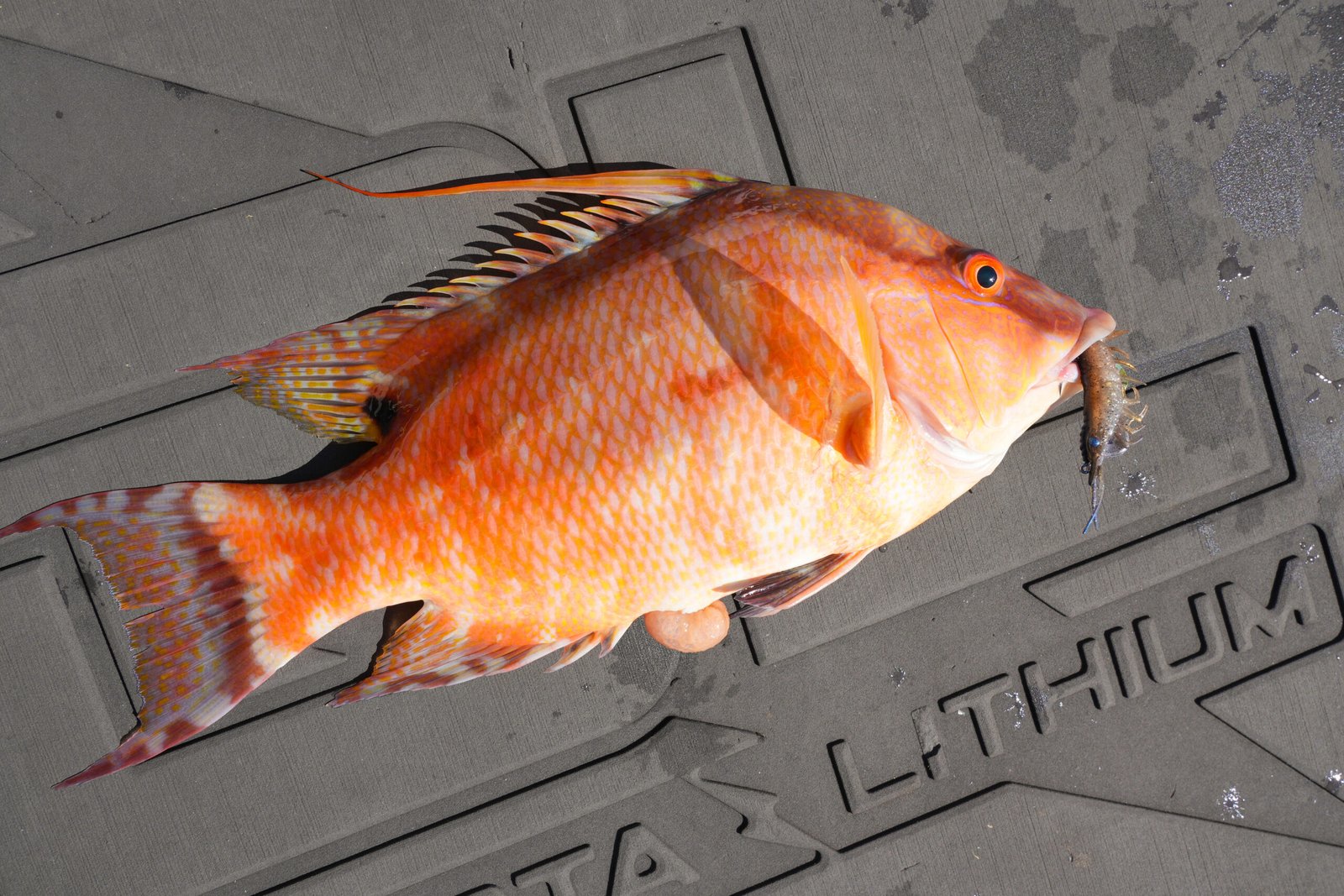
Instead of picking up one hogfish here and there, we began catching two or three hogfish at some of our stops.
It was exactly the kind of action we had hoped for.
Our rods were constantly bending, and the cooler was steadily filling.
Interestingly, the frozen shrimp seemed to outperform the live shrimp.
That’s something I’ve noticed on other hogfish trips as well.
Sometimes hogfish show a stronger preference for frozen shrimp, and other times live shrimp produce better results.
I suspect the scent released from thawed shrimp can play a role, particularly when fish are feeding close to the bottom.
Whatever the reason, the frozen shrimp was getting plenty of attention on November 9.
It’s a good reminder that you don’t always need the most expensive or complicated bait to catch quality offshore fish.
Sometimes a simple piece of shrimp on the right rig is all it takes.
Mary and Megan Put in a Full Day of Fishing
One thing I have to mention is just how hard Mary and Megan fished throughout the day.
Both of them spent almost the entire trip with rods in their hands, taking very few breaks.
Mary, who is Megan’s mother, was especially determined to keep catching fish.
The goal was to go home with plenty of fresh seafood, and they certainly put in the effort to make that happen.
Throughout the day, they caught red grouper, Key West grunts, and some of their very first hogfish using hook and line.
Catching a hogfish is always a special experience.
Unlike many reef fish, hogfish aren’t something you typically encounter in huge numbers at every offshore location.
They’re a prized target, and catching your first one on rod and reel is a memorable accomplishment.
Seeing both Mary and Megan accomplish that goal made the trip even better.
As a fishing charter captain, I enjoy catching fish myself, but watching clients experience a new species for the first time is often the most rewarding part of the day.
The Sharks Were Relentless Around Our Hogfish
One challenge we faced throughout the trip was the number of large sharks hanging around some of the fishing locations.
Sandbar sharks and bull sharks have been particularly noticeable during my offshore trips this year.
One thing I’ve observed is how quickly some of these sharks seem to respond when we hook a hogfish.
We can catch several other species without drawing much attention, but sometimes, as soon as a hogfish gets hooked, a shark suddenly appears.
Whether that’s related to the movement of the fish, its struggle, or something else, it’s an interesting pattern I’ve encountered repeatedly.
Unfortunately, when a large shark decides to take your fish, there’s often not much time to react.
You have to get that hogfish off the bottom and into the boat as efficiently as possible.
If you take too long, there’s a good chance a shark will grab it.
A few of those encounters resulted in lost fish and broken lines.
It’s frustrating to hook a quality hogfish only to watch it disappear before reaching the boat, but it’s also part of fishing in an environment filled with large predators.
Megan Catches an Incredible Porkfish
One of the most unusual catches of the entire trip belonged to Megan.
She hooked a porkfish, a species I had never personally caught before.
If you’ve never seen a porkfish, it’s an incredibly beautiful fish.
Its yellow coloration and contrasting dark markings make it look like something you’d expect to see swimming around a tropical aquarium.
It’s certainly not something we encounter on a regular basis during our offshore fishing charters.
What made this particular catch even more memorable was what happened while Megan was bringing it toward the boat.
A shark suddenly grabbed the fish.
For a moment, it looked like we were going to lose it.
But apparently the shark didn’t have a secure hold, because Megan was able to pull the fish free as the shark adjusted its grip.
Somehow, she managed to bring that beautiful porkfish all the way into the boat.
It was one of those unusual moments that everyone remembers long after a fishing trip is over.
After spending more than 30 years fishing Tampa Bay and the surrounding Gulf waters, I still appreciate encountering species I haven’t personally caught before.
That’s part of what makes offshore fishing so interesting.
Aiden Lands a Beautiful Male Hogfish
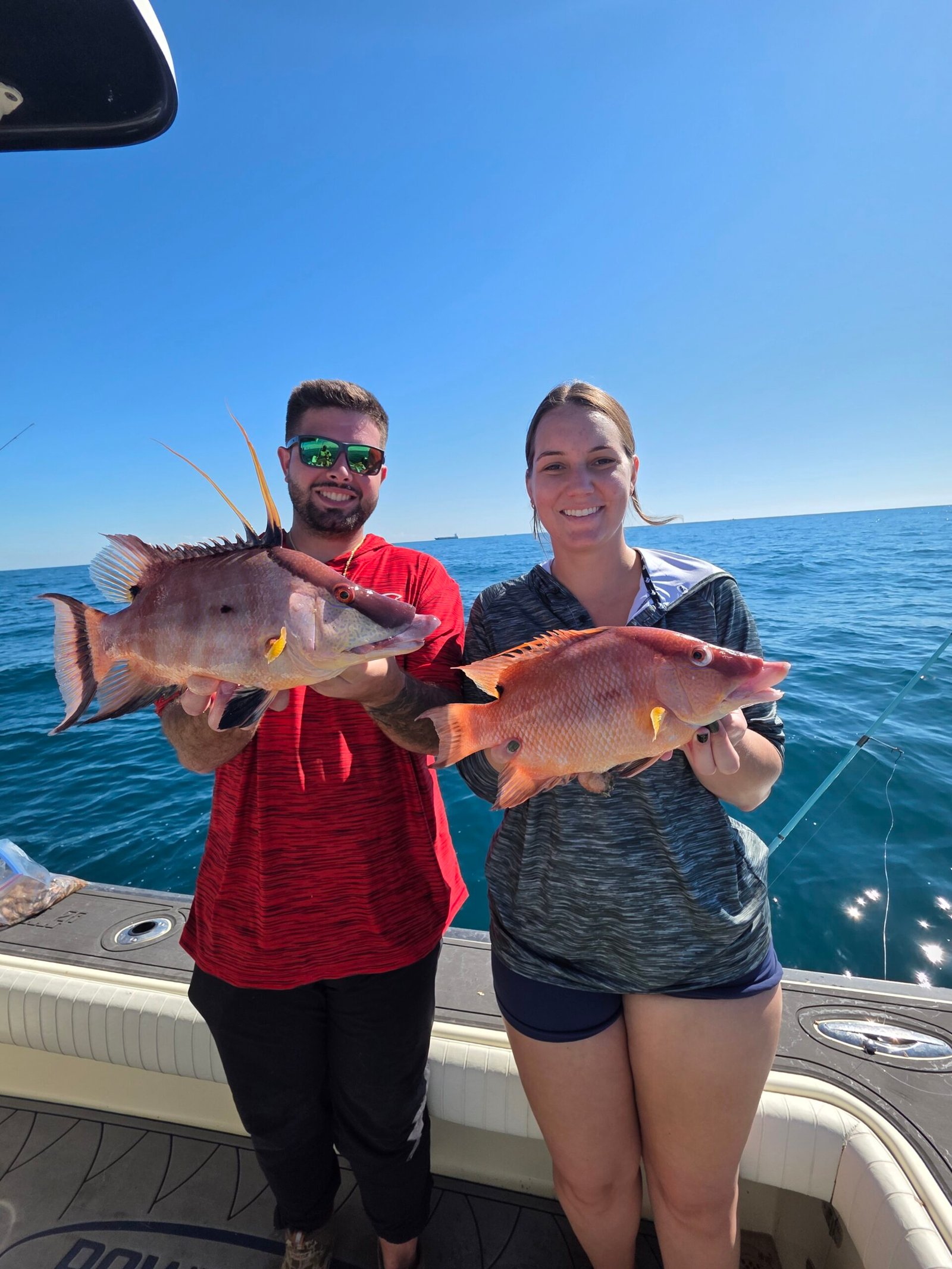 Another highlight came toward the end of the trip when Aiden managed to catch a nice male hogfish.
Most of the hogfish we encountered throughout the day appeared to be females.
Female hogfish can be beautiful, but the mature males have an especially distinctive appearance.
Their coloration, head shape, and overall profile make them one of the most recognizable reef fish in the Gulf of Mexico.
Aiden’s male hogfish was a great addition to the day’s catch and another quality fish headed home for dinner.
It’s always satisfying when everyone aboard contributes to the cooler, especially when the main target is a species as desirable as hogfish.
Losing a Beautiful Scamp Grouper at the Surface
Not every fish made it into the boat.
One of my more disappointing moments involved a large scamp grouper that I hooked in approximately 50 feet of water.
I fought the fish all the way toward the surface.
As it came into view, I could see that it was a beautiful scamp, probably somewhere around 17 to 18 inches.
For the shallow water we were fishing, that was a particularly impressive fish.
Unfortunately, right at the surface, the hook came free.
Just like that, the scamp was gone.
It was disappointing because I would have loved to get a better look at it and measure it.
At the same time, encountering a scamp of that size in 50 feet of water was encouraging.
It showed that the structure we were fishing was holding more than just the usual smaller bottom fish.
Sometimes even the ones you lose can teach you something about an area.
What Can You Catch on an Offshore Hogfish Fishing Charter?
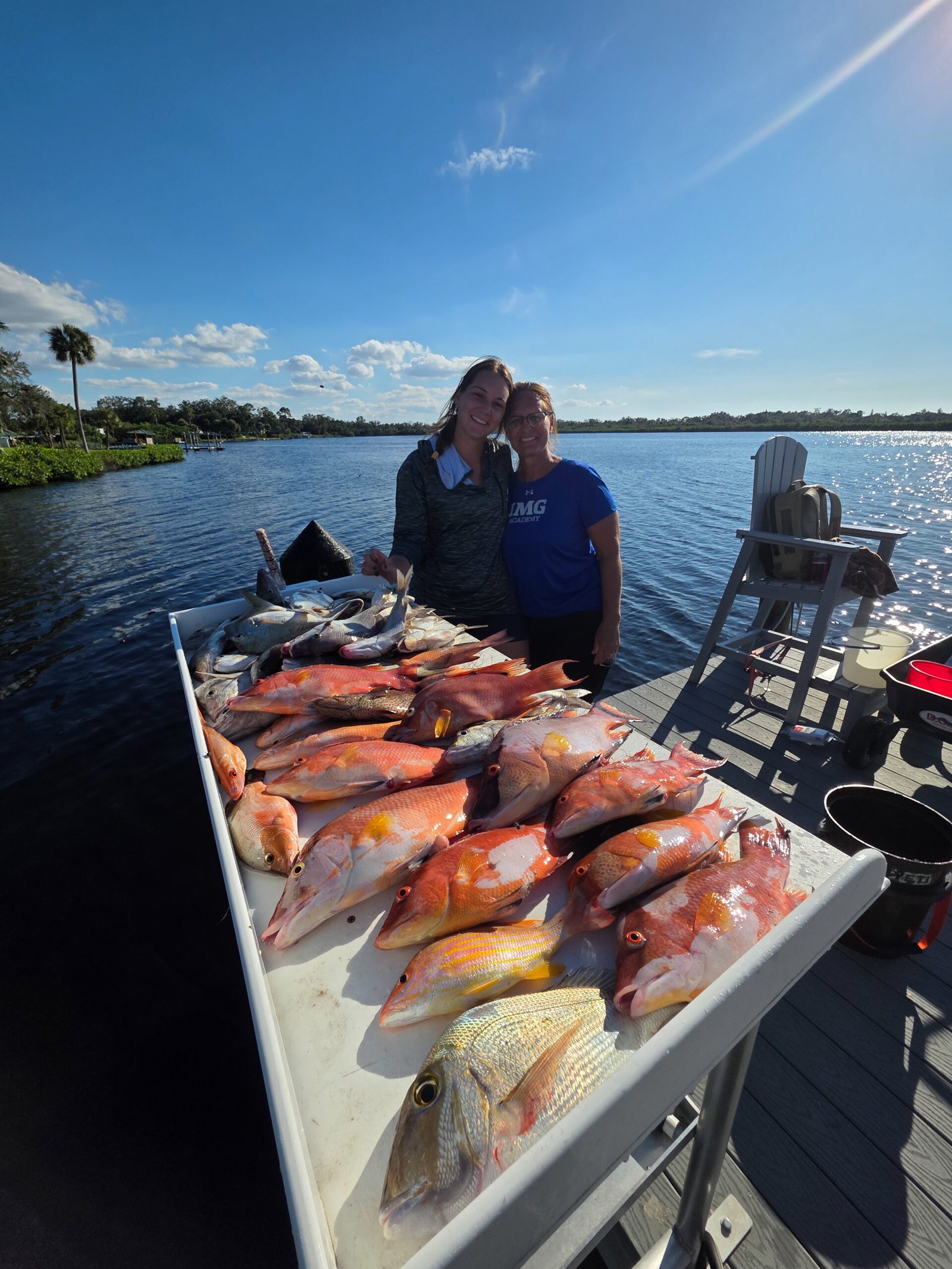 One of the questions I frequently get from customers looking to book a Tampa Bay offshore hogfish fishing charter is whether they’ll catch anything besides hogfish.
The answer is absolutely.
When you’re using shrimp over natural bottom and rocky ledges in the Gulf of Mexico, there’s a wide variety of species that may bite.
Some of the most common include Key West grunts, red grouper, gag grouper, scamp grouper, lane snapper, mangrove snapper, and triggerfish.
Key West grunts are particularly abundant.
On many of my hogfish charters, catching 50 to 200 grunts throughout the day isn’t unusual, depending on the locations and fishing conditions.
They’re aggressive, they love shrimp, and they can keep anglers entertained between the more desirable bites.
Some people overlook grunts because they aren’t particularly large fish, but they’re excellent table fare.
They have mild white meat and can make a great fish dinner when properly cleaned and prepared.
For families and groups who simply want to catch fish throughout the day, this kind of action is one of the advantages of targeting hogfish with shrimp.
You can have a productive day even when the hogfish themselves aren’t feeding consistently.
Of course, we always follow applicable harvest regulations, seasons, and size limits for the species we’re targeting.
Why November Is a Great Time for Offshore Hogfish Fishing
November marks an important seasonal transition in the Gulf of Mexico.
The arrival of periodic cold fronts begins changing the conditions we’ve been experiencing throughout the warmer months.
Water temperatures gradually decline, weather windows become increasingly important, and the areas holding active fish can shift.
For hogfish anglers, this creates some excellent opportunities.
When the weather allows, I like to explore rocky bottom and natural ledges in that 35 to 75 foot range.
This trip reinforced several important lessons.
First, you don’t have to immediately run to the deepest water available.
Second, moving between smaller areas of structure can be more productive than sitting in one spot and waiting for the fish to turn on.
Third, simple shrimp presentations remain incredibly effective.
Finally, paying attention to feeding periods can help explain why an area suddenly becomes more productive after producing only moderate action earlier in the day.
The new moon on November 9 was another interesting part of the equation.
New moon periods can produce stronger tidal ranges, but the influence on offshore bottom fishing depends on much more than the moon alone.
In our case, the strongest hogfish activity occurred around the predicted major feeding window, making it a trip worth remembering when planning future November charters.
A Packed Yeti Cooler and a Beautiful Ride Back to Ruskin
After spending a large portion of the day fishing, we finally reached the point where we had more than accomplished our goals.
The Yeti cooler was absolutely loaded with fish.
In fact, getting the lid closed was becoming a challenge.
Mary, Megan, and Aiden had worked hard throughout the day, and their efforts had paid off.
We had enjoyed consistent bottom fishing action, caught some beautiful hogfish, encountered multiple grouper species, and experienced a few surprises along the way.
With plenty of fresh fish headed home for dinner, it was time to call it a day.
By this point, the weather had changed significantly from what we experienced during the morning.
The wind had calmed, the Gulf was beautiful, and the ride back toward Egmont Key and the Little Manatee River was exceptionally smooth.
Those are the kinds of conditions every offshore captain appreciates after spending a full day on the water.
We couldn’t have asked for a better finish.
Final Thoughts: November 9 Offshore Hogfish Fishing Report
Looking back on November 9, this was an excellent example of why I enjoy targeting hogfish offshore of Tampa Bay.
The trip started with some wind and a bite that was steady but not particularly aggressive.
As the morning progressed, we moved between different depths, explored multiple pieces of natural structure, and continued putting fish in the boat.
When the major feeding period arrived, the hogfish bite noticeably improved.
Our most productive locations were around 50 feet of water; frozen shrimp seemed to outperform live shrimp, and the simple 2 ounce knocker rig continued proving its effectiveness.
We also encountered plenty of aggressive sharks, caught an unusual porkfish, landed some nice hogfish, and lost one memorable scamp grouper at the surface.
Most importantly, Mary, Megan, and Aiden had a great day of fishing and went home with a cooler full of fresh seafood.
For me, that’s what makes a successful fishing charter.
It’s not always about catching the biggest fish or traveling the farthest offshore.
It’s about making the most of the conditions, finding productive water, and giving everyone aboard an experience they’ll remember.
And on November 9, that’s exactly what we accomplished.
Book a Tampa Bay Offshore Hogfish Fishing Charter
If you’ve been wanting to catch hogfish on hook and line, November and the cooler months can offer some excellent opportunities in the Gulf of Mexico.
At Salty Scales Fishing Charters, we offer offshore and nearshore fishing trips departing from the Little Manatee River in Ruskin, Florida.
We target hogfish, mangrove snapper, grouper, and a variety of other Gulf Coast species depending on conditions and seasonal regulations.
Whether you’re an experienced angler or looking to catch your first hogfish, I’ll work to put together a trip suited to your group and the conditions.
Book your next fishing adventure with Capt. Joshua Taylor at “SaltyScalesCharter.com” (https://saltyscalescharter.com/). Checkout this video of the trip, it shows a small window of fun: