 Skip to content

Hogfish Charter Tampa Bay: How We Catch Hogfish on Hook and Line
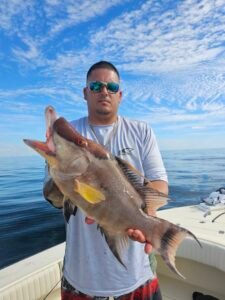 Hogfish have quickly become one of my favorite fish to target offshore of Tampa Bay.
They’re beautiful, they fight surprisingly hard, they’re incredibly unique, and, perhaps best of all, they’re among the finest-eating fish you can bring back to the dock.
For years, most Florida anglers associated hogfish with scuba diving and spearfishing. Seeing somebody consistently catch hogfish with a rod and reel wasn’t nearly as common. Over roughly the last six to ten years, however, targeting hogfish on hook and line has become increasingly popular along Florida’s Gulf Coast.
And once you catch your first one, you’ll understand why.
Here around Tampa Bay, November, December, and January are some of my favorite months to schedule a hogfish fishing charter. Once our cold fronts begin to arrive and the Gulf cools down, I regularly find hogfish in shallower water, where we can target them with light spinning tackle, shrimp, small crabs, and bottom presentations.
It’s a completely different style of offshore fishing—and it’s a blast.
If you’ve never caught a hogfish on rod and reel, here’s what you can expect when you book a Tampa Bay hogfish charter with Salty Scales Fishing Charters.
What Exactly Is a Hogfish?
Here’s something that surprises a lot of anglers:
A hogfish isn’t actually a snapper.
You’ll frequently hear people call them “hog snapper,” but hogfish, Lachnolaimus maximus, are members of the wrasse family.
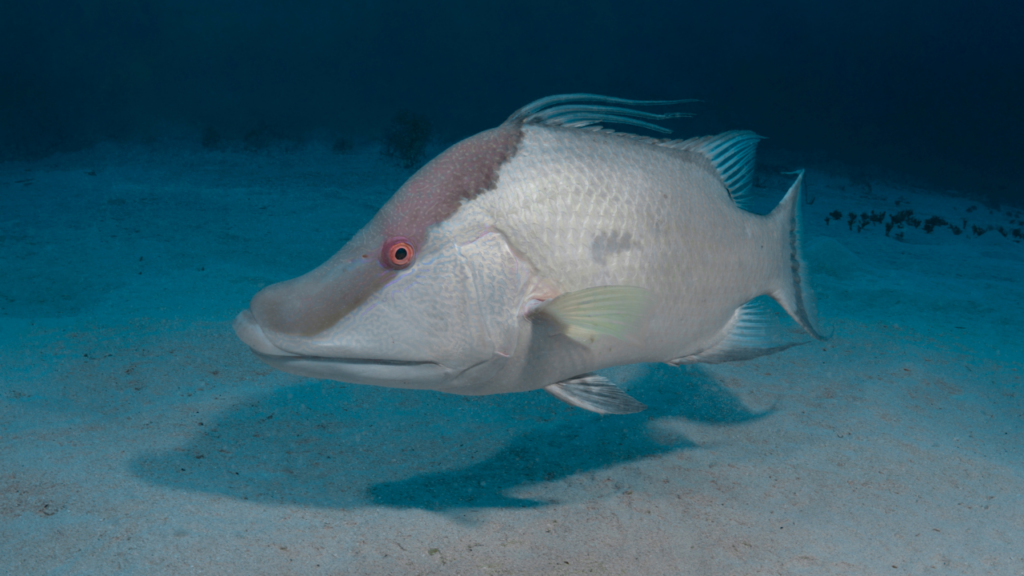
The name hogfish comes from one of their most recognizable features: that long, pig-like snout.
Watch a hogfish underwater, and you’ll understand the name immediately. Instead of spending all day chasing schools of baitfish through the water column, hogfish spend a considerable amount of time with their nose toward the bottom, searching through sand, rubble, and hard-bottom areas for food.
They almost look like an underwater hog rooting around for dinner.
Their diet consists largely of bottom-dwelling prey such as shrimp, crabs, mollusks, sea urchins, and other small invertebrates.
Understanding that behavior is extremely important when you’re trying to catch them with a fishing rod.
If your bait isn’t down where the hogfish are feeding, you’re probably not going to catch many hogfish.
Hogfish Can Actually Change Sex
Hogfish have another fascinating characteristic that most anglers don’t know about.
They’re protogynous hermaphrodites.
In simple terms, hogfish generally begin life as females, and some transition into males as they mature. Large dominant males can become dramatically different in appearance, developing a more pronounced forehead, elongated dorsal-fin rays, and striking coloration.
Florida Museum researchers also describe hogfish as protogynous hermaphrodites, with larger females capable of transforming into functional males.
Once you’ve seen a big mature male hogfish coming toward the surface in clear Gulf water, you don’t forget it.
They’re absolutely beautiful fish.
Hogfish Can Change Color, Too
Something else you’ll notice when catching hogfish is how dramatically their appearance can change.
A hogfish may look incredibly vivid underwater and then become much lighter after being hooked or brought aboard.
Their ability to alter coloration helps them visually blend with their surroundings, and watching those colors change during a fight is one of the coolest parts of catching them in clear water.
As that fish begins pinwheeling toward the surface and its colors become visible below the boat, everybody starts looking over the side.
Then it finally breaks the surface.
For somebody who has never seen a hogfish before, the reaction is usually the same:
“What is that?”
They’re that impressive.
Where Do We Find Hogfish Offshore of Tampa Bay?
Finding the right bottom is one of the biggest parts of successful hogfish fishing near Tampa Bay.
I generally look for areas containing a combination of:
- Natural hard bottom
- Rocky ledges
- Reef structure
- Broken bottom
- Sandy patches adjacent to structure
- Wrecks and other suitable habitat
That mixture of hard bottom and sand is important because it gives hogfish access to the crustaceans and other small organisms they’re constantly searching for.
You don’t necessarily need a giant artificial reef or huge ledge.
Sometimes relatively subtle natural bottom can hold an impressive number of fish.
The trick is finding the right area and then moving until you make contact.
On a typical hogfish charter, we might stop on several different pieces of natural bottom before finding the group we’re looking for.
Once we do, things can change quickly.
Best Time for Hogfish Charter Tampa Bay
For my charter operation, some of my favorite months to target hogfish are:
November
December
January
This is when cold fronts begin cooling the Gulf and, in my experience, we start seeing excellent opportunities for hook-and-line hogfish closer to Tampa Bay.
One of the great advantages of this cooler period is that I can often locate quality fish in roughly 25 to 45 feet of water.
That means we don’t necessarily have to make an extremely long offshore run.
I can frequently locate productive hogfish habitat within approximately nine miles of the coastline once conditions line up.
That’s a major benefit, particularly for families or anglers who enjoy offshore fishing but don’t necessarily want to run 30, 40, or 50 miles into the Gulf.
Weather still matters tremendously.
During the winter months, we carefully watch the cold fronts and choose good weather windows. Fishing offshore is supposed to be enjoyable. I’d rather schedule around a comfortable window than beat everybody up unnecessarily.
When the seas cooperate and the water temperatures line up, however, winter hogfish fishing can be outstanding.
The Best Hogfish Rod and Reel Setup
You don’t need giant conventional tackle for this fishery.
Actually, one of the reasons I love hogfish fishing is because we can use relatively light spinning equipment.
One of my preferred setups is:
Reel: Okuma Cedros or Tesoro 4000
Rod: Okuma SRT medium to medium-heavy
Main line: 15-pound PowerPro braid
Leader: Approximately 20-pound fluorocarbon
Hook: 2/0 or 3/0 circle hook
That combination gives you plenty of sensitivity while still providing enough backbone when a quality hogfish decides it doesn’t want to leave the bottom.
And make no mistake:
Hogfish pull hard.
People look at their body shape and sometimes don’t expect much of a fight.
Then they hook one.
The rod bows over, the fish begins pulling drag, and you see that rod tip:
Bounce. Bounce. Bounce. Bounce.
It’s a very distinctive fight.
Hogfish frequently pinwheel as they’re coming toward the surface, and once you’ve caught enough of them, you can sometimes have a pretty good idea what’s on the line before you ever see the fish.
My Favorite Hogfish Rig: The Knocker Rig
One of my favorite setups for hogfish fishing in Tampa Bay is incredibly simple:
The Knocker Rig
I’ll typically use approximately a 2-ounce weight, a couple of beads, and then tie directly to a 2/0 or 3/0 circle hook.
The exact sinker weight can change depending upon depth and current.
The objective is simple:
Keep the bait on the bottom.
That’s one of the most important things I can tell somebody who wants to catch hogfish on hook and line.
Remember how hogfish feed.
They’re not necessarily swimming 20 feet off the bottom waiting for something to come by.
They’re down there rooting around natural bottom and sandy areas looking for shrimp, crabs, mollusks, and other small prey.
Put your bait where they’re already eating.
Another Effective Hogfish Rig: The Jig
My second favorite presentation is a jig.
Use enough weight to maintain contact with the bottom and tip the jig with something natural.
My favorite choices include:
Live shrimp/frozen shrimp
or
Small crabs, including fiddler crabs when appropriate
Drop it down, maintain bottom contact, and work it naturally.
You don’t need to overwork the presentation.
Let the bait do its job.
This fishery is much more about putting a natural food source directly into the hogfish’s feeding zone than trying to create some elaborate presentation.
Hogfish Charters Produce Much More Than Hogfish
One thing I really enjoy about these trips is the amount of action.
Even when we’re specifically targeting hogfish, you never know what is going to eat next.
Typical bycatch can include:
- White grunts
- Red grouper
- Gag grouper
- Porgies
- Triggerfish
- Spanish mackerel
- Cobia
- Other Gulf reef species
That’s one of the reasons these trips can be fantastic for families.
You’re fishing.
You’re catching.
And you’re constantly wondering what’s going to come up next.
Then somebody hooks a fish, the rod doubles over and starts bouncing.
Everyone looks over.
And suddenly that unmistakable hogfish begins appearing through the clear Gulf water.
That’s when it gets exciting.
What a Tampa Bay Hogfish Charter Looks Like
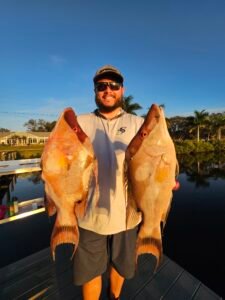 When you book a hogfish trip with me, we’ll meet at my dock near the Little Manatee River.
From there, we’ll make our way through Tampa Bay, pass the Sunshine Skyway area, continue outside toward Egmont Key, and eventually head into the open Gulf.
Depending on conditions and where I’m locating fish, the run from the Little Manatee River can take approximately an hour and 15 minutes to an hour and a half.
Once we arrive on the grounds, the real hunting begins.
I’ll work natural ledges, hard bottom, and areas where structure transitions into sand.
We may move several times.
Catch a grunt here.
A grouper there.
Maybe a porgy.
Then suddenly somebody hooks a hogfish.
And sometimes that first hogfish tells us we’ve finally found what we’re looking for.
When you locate the right area during the right time of year, multiple hogfish can be concentrated around the same stretch of bottom.
That’s when the bite can really come alive.
A Hogfish Trip I’ll Never Forget
One of my favorite hogfish memories actually involved someone I knew through an old church of mine.
This gentleman had retired and spent years volunteering his time to the church.
And when I say volunteering, I’m not talking about occasionally showing up.
He was building things, constructing things, fixing things, and continually giving his time to help.
Eventually, he booked a fishing trip with me after hearing that I had been doing well catching hogfish offshore.
He had never caught a hogfish on hook and line.
Before that trip, I said a prayer.
I asked Jesus that if this gentleman was deserving after everything he had done for others, please give him a special day on the water and let him catch a really nice hogfish.
We went fishing.
We bounced around.
We caught a hogfish here and another one there, but nothing extraordinary.
Then we stopped on one particular piece of bottom.
He hooked up.
And eventually a hogfish of approximately 26 inches came to the surface.
To this day, it remains one of the largest hogfish caught aboard my boat.
I couldn’t have been happier for him.
Maybe some people would call that coincidence.
I looked at it differently.
He had faithfully given his time and talents to help others, and on that particular day, he received a pretty incredible fish in return.
That’s one of those charter memories that has stayed with me.
Are Hogfish Good to Eat?
They’re phenomenal.
In fact, if you ask a group of Florida offshore fishermen to name the best-eating fish in the Gulf, hogfish will probably appear near the top of a lot of lists.
The meat is delicate, mild, and white—sometimes almost translucent when freshly filleted.
Catching one is rewarding.
Eating one afterward might be the icing on the cake.
Simple Lemon-Garlic Butter Hogfish Recipe
For fresh hogfish, I don’t like overpowering the meat.
Ingredients
- Fresh hogfish fillets
- 2 tablespoons butter
- 1 tablespoon olive oil
- 2 cloves minced garlic
- Fresh lemon
- Sea salt
- Black pepper
- Paprika
- Fresh parsley
Pat the fillets dry and season lightly with salt, pepper, and a touch of paprika.
Heat olive oil and one tablespoon of butter in a skillet over medium-high heat. Add the hogfish and cook until the first side develops a light golden crust.
Flip the fillet and reduce the heat slightly.
Add the remaining butter and garlic. As the butter melts, spoon it over the fish repeatedly.
Finish with fresh lemon juice and chopped parsley.
The exact cooking time depends upon fillet thickness, so avoid overcooking it. Hogfish is too good to dry out.
Serve it with rice, roasted vegetables, potatoes, or a fresh salad.
Simple. ,Fresh. And absolutely delicious.
Current Tampa Bay Hogfish Regulations
Tampa Bay falls within Florida’s Gulf hogfish management area north of Cape Sable. Current FWC recreational regulations list a 14-inch fork-length minimum, a five-fish-per-harvester daily bag limit, and a year-round season for Gulf waters. Regulations can change, so always verify the current FWC rules before your trip.
Remember that when I refer to November through January as hogfish season, I’m talking about the period I particularly like to target them around Tampa Bay—not a regulatory harvest season.
Book a Hogfish Charter in Tampa Bay
If you’ve never caught a hogfish on hook and line, I highly recommend adding it to your list.
It’s different from chasing snook along mangroves.
It’s different from throwing crabs at tarpon.
And it’s different from trolling offshore.
You’re fishing natural Gulf bottom with relatively light tackle, never knowing exactly what you’re going to hook next.
Then that rod doubles over.
The tip starts bouncing.
The fish begins pinwheeling toward the surface.
And suddenly those incredible hogfish colors appear underneath the boat.
It’s an experience people remember.
November, December, and January are some of my favorite months to offer hogfish fishing charters out of Tampa Bay, and good weather windows can provide fantastic opportunities without requiring extremely long offshore runs.
These trips work for experienced anglers, beginners, families, and kids.
We’ll supply the tackle, put you over productive bottom, and do everything we can to put some hogfish in the cooler.
Then you get to experience what may be the best part:
Dinner.
If you’re ready to experience Tampa Bay hogfish fishing for yourself, book your trip with Salty Scales Fishing Charters.
Let’s put you on your first hogfish.
Book at SaltyScalesCharter.com
Until next time, I’ll see you on the water. Checkout this hogfish video for two effective rigs offshore:
