 Skip to content

Tampa Bay Fishing Report September 13th
 September fishing in Tampa Bay can be incredible because you never really know what the day is going to bring. We still have plenty of summer heat, huge schools of bait throughout the bay, active grouper and snapper, and some of the first signs that our fall fishing patterns are right around the corner.
Our Tampa Bay fishing report September 13th was a perfect example.
The original plan was straightforward: load the boat with live bait, target gag grouper and mangrove snapper, and take advantage of the September grouper bite while we still had the opportunity. By the time the trip was over, however, Tampa Bay had thrown just about everything at us.
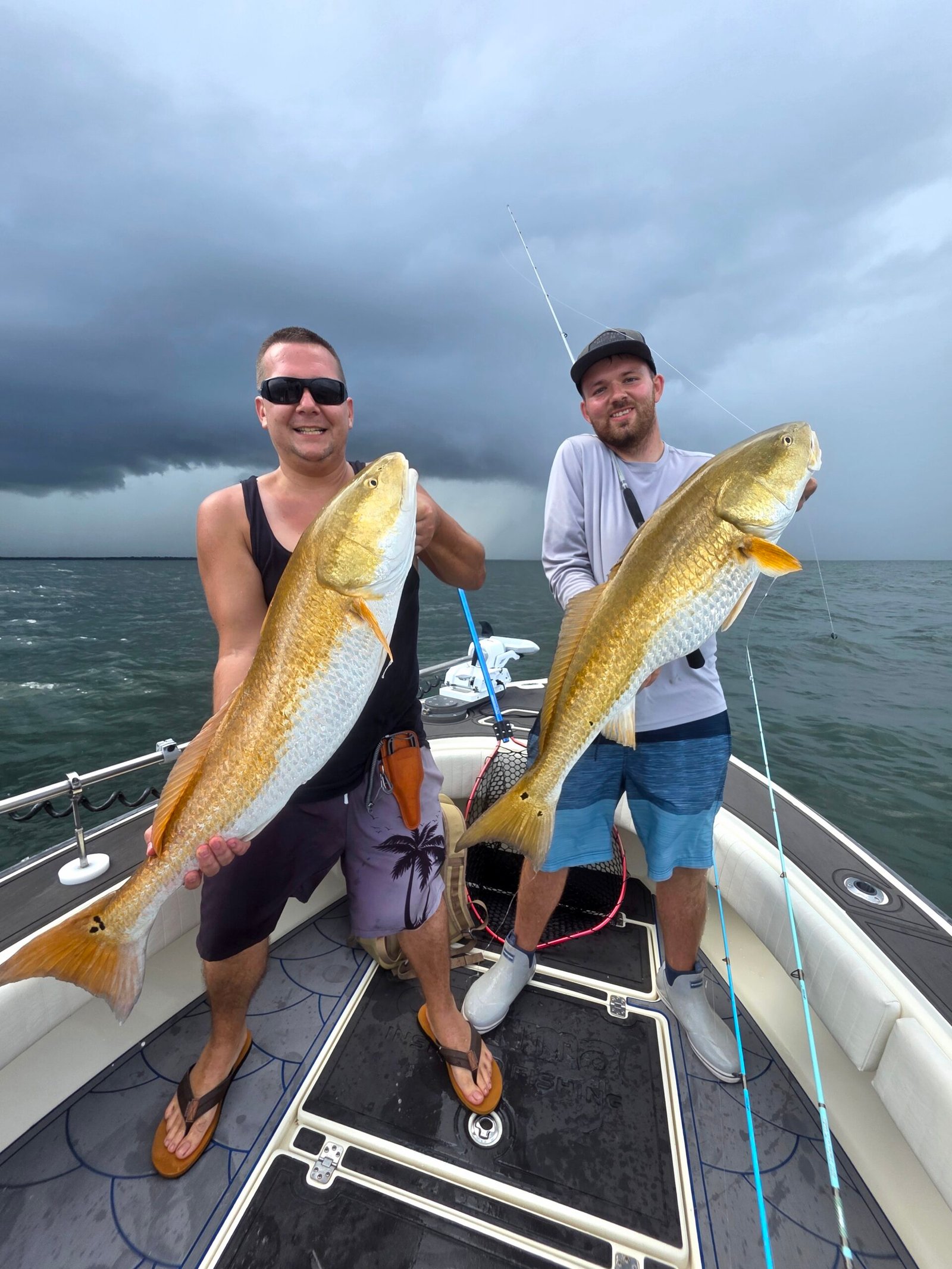
We caught mangrove snapper, red grouper, gag grouper and plenty of ladyfish. We watched Spanish mackerel terrorizing bait schools at daylight. We dealt with increasingly finicky grouper, moved through a series of rock piles and channel ledges, dodged thunderstorms and lightning, and then finished the trip with a completely unexpected triple hookup on giant breeding-size redfish.
The smallest redfish was approximately 38 inches, and the largest stretched the tape to 41.5 inches.
That’s September fishing in Tampa Bay.
Sometimes the fish you leave the dock intending to catch aren’t necessarily the fish that provide the most memorable part of the trip.
Starting Our September Tampa Bay Fishing Trip Before Sunrise
We departed the dock at approximately 6:00 a.m. on September 13, but most of the work for a successful fishing trip begins well before the boat ever leaves the dock.
Our tackle had already been prepared the night before.
Because the primary targets were grouper and snapper, I wanted a wide range of equipment on the boat. We brought some of my heavier grouper setups, including Okuma Makaira 15s paired with PCH Custom rods, along with larger Okuma Tesoro spinning reels.
I also loaded several lighter spinning combinations.
That variety ended up being extremely important.
When you’re grouper fishing, the natural temptation is to bring heavy tackle, heavy leader and enough power to stop a fish before it reaches the rocks. Normally, that’s exactly what you want. But heavily pressured Tampa Bay grouper can force you to make adjustments, and that became one of the biggest lessons from this trip.
We also brought shrimp because our first objective wasn’t actually catching grouper.
It was catching bait.
At approximately 6 a.m., conditions around Tampa were warm, humid and relatively calm. Historical observations showed temperatures around 78°F, roughly 94% humidity, clear skies and winds around 3 mph. Sunrise wasn’t until approximately 7:14 a.m., so we were working in the predawn darkness.
Those calm early conditions gave us a perfect window to get the livewell loaded before daylight.
Catching Pinfish, Pilchards and Spanish Sardines in Tampa Bay
Our first stop was a tower where I knew there had been plenty of bait.
When we arrived, the area was loaded.
There were Spanish sardines, pilchards and good-size pinfish, and there were Spanish mackerel working the bait schools around us.
Aiden and Shane immediately went to work with the Sabiki rigs. We tipped the small Sabiki hooks with tiny pieces of shrimp and began picking away at the pinfish.
Meanwhile, Vince was casting away from the boat toward the bait activity, trying to connect with one of the Spanish mackerel that were crashing through the schools.
It was one of those classic Tampa Bay mornings where the entire food chain seems to be awake.
Small baitfish were everywhere, pinfish were coming over the side, and predators were actively working around them.
After Aiden and Shane put roughly 35 to 40 pinfish in the livewell, it was time to grab the cast net.
That’s when things got ridiculous.
One Cast Net Throw Created a Complete Livewell Blackout
For this type of bait fishing, I was using a 3/16-inch mesh Dropout cast net.
The smaller mesh is important when you’re dealing with Spanish sardines and smaller pilchards because it helps prevent the bait from getting heavily gilled—or what many anglers call “Christmas treeing” the net.
One throw was all it took.
The net was absolutely loaded.
In fact, when we started pulling it toward the boat, it was so heavy that Shane and Aiden were struggling to lift it together.
Once we finally got the net over the gunwale and dumped everything into the approximately 50-gallon livewell on my Avenger Custom, we had what I call a true livewell blackout.
There were almost too many baits.
That’s a good problem to have, but overcrowding a livewell can quickly become a bad problem if you aren’t careful. We removed some of the extra bait and put it on ice. I’ll freeze those sardines and save them for another fishing trip where they’ll make excellent dead bait or cut bait.
And here’s the best part:
The sun still wasn’t up.
We had already captured virtually all the bait we could possibly need for the trip, and we were heading toward our first fishing spot before sunrise.
That is exactly how I like to start a September Tampa Bay fishing trip.
Tampa Bay Tide and Weather Conditions on September 13
The tide was another important part of the day’s fishing.
At the Little Manatee River, the predicted high tide occurred around 4:31 a.m. at 1.78 feet, followed by a low tide around 11:32 a.m. at 0.12 feet. That meant we departed during an outgoing tide and spent much of the morning fishing that falling water.
That becomes important later in the story.
Early in the morning, the weather was about as good as we could ask for. Around 6:15 a.m., Tampa observations showed clear skies, a temperature around 78°F, very light wind and high humidity. Conditions remained sunny through much of the early morning.
But Tampa Bay weather can change quickly in September.
By roughly 9:30 to 10:00 a.m., nearby weather observations were already reporting thundershowers in the area, and by late morning thunderstorms were becoming much more widespread.
That progression matched exactly what we were watching develop around us on the water.
First, though, we had fish to catch.
Mangrove Snapper Were Fired Up at First Light
 We pulled onto our first productive bottom spot and started with relatively small spinning tackle.
The rig was simple.
We used a knocker rig, approximately a 20-pound leader, a small 1/0 hook, and around a half-ounce weight—just enough weight to reach the bottom and keep the bait in the strike zone.
You don’t always need complicated tackle.
In fact, when Tampa Bay fish are pressured, simpler and lighter can often be better.
Almost immediately after the first bait reached the bottom, we were hooked up.
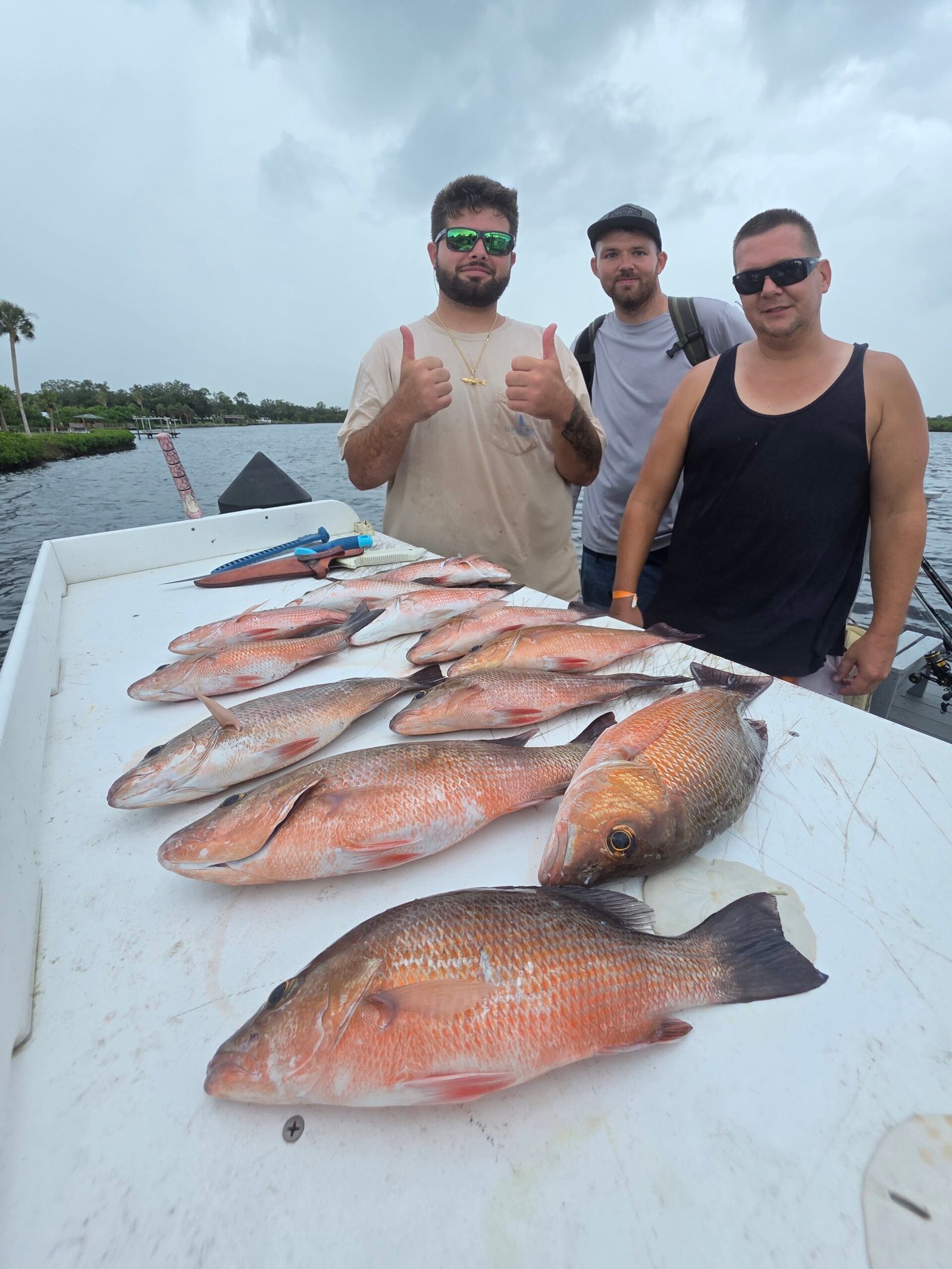
A nice mangrove snapper came over the side.
Then another.
And another.
The mangrove snapper bite was on fire at first light.
Within approximately 10 minutes, we had probably caught five to eight quality mangrove snapper.
What made it even more encouraging was that we hadn’t reached the strongest portion of the feeding period we were expecting yet. The fish were simply feeding aggressively at daylight.
If you’re looking for a takeaway from this Tampa Bay fishing report for September, don’t underestimate first light.
Get your bait before sunrise, have the rods rigged the night before and be sitting on productive structure when the sky begins getting light.
Those first 30 to 60 minutes can be extremely productive.
When Ladyfish Invade Your Snapper Chum Slick
Of course, Tampa Bay usually finds a way to throw a little chaos into the program.
Our chaos came in the form of ladyfish.
Once the ladyfish discovered what we were doing, they moved directly into our chum slick and absolutely took over.
When a school of ladyfish gets fired up around your boat, there isn’t a magic trick that’s going to make them disappear.
Sometimes the solution is simply to catch them.
We kept fishing through the school, hooking ladyfish and getting them out of the area. Eventually, after enough of them were caught and the school started breaking apart, we were able to get our baits back toward the bottom and resume snapper fishing.
In between the ladyfish, we continued catching mangrove snapper.
We were also picking up several red grouper, although all of the red grouper we caught on this particular trip were undersized and released.
Because we were catching them on relatively light spinning tackle, they were still a lot of fun.
But the more interesting story was what we were seeing with the gag grouper.
September Gag Grouper Have Become Extremely Leader Shy
The gag grouper have received a tremendous amount of fishing pressure since the season opened.
And you can tell.
During this trip, the fish acted noticeably more cautious than they had earlier.
We started with traditional grouper leaders in the 50- to 80-pound range, but the gags simply weren’t responding consistently.
Once we scaled the leader down, everything changed.
The magic range seemed to be approximately 20- to 30-pound leader.
That’s extremely light for gag grouper fishing around serious structure, and there’s obviously a major risk associated with doing it.
A gag doesn’t care that you’re fishing 20-pound leader.
Once that fish feels the hook, it’s still going to turn toward the nearest rock, ledge or hole and try to absolutely destroy you.
But there’s another side to the equation.
You can’t catch a grouper that won’t bite.
With countless boats trolling ledges, dropping live bait, running plugs and fishing many of these Tampa Bay areas throughout September, the fish have seen a lot of tackle.
They become conditioned.
They become wary.
And sometimes downsizing your leader is the difference between getting a bite and staring at untouched baits.
Live Pinfish Were the Key for Pressured Gag Grouper
Our most effective presentation was incredibly simple:
A live pinfish dropped directly to the bottom on lighter leader.
We weren’t trying to reinvent grouper fishing.
The objective was to present a natural bait with as little unnecessary hardware and heavy leader as we could reasonably get away with.
When you’re fishing lighter leader around grouper structure, though, you have to understand the trade-off.
You’re going to get more bites.
You’re also probably going to lose more fish.
That’s fishing.
As September progresses and these fish continue experiencing heavy boat and fishing pressure, I expect some of the grouper to remain increasingly finicky.
If you’re marking fish and you’re confident gags are on the structure but they refuse your bait, start changing things.
Downsize the leader.
Change the bait.
Make sure your pinfish is lively.
Use only as much weight as necessary.
Sometimes small adjustments make a massive difference.
Fishing Tampa Bay Rock Piles in 17 to 25 Feet of Water
After working the first area, we began running a series of rock piles.
We probably fished five or six different pieces of structure, generally in approximately 17 to 25 feet of water.
That’s an important point for anglers reading this report.
You don’t necessarily need to run 40 or 50 miles offshore to find September grouper around Tampa Bay.
There are productive rock piles, edges and structure in relatively shallow water.
But finding good bottom doesn’t guarantee the fish will cooperate.
Some areas produced.
Some didn’t.
That’s why being willing to move is so important.
You can have a spot that was incredible a week ago—or even yesterday—and pull onto it the following morning and catch absolutely nothing.
One of our next stops is an area I jokingly call my “grouper slay spot.”
Normally, I have a lot of confidence in it.
We dropped down expecting action.
Nothing.
We had four or five anglers fishing a combination of snapper and grouper tackle for approximately 20 minutes and couldn’t buy a meaningful bite.
That’s when experience tells you not to become emotionally attached to a fishing spot.
The fish don’t care what you named it.
If they aren’t biting, move.
So that’s exactly what we did.
Channel Edges Can Produce Big Fish—and Brutal Break-Offs
Our next move was to a channel edge that I know holds fish.
The problem with this particular area is the structure itself.
The edge is sharp.
Really sharp.
I know when we pull onto it that we’re probably going to get opportunities. I also know there’s a very good chance we’re going to donate some hooks and leader to Tampa Bay.
A few minutes after we began fishing, Vince hooked a good fish.
It immediately did exactly what grouper do.
The rod loaded up, the fish turned toward the structure, and before we could get it away from the edge, it broke the 50-pound leader.
Gone.
That’s why grouper fishing becomes such a balancing act when the fish are leader shy.
A lighter leader can get you the bite, but even a 50-pound leader isn’t guaranteed to survive when a strong fish reaches sharp structure.
I managed to pull a beautiful mangrove snapper of around 15 inches from the same area, but overall the bite began slowing.
That wasn’t completely surprising.
The tide was getting close to the bottom of the outgoing cycle.
The Falling Tide Began Slowing—and So Did the Bite
As late morning approached, we could physically see and feel the current beginning to diminish.
Remember, the predicted low tide at the Little Manatee River was approximately 11:32 a.m.
We were nearing that transition.
Current is incredibly important when fishing Tampa Bay structure.
Moving water positions bait.
It carries scent.
It helps organize predators on ledges, rock piles and other structure.
When that current disappears during the slack portion of the tide, the fishing can become noticeably tougher.
We knew we had limited time.
Once the tide turned and started coming back in, the bite could potentially pick up again, but there was another problem becoming much more important than the tide.
The sky.
September Thunderstorms Began Surrounding Us in Tampa Bay
We had storms developing all around the boat.
There were cells to the north.
There were storms to the west.
There was weather to our south.
It was beginning to feel like the entire bay was closing in around us.
We made another grouper stop and caught a couple more small gag grouper along with approximately four or five additional mangrove snapper that went into the box for dinner.
But by this point, the radar was telling us what we needed to know.
It was time to go.
Historical observations from Tampa show how quickly the conditions deteriorated that morning. Conditions were clear around 6 a.m., but thundershowers were being reported by approximately 9:35 a.m. By 11:35 a.m., temperatures were around 86°F with thundershowers and winds around 12 mph, and storm activity continued through the noon hour.
More importantly, we were seeing lightning.
Lightning is something we do not mess with.
Fish are never worth gambling with lightning.
So with noon approaching, we packed things up and began heading toward home.
I thought the fishing portion of the day was finished.
Tampa Bay had one more surprise.
Giant Tampa Bay Redfish Appeared in Deep Open Water
While we were running in, Aiden suddenly called out from the port side of the boat.
There were redfish.
And not ordinary redfish.
These were big, mature, jumbo redfish grouped together in deep water out in the middle of Tampa Bay.
They were moving in a huge circular school and appeared to be doing exactly what these large mature fish do during their spawning period.
It was incredible just watching them.
We already had storms chasing us, and I certainly wasn’t interested in hanging around with lightning in the area.
But seeing a school of redfish like that is difficult for any fisherman to drive past.
We stopped.
We grabbed both pinfish and sardines and fired some baits toward the school.
It didn’t take long.
The rods loaded up.
Then another.
Then another.
Triple hookup.
All three guys were connected to giant Tampa Bay redfish at the same time.
And these weren’t 25-inch fish.
The smallest redfish was approximately 38 inches.
The largest measured an incredible 41.5 inches.
These were massive breeder redfish—the exact fish responsible for helping produce future generations of Tampa Bay reds.
It turned what had already been a successful September fishing trip into something we’ll remember for a long time.
Properly Releasing Big Breeder Redfish Matters
When you encounter fish like these, how you handle them is extremely important.
The goal isn’t to keep one out of the water forever while everyone takes 50 pictures.
Get the fish in.
Support its body properly.
Get your picture.
Then get the fish back into the water.
With large redfish in particular, I want to make sure the fish is properly revived before releasing it.
These are mature breeding fish.
They’re an important part of the future of the fishery.
After fighting a big redfish—especially on lighter tackle—the fish may be exhausted. Give it the time it needs in the water, keep water moving across the gills and don’t release it until it is ready to swim away strongly.
We enjoyed the moment, took our pictures and made sure those fish went back into Tampa Bay healthy.
The school continued feeding, and we probably could have kept catching them.
But now the weather was getting too close.
It was time to leave.
Lightning Ended the Fishing Day—and We High-Tailed It Home
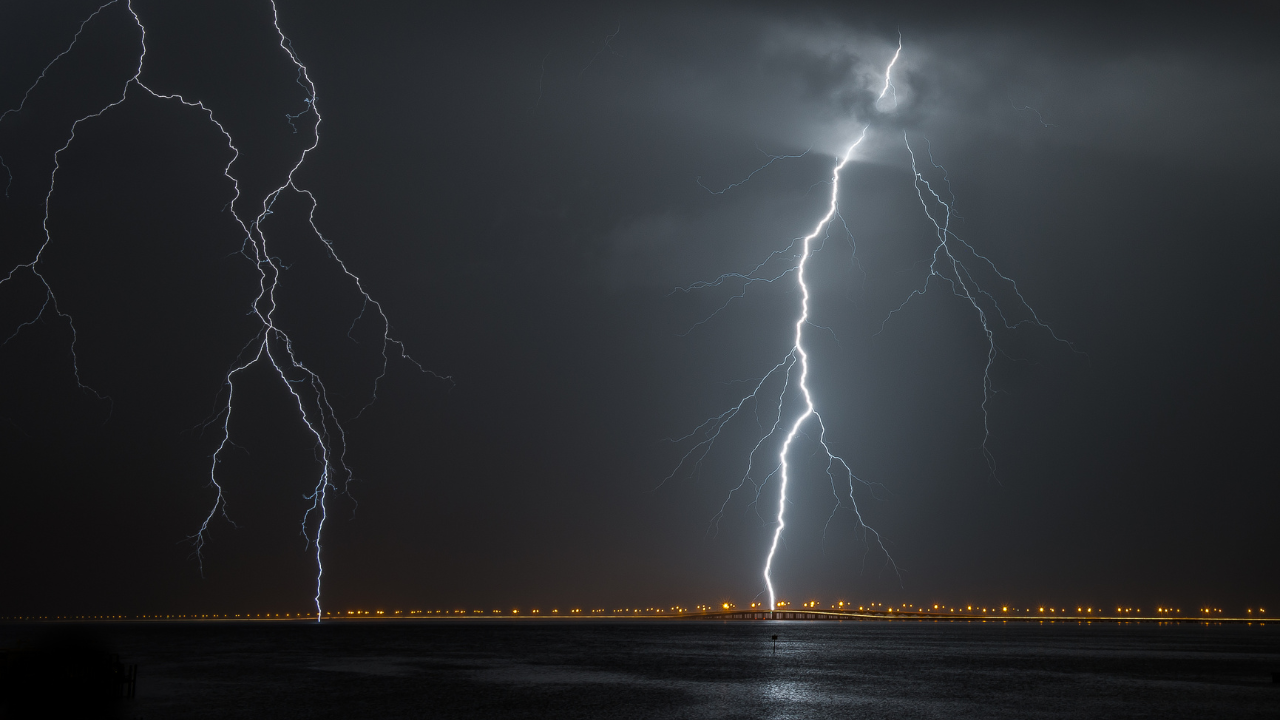
As much as I would have loved to stay with those redfish, safety comes before fishing.
The storms were finally catching up with us.
We pointed the Avenger Custom toward home and high-tailed it back to the lift.
By the time we arrived, we had experienced about as much variety as you could pack into a September Tampa Bay fishing trip.
We started in darkness catching pinfish.
We threw a cast net so full of sardines and pilchards that two people struggled to get it into the boat.
We caught mangrove snapper at first light.
We fought through ladyfish.
We caught short red grouper.
We found gag grouper that had become extremely leader shy.
We lost good fish to sharp structure.
We bounced rock piles between 17 and 25 feet.
We watched the outgoing tide slowly die.
We dodged thunderstorms.
And then, on the run home, we somehow ended up tripled up on giant redfish approaching 42 inches.
You can’t script that.
Fresh Mangrove Snapper for Dinner
Of course, arriving back at the dock doesn’t mean the work is finished.
We still had a boat to unload and clean.
And, more importantly, we had some beautiful mangrove snapper to fillet.
I broke out a new Okuma fillet knife and went to work cleaning the day’s catch.
There is something especially satisfying about ending a fishing trip with fresh snapper destined for the dinner table.
Mangrove snapper are easily one of my favorite Tampa Bay fish to target because they combine everything anglers want.
They fight hard.
They can be extremely challenging once they become pressured.
You can target them on everything from shallow structure to deep offshore bottom.
And they’re outstanding table fare.
We took a few more pictures of the catch, cleaned everything up and finally wrapped up what had been a very memorable September day.
What This September Tampa Bay Fishing Report Tells Us
There were several important fishing lessons from this trip that should help anglers heading onto Tampa Bay during September.
First, live bait is still king.
Pinfish, pilchards and Spanish sardines gave us options throughout the day. The pinfish were especially important when targeting grouper around the rock piles and ledges.
Second, don’t assume heavier tackle always catches more grouper.
You need enough leader to land the fish, but when gag grouper have been hammered for weeks, they can become extremely leader shy.
We saw a noticeable difference when scaling from the traditional heavier grouper leader down into the 20- to 30-pound range.
Is it risky?
Absolutely.
But sometimes it’s the difference between getting broken off and never getting the bite in the first place.
Third, keep moving.
We fished several spots that normally produce and found almost nothing.
Instead of spending an hour trying to force fish to bite on an unproductive rock pile, we kept hunting.
That eventually produced additional mangrove snapper and gag grouper opportunities.
And finally, always pay attention to what’s happening around you.
If Aiden hadn’t spotted those redfish while we were running home, we would have driven right past one of the best moments of the entire trip.
Why September Through November Is One of My Favorite Times to Fish Tampa Bay
We’re now entering one of my favorite stretches of the Tampa Bay fishing calendar.
September through November can offer some phenomenal fishing.
September still feels very much like summer, but change is coming.
The days gradually shorten.
Eventually, we’ll begin getting stronger cold fronts.
Water temperatures start dropping.
Bait movements change.
Fish begin responding to those seasonal changes.
And when you get a beautiful weather window between fronts, the fishing can be incredible.
Mangrove snapper remain an excellent target.
Grouper fishing can stay productive.
Redfish opportunities can be outstanding.
Spanish mackerel continue taking advantage of the bait schools.
And as conditions cool further through the fall, an entirely new set of patterns begins developing around Tampa Bay.
That’s one of the reasons I love guiding here.
There is always another pattern developing and another species to target.
Book a Tampa Bay Fishing Charter With Salty Scales
If you’ve been thinking about booking a Tampa Bay fishing charter, September through November is a great time to get on the calendar.
Every trip is different.
I can’t promise you’re going to stumble across a school of 40-inch redfish on the ride home, and that’s part of what makes fishing fishing.
What I can do is put you in the best position possible by using decades of experience fishing Tampa Bay, preparing the right tackle, catching quality live bait and adjusting throughout the day based on the tide, weather and what the fish are telling us.
Some days you pull onto the first rock pile and the fish are chewing.
Other days you have to work through five or six spots, change leaders, switch baits and grind it out.
And every once in a while, you’re running home ahead of a thunderstorm when somebody yells, “Redfish!”
That’s why we keep going.
If you’re ready to experience Tampa Bay fishing in September, October or November, visit SaltyScalesCharter.com and reserve your trip with Salty Scales Fishing Charters.
We’ll load the livewell, rig the rods and see what Tampa Bay has waiting for us.
Captain Joshua Taylor
Salty Scales Fishing Charters
Tampa Bay, Florida