 Skip to content

It’s Hot in Tampa Bay… But July Fishing is Hotter!
By Capt. Joshua Taylor | Salty Scales Fishing Charters
July fishing comes to a close. If there is one word to describe the fishing throughout Tampa Bay at the end of July, it would simply be productive. While many anglers assume the Florida summer heat slows the fishing down, Mother Nature has thrown us a curveball this year. The steady afternoon thunderstorms and frequent rainfall across Florida’s west coast have cooled water temperatures just enough to create some phenomenal fishing conditions throughout Tampa Bay.
Over the past several weeks, every trip has offered something different, but one thing has remained constant, the action has been outstanding. Whether we’re targeting speckled trout on the shallow grass flats at sunrise, easing into the mangroves for aggressive redfish, or anchoring over structure to fill the cooler with mangrove snapper, the fish have been cooperating in a big way. We’ve even been surprised by a few cobia crashing the party and some quality flounder adding variety to the day’s catch.
As a full-time guide, I spend nearly every day 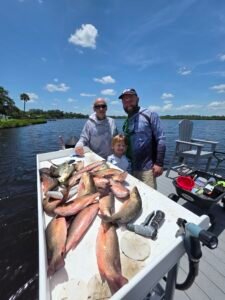 on the water, and these are the conditions we wait for. The combination of abundant baitfish, cooler water temperatures from the summer rains, and consistent tidal movement has created some of the best inshore fishing we’ve seen in weeks.
One of the biggest reasons for our success has been keeping things simple and paying close attention to what the fish are naturally feeding on. Around Tampa Bay, the flats and shorelines are loaded with schools of pilchards of every size imaginable. Instead of throwing the largest bait available, we’ve been carefully matching the size of the natural forage. That small adjustment has made a tremendous difference. Whether the bait is two inches long or four inches long, presenting the fish with something that closely resembles what they are already chasing has resulted in more bites and more quality fish throughout the day.
The speckled trout bite has easily been one of the highlights of our recent charters. Healthy grass flats throughout Tampa Bay have been holding impressive numbers of trout, with many fish well over keeper size. Early mornings have produced fast action before the summer sun climbs overhead. Working shallow grass, sand potholes, and areas with moving water has consistently produced fish after fish. Live pilchards have been the bait of choice, but anglers throwing soft plastic paddle tails or shrimp imitations have also enjoyed excellent success. Long casts, natural presentations, and a slow retrieve have been the key to consistently fooling larger trout.
While the trout have been outstanding, it has been especially exciting to see the redfish bite come back to life. The past couple of months have been challenging, but the recent high tides have pushed schools of redfish deep into the mangrove shorelines where they feel comfortable feeding. There is nothing quite like watching a redfish inhale a live pilchard tight against the mangroves before making a blistering run that sends your drag screaming. Those are the moments that make every charter memorable.
Fishing extremely close to the mangrove roots has been critical. Accurate casts, quality fluorocarbon leaders, and enough backbone in your rod to pull fish away from the cover are essential. For most of my inshore fishing, I prefer a 7-foot to 7-foot-6 medium-heavy spinning rod paired with a quality 3000 or 4000 size reel spooled with 15 to 20-pound braided line. Depending on the amount of structure, I’ll typically use a 25 to 30-pound fluorocarbon leader, increasing to 40 pounds around heavier mangroves when larger snook and redfish are present.
The real star of late July has undoubtedly been the mangrove snapper. The numbers have been nothing short of incredible. On many trips we’ve caught hundreds of snapper throughout the morning, with plenty of quality keeper fish making their way into the cooler. Bridges, rock piles, docks, reefs, and other hard structure throughout Tampa Bay have been loaded with hungry fish.
One of the biggest secrets to consistently catching mangrove snapper is maintaining a steady chum slick. Chumming doesn’t simply attract fish, it excites them. Once a school begins competing for food, their caution quickly disappears. Whether we’re using frozen chum, cut bait, or small pieces of pilchards, creating a continuous stream of scent and bait in the water keeps the fish actively feeding. I’ve always believed that an aggressive school of snapper is much easier to catch than one that is simply holding on structure without competition.
Light tackle makes the experience even more enjoyable. A small live pilchard drifting naturally through the chum slick is often all it takes before the rod doubles over. Anyone who has fought a quality mangrove snapper understands just how powerful these fish can be. Their first instinct is to dive directly back into the structure, making quick reactions and steady pressure extremely important.
While targeting snapper, we’ve also enjoyed some excellent flounder fishing. Many anglers overlook flounder during the summer months, but they continue to surprise us with quality keeper fish. Most of our flounder have been caught while slowly working baits across sandy bottoms adjacent to rock piles and channel edges. Live pilchards, shrimp, and soft plastics bounced slowly along the bottom have all produced excellent results. Not only are flounder exciting to catch, but they are also among the finest table fare swimming in Tampa Bay.
Another pleasant surprise has been the occasional cobia. Although they haven’t been showing up in large numbers, we’ve encountered enough to keep things exciting. Every cobia seems to appear when you least expect it, and they always provide one of the hardest fights you’ll experience on inshore tackle. These fish are notorious for making powerful runs and creating chaos once they reach the boat. Having a heavier rod rigged and ready is never a bad idea because opportunities often come without warning.
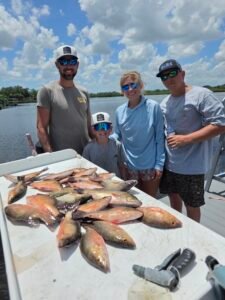 The afternoon thunderstorms have changed the way we’ve approached our fishing days. Rather than fighting the heat and racing storms, we’ve adjusted our schedule by getting on the water much earlier. We are launching before sunrise, catching fresh bait while the morning is still cool, and taking advantage of the most productive hours between first light and late morning. By the time the summer heat becomes intense and thunderstorms begin building over Tampa Bay, we’re usually headed back to the dock with a cooler full of fish and smiles all around.
Fishing early has provided several advantages beyond simply avoiding uncomfortable temperatures. Water temperatures are cooler, baitfish are more active, predator fish are feeding aggressively, and boat traffic is significantly lighter. Those first few hours after sunrise continue to be some of the most productive of the entire day.
For anglers planning to fish on their own, my biggest advice is to remain flexible. Conditions change daily during the summer, and successful anglers adjust accordingly. If the trout aren’t cooperating on the flats, don’t be afraid to move deeper. If the mangroves aren’t producing redfish, check nearby oyster bars or creek mouths. Always pay attention to the bait, because the bait rarely lies. Wherever the schools of pilchards gather, predator fish usually aren’t far behind.
As we move into August, I expect the excellent fishing to continue. The trout bite should remain strong, redfish numbers should continue improving, and mangrove snapper fishing should stay outstanding as long as the bait remains plentiful. We’ll also continue watching for opportunities at cobia, flounder, snook, and anything else Tampa Bay decides to surprise us with.
If you’ve been thinking about booking a fishing trip, now is an outstanding time to get on the water. Whether you’re an experienced angler looking for a trophy fish or a family wanting to make unforgettable memories, late summer continues to produce some incredible action throughout Tampa Bay.
At Salty Scales Fishing Charters, our goal isn’t simply to put fish in the boat, it’s to provide an unforgettable experience from the moment you step aboard until we return to the dock. Every trip includes quality tackle, live bait, local knowledge developed over decades on Tampa Bay, and a commitment to helping every angler become a better fisherman.
I look forward to seeing you on the water soon.
Tight lines,
Capt. Joshua Taylor
USCG Licensed Captain
Salty Scales Fishing Charters
Book your next Tampa Bay Fishing Charter today: https://saltyscalescharter.com