 Skip to content

Top Three Rigs for Mangrove Snapper That Catch More Fish
Hello, my name is Capt. Joshua Taylor, and I have been a USCG-licensed captain guiding anglers throughout Tampa Bay since 2013. One of my all-time favorite light tackle species to target is the finicky—but incredibly delicious—mangrove snapper. These fish are abundant throughout Tampa Bay, provide exciting action on light tackle, and are one of the best-eating fish you can put on the dinner table.
Over the years, I have spent thousands of hours learning their seasonal movements, feeding habits, and the subtle techniques that consistently fool larger, more educated fish. While many anglers catch a few snapper here and there, consistently catching quality fish and limiting out requires paying attention to details such as tide, current, bait selection, leader size, and presentation.
In this article, I’m going to share three of my most productive rigs for targeting mangrove snapper inside Tampa Bay. These are the exact setups I rely on while guiding clients throughout the year and have helped countless anglers catch their personal best snapper. Whether you’re fishing bridges, docks, reefs, rock piles, or artificial structure, these rigs will dramatically increase your success.
If you’re struggling to locate or catch mangrove snapper, there is no faster way to shorten the learning curve than by booking a Tampa Bay fishing charter. I’ll show you firsthand where to find fish, how to rig properly, the best tides to fish, and the techniques that consistently produce larger snapper.
Let’s start with one of my absolute favorite techniques for fooling bigger, more cautious fish.
1. Free-Lining for Mangrove Snapper
Mangrove snapper have exceptional eyesight and become increasingly wary after watching a few of their schoolmates get pulled to the surface. That’s why free-lining is one of the most productive techniques for catching larger fish. It creates the most natural presentation possible, allowing your bait to drift with the current without the added weight or hardware that often causes educated fish to refuse it.
I always recommend using the lightest tackle and the least amount of terminal tackle possible. Larger mangrove snapper—especially fish measuring 18 to 20 inches—are often five to seven years old. These fish didn’t reach that size by being careless. There’s a good chance they’ve encountered hooks, leaders, and anglers before, making stealth extremely important.
That said, free-lining isn’t simply tossing out a bait and hoping for the best. Success depends heavily on timing. If you try to free-line during the strongest part of an outgoing or incoming tide—especially around a new moon when currents are at their fastest—your bait will often move too quickly, making it difficult for snapper to inspect and eat naturally.
Instead, I prefer to free-line as the tide begins to slow approaching slack water. During these periods, I downsize everything: a 20- to 25-pound fluorocarbon leader, a sharp 1/0 to 2/0 live bait hook, and a lively bait such as a pilchard, threadfin herring, or small pinfish. Allow the bait to drift naturally back into the structure while maintaining just enough tension to detect a bite.
One mistake I frequently see anglers make is setting the hook too quickly. Large mangrove snapper often grab a bait, turn back toward the structure, and then fully inhale it. Give the fish a brief moment to load the rod before applying steady pressure. Once hooked, keep constant pressure on the fish and pull hard immediately—otherwise it will almost certainly dive back into the rocks, bridge pilings, or dock pilings and break you off.
Free-lining consistently produces the biggest mangrove snapper of the day, especially when combined with a steady chum slick and fresh, lively bait. If you’re targeting trophy-sized snapper inside Tampa Bay, this is often the first technique I reach for.
#2 Using a Jig for Consistent Mangrove Snapper Success
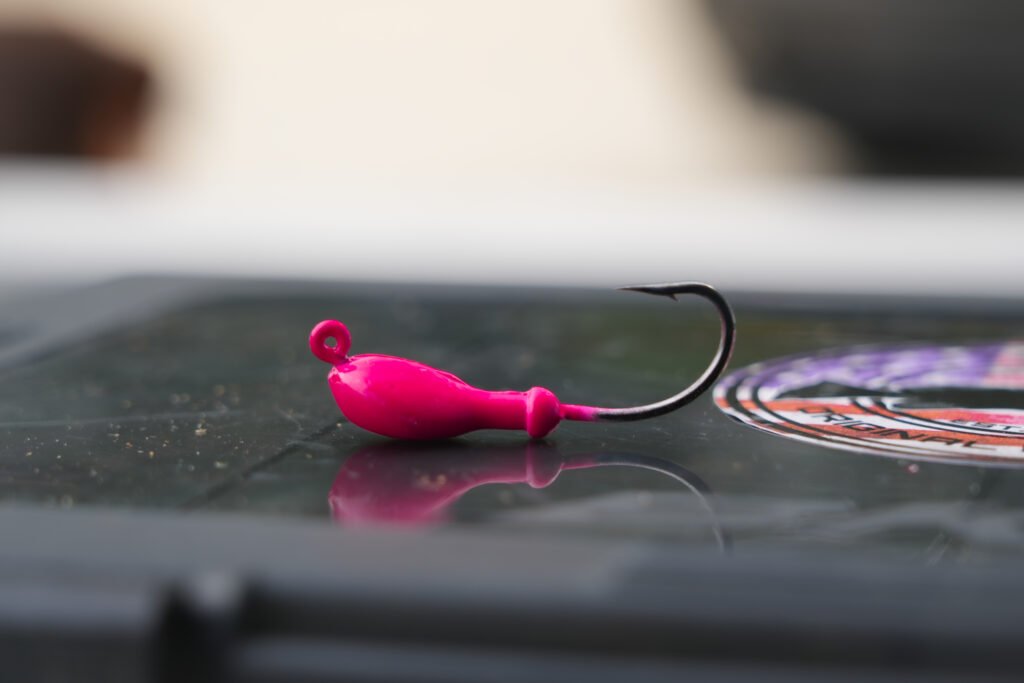
As the current begins to pick up, I immediately switch from free-lining to a presentation with a little more weight—but only enough to keep my bait in the strike zone. My second favorite technique for targeting mangrove snapper is fishing with a jig that is just heavy enough to reach, or stay close to, the bottom.
As the tide strengthens, mangrove snapper become much less willing to move up in the water column to chase a bait. Instead, they’ll position themselves tight to structure such as bridge pilings, rock piles, reefs, docks, or ledges where they can conserve energy while waiting for food to drift by. If your bait is several feet above the fish, your chances of getting bit drop dramatically. Keeping your presentation in the strike zone is one of the biggest keys to consistently catching quality snapper.
When choosing a jig, I prefer one with a small but extremely strong hook. Mangrove snapper have relatively small mouths, so a compact hook provides much better hook-up ratios than oversized hooks. At the same time, it needs enough strength to handle the powerful runs of larger snapper and the occasional bycatch like gag grouper, red grouper, cobia, or even a surprise tarpon.
Two of my favorite choices are JYG Pro Fishing jigs and yellowtail-style jigs. Both provide enough weight to get the bait down quickly while maintaining a natural presentation. Their strong hooks give me the confidence to apply heavy pressure immediately after the hookset, which is critical because mangrove snapper will head straight back into the structure if given the opportunity.
My preferred setup consists of a 3000- to 4000-size spinning reel with a smooth, reliable drag. I personally fish an Okuma Cedros paired with an Okuma SRT medium-fast spinning rod. I spool the reel with 15- to 20-pound braided line connected to a 20-pound fluorocarbon leader using a Uni-to-Uni Knot. This combination gives me excellent casting distance, outstanding sensitivity, and enough power to turn big fish before they reach the rocks or pilings.
One mistake I often see anglers make is selecting a jig that’s too heavy. While it’s important to stay near the bottom, using more weight than necessary creates an unnatural presentation and can reduce the number of bites. Start with the lightest jig that still allows you to maintain bottom contact, and only increase the weight as the current demands it.
This simple approach has helped me catch thousands of mangrove snapper throughout my career as a Tampa Bay fishing guide, and it’s still one of the first techniques I rely on whenever the tide begins to move. It’s easy to fish, highly effective, and consistently produces quality fish throughout the year.
#3 The Trusty and Reliable Carolina Rig for Mangrove Snapper
When free-lining isn’t producing, and the current becomes too strong for a light jig, I almost always reach for a Carolina rig. It’s one of the most dependable setups you can fish for mangrove snapper and has consistently put fish in the boat for me throughout my career as a Tampa Bay fishing guide.
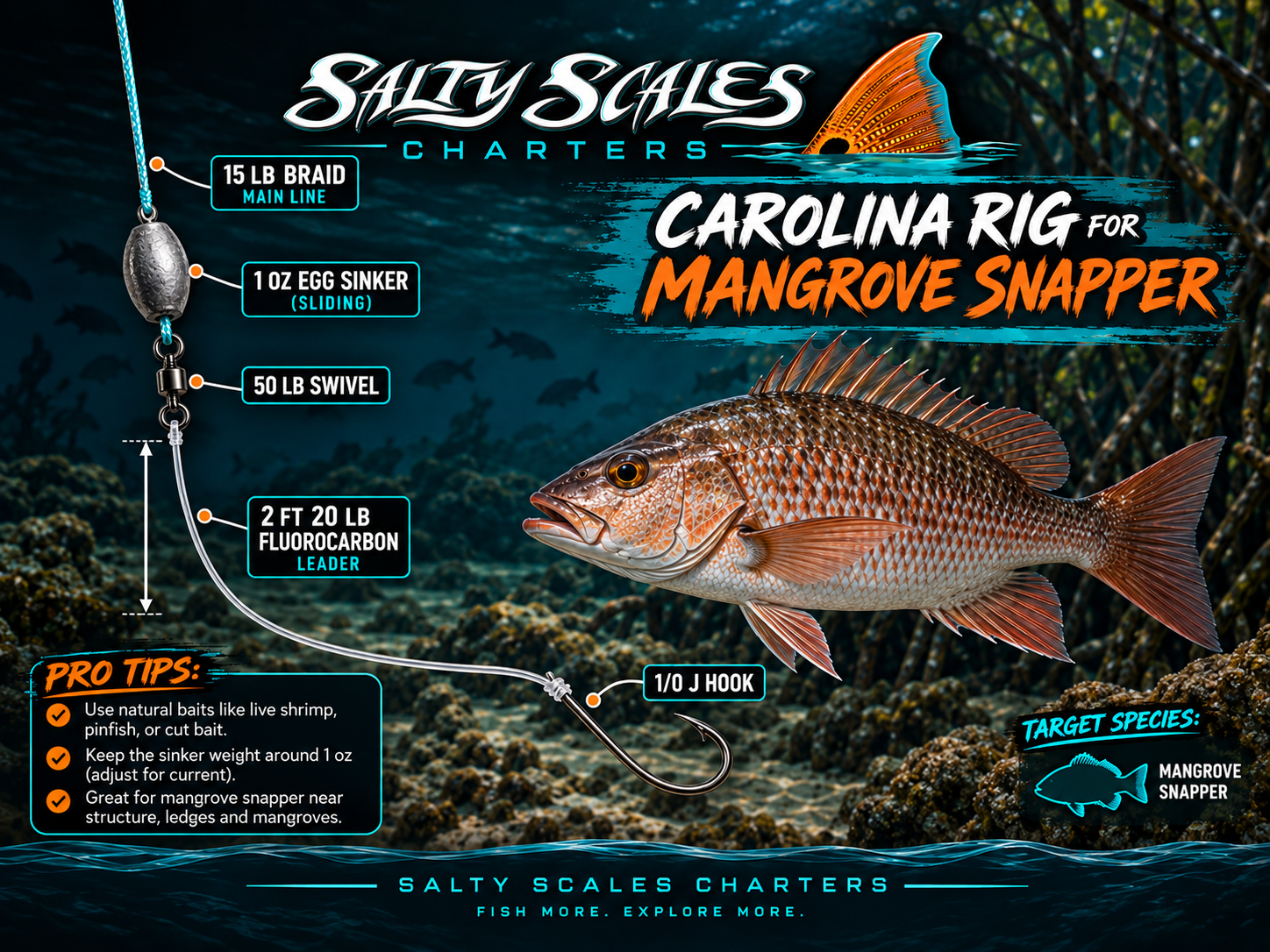
A basic Carolina rig is simple to tie and extremely effective. Start by sliding a 1- to 2-ounce egg sinker onto your main line, followed by a bead if you prefer added knot protection. Tie the main line to a 75-pound barrel swivel, then attach 18 to 24 inches of 20-pound fluorocarbon leader. Finish the rig with a 1/0 or 2/0 circle hook, choosing the hook size based on the bait you’re using.
The Carolina rig excels because it keeps your bait close to the bottom while still allowing it to move naturally with the current. Instead of dragging directly across the bottom, the leader gives your bait freedom to swim and drift just above the structure, which is exactly where mangrove snapper spend much of their time feeding. This natural presentation often results in more confident bites, especially when fishing around bridge pilings, reefs, rock piles, and dock structures.
My favorite baits for this rig are live pilchards, live shrimp, small threadfin herring, and occasionally cut threadfin when the bite slows. Fresh bait almost always outperforms frozen bait, so whenever possible, I spend a little extra time catching live bait before heading to my fishing spot. The healthier and more lively your bait is, the better your chances of fooling larger snapper.
One tip that many anglers overlook is matching your sinker weight to the current. If your bait is constantly drifting away from the structure, increase your weight just enough to maintain bottom contact. On the other hand, if the current begins to slow, don’t hesitate to lighten up. Using the least amount of weight necessary will almost always result in a more natural presentation and more bites.
Patience is also important when fishing a Carolina rig with circle hooks. Resist the urge to jerk the rod when you feel a bite. Instead, allow the fish to load the rod before applying steady pressure. Circle hooks are designed to rotate into the corner of the fish’s mouth, resulting in solid hook-ups while also helping protect the fish if you’re practicing catch and release.
If you’re ready to start catching more mangrove snapper in Tampa Bay, these three rigs should become staples in your arsenal. Each one has its place depending on the tide, current, and fish behavior, and knowing when to switch between them can make the difference between catching a few fish and limiting out.
There’s no faster way to shorten the learning curve than spending a day on the water with an experienced guide. If you’re interested in learning these techniques firsthand, consider booking a Tampa Bay mangrove snapper charter. We’ll cover everything from catching live bait and selecting the right tackle to reading the tides and fishing the area’s most productive structure.
If you’ve been following my recent Tampa Bay Fishing Reports, you already know the mangrove snapper bite has been outstanding, and it typically remains strong well into the fall.
What’s your favorite rig for mangrove snapper? Leave a comment below and let me know. I’d also encourage you to check out my video on catching mangrove snapper, where I demonstrate these techniques on the water and share even more tips to help you put more fish in the boat.
