Skip to content

Learning the Secrets to Catching Mangrove Snapper in Tampa Bay
There’s something special about launching a boat before sunrise in Tampa Bay. The air is calm, the water is quiet, and you know you’re about to witness one of nature’s greatest shows as the first rays of sunlight begin breaking across the horizon. For our very first Captain’s Corner episode, I couldn’t think of a better guest than Captain Mike Fields, one of Tampa Bay’s most respected mangrove snapper fishermen.
The goal wasn’t simply to catch fish. We wanted to teach anglers exactly how we approach Tampa Bay mangrove snapper fishing during the summer months, from locating fresh bait to selecting the right tackle and understanding why current, structure, and moon phases play such an important role.
Our day started around 6:00 a.m. at the dock on the Little Manatee River. After loading a handful of rods, tackle, cameras, and the essentials for the day, we idled toward Tampa Bay as the sunrise painted the sky in brilliant shades of orange and pink. Like most successful fishing trips, the priority wasn’t finding fish—it was finding bait.
Why Summer Fry Bait Signals Great Snapper Fishing
Every summer, Tampa Bay’s grass flats come alive with millions of newly hatched pilchards and other small baitfish. These “fry” become the primary food source for nearly every predator in the bay, including mangrove snapper, snook, trout, Spanish mackerel, kingfish, and tarpon.
One of the first things Captain Mike and I discussed was how closely this bait hatch lines up with the annual mangrove snapper bite. When we start seeing clouds of tiny baitfish covering the shallow grass flats, it’s usually a strong indication that snapper fishing is about to become exceptional.
After arriving on one of our favorite flats, we slowly idled while scanning for signs of life. Rather than blindly throwing the cast net, we looked for every clue available. Nervous water, birds diving, flickering bait, and subtle surface movement all pointed us toward the schools.
Once we located the bait, we stopped the boat, deployed the Power-Pole, and began chumming with a mixture of Purina Tropical Fish Food. This is a trick I’ve relied on for years because it quickly concentrates scattered bait into one tight school, allowing you to make fewer throws with the cast net and put less stress on yourself before the fishing even begins.
Preparation always leads to better fishing.
Choosing the Right Cast Net for Small Pilchards
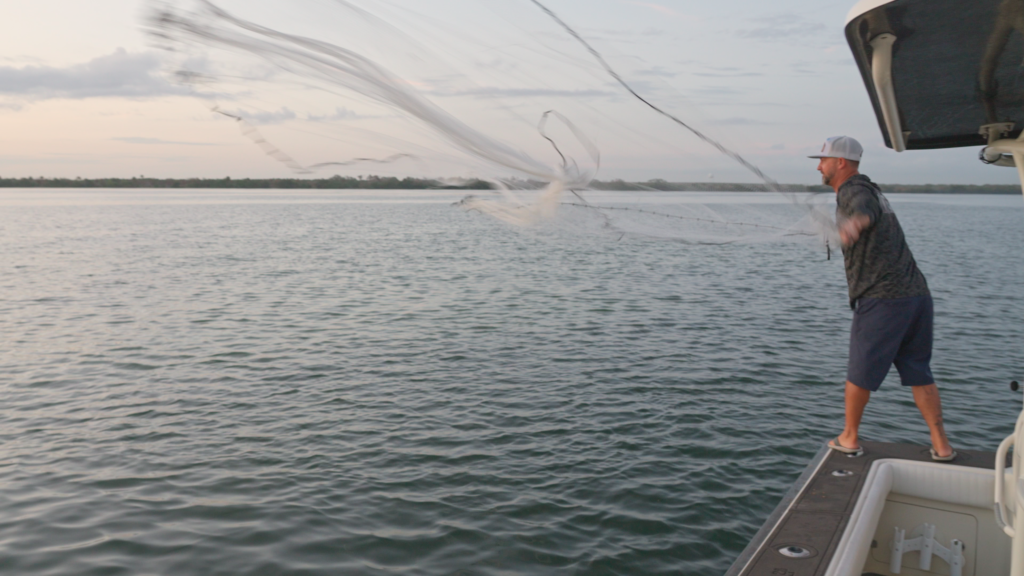
For this trip, we threw a 10-foot Dropout cast net with quarter-inch mesh.
While the net certainly caught plenty of bait, I quickly realized an even smaller mesh would have been a better choice. The tiny pilchards became tangled throughout portions of the net, creating what many anglers call a “Christmas tree.” Untangling dozens of tiny baitfish takes time and can injure otherwise healthy bait. Fortunately, we ended up with an excellent mix of lively pilchards and small pinfish that would become perfect mangrove snapper baits.
Captain Mike then shared one of the simplest but smartest tricks of the day. Instead of throwing away the dead bait that became tangled in the net, he used a plastic Wiffle ball bat thrower to quickly remove them. Those dead pilchards weren’t wasted. Instead, they became fresh chum that would later help pull snapper away from the bottom and into the water column. Sometimes the smallest tricks make the biggest difference.
Finding the Right Structure
With the livewell full of fresh bait, we made our way toward one of Tampa Bay’s productive shipping channel edges. Mangrove snapper love hard structure. Bridge pilings, limestone ledges, rock piles, artificial reefs, channel edges, and natural hard bottom all provide protection while allowing current to carry food directly to waiting fish. As soon as we reached our first location, we began chumming.
For nearly eight minutes, we maintained a consistent chum line while watching the Garmin electronics closely. At first, the bottom looked quiet. Then, almost like someone flipped a switch, the graph lit up. Fish began rising off the bottom and suspended throughout the middle of the water column. That was exactly what we wanted to see.
Why Chumming Makes Such a Difference
One of the biggest mistakes anglers make when targeting mangrove snapper is immediately dropping a bait to the bottom.
Captain Mike prefers letting the fish come to you. By establishing a steady chum slick, snapper become competitive. Instead of carefully inspecting every bait, they begin racing one another to the food source. Once we saw fish actively feeding in the chum, we dropped our baits naturally alongside the free-floating chum pieces.
The response was immediate.
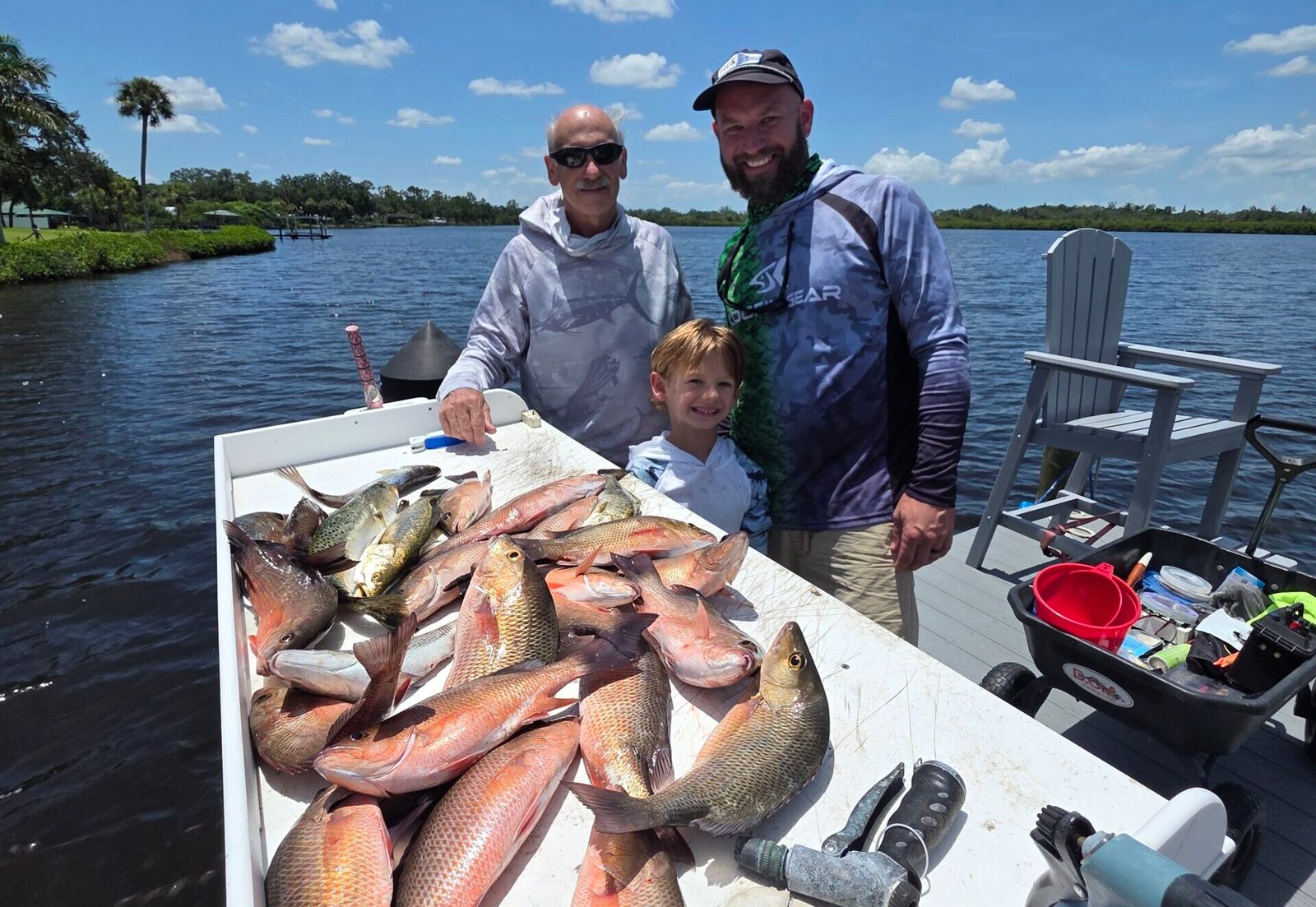
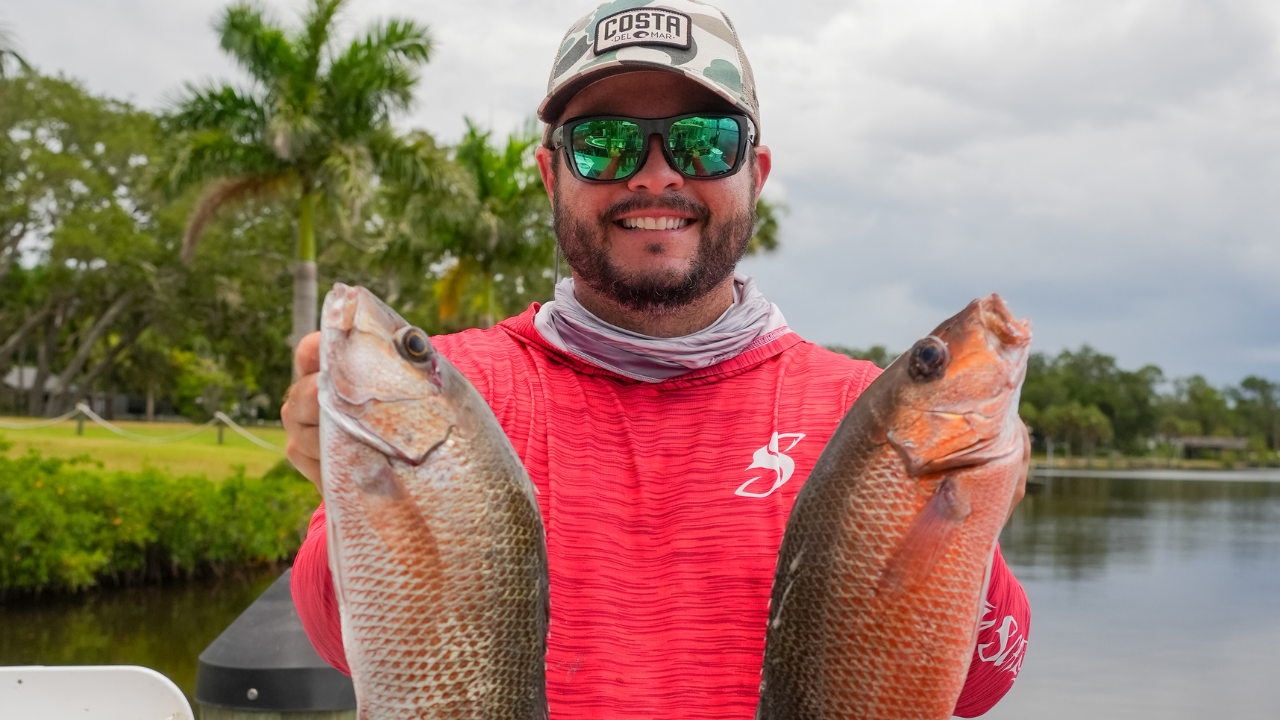
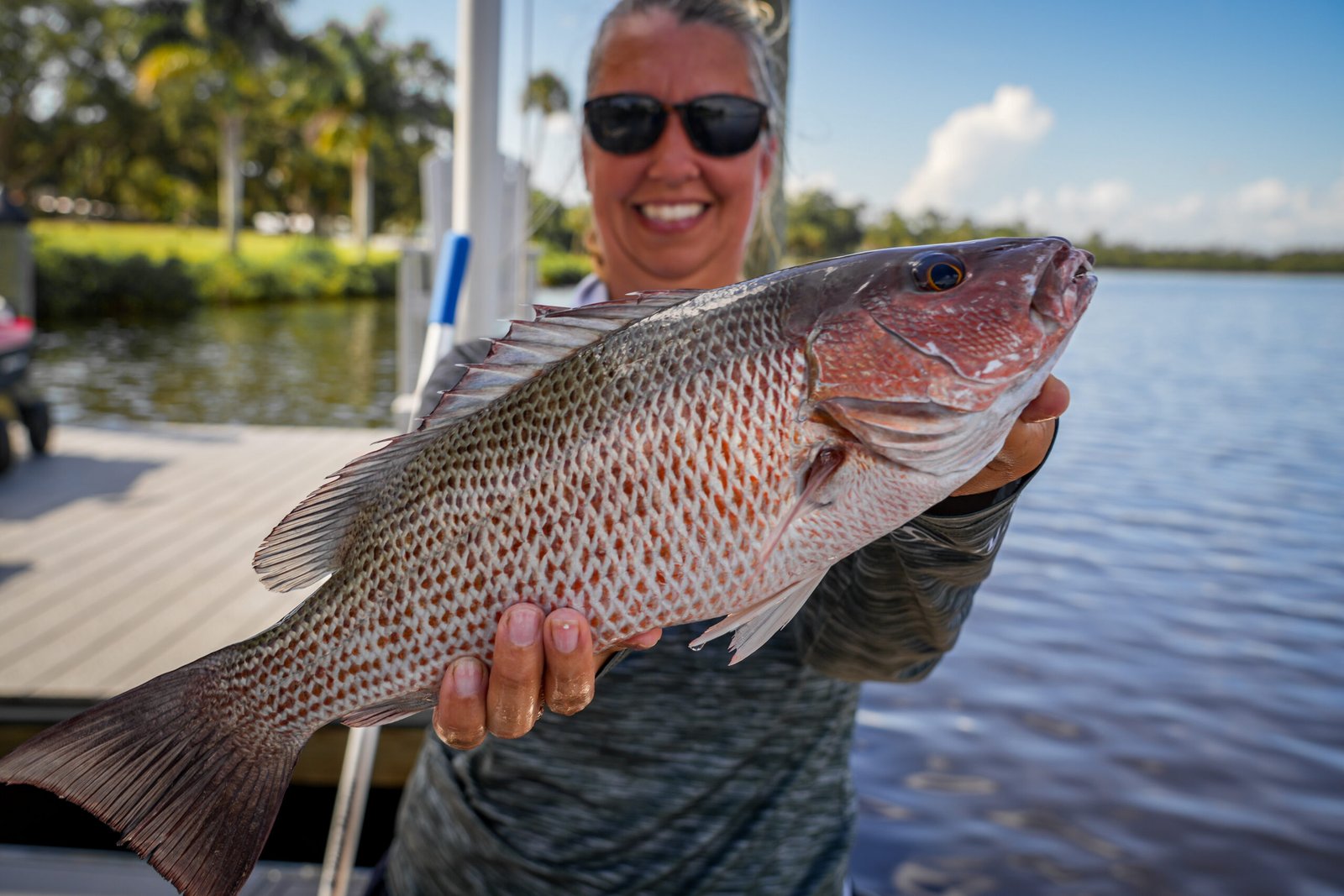
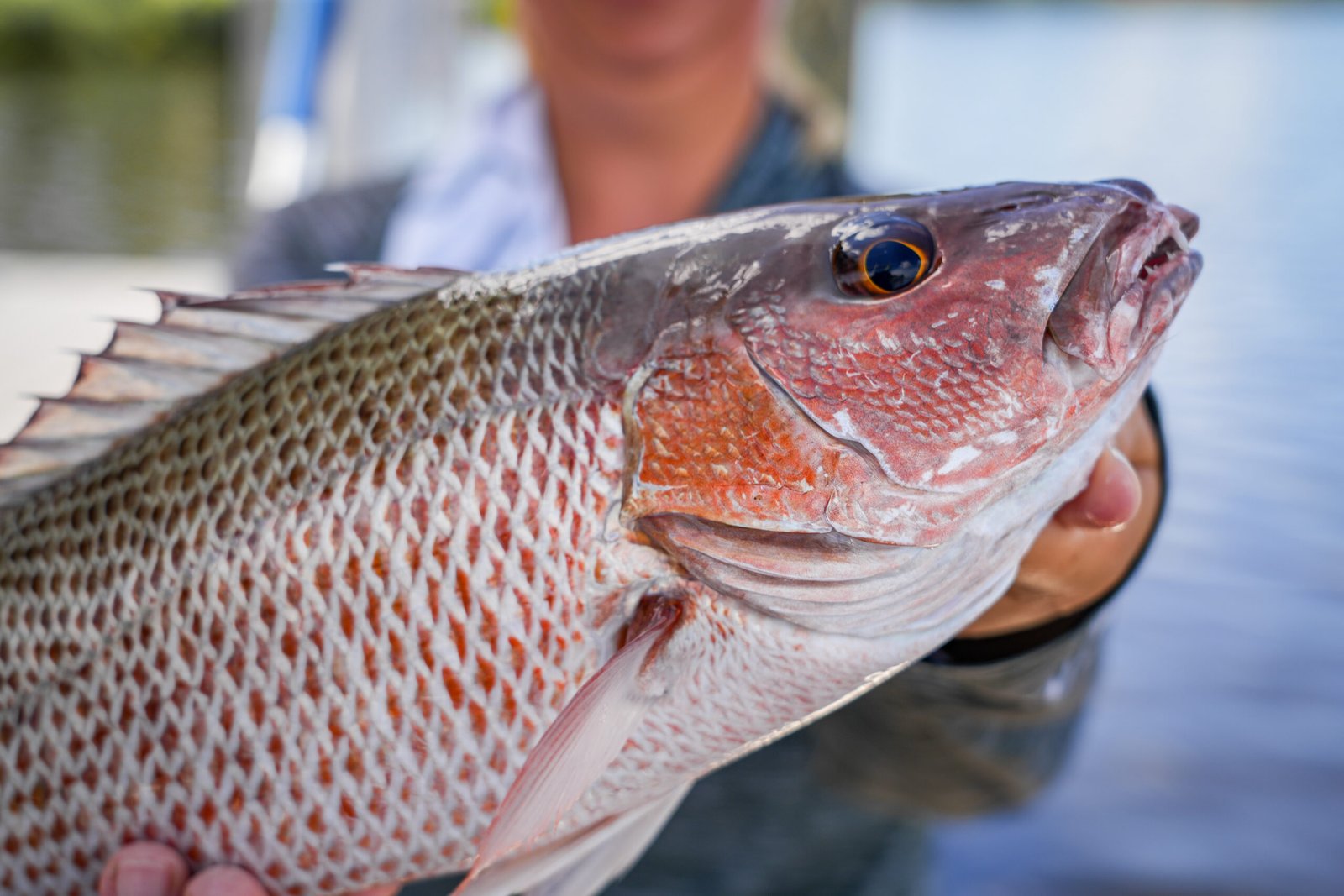
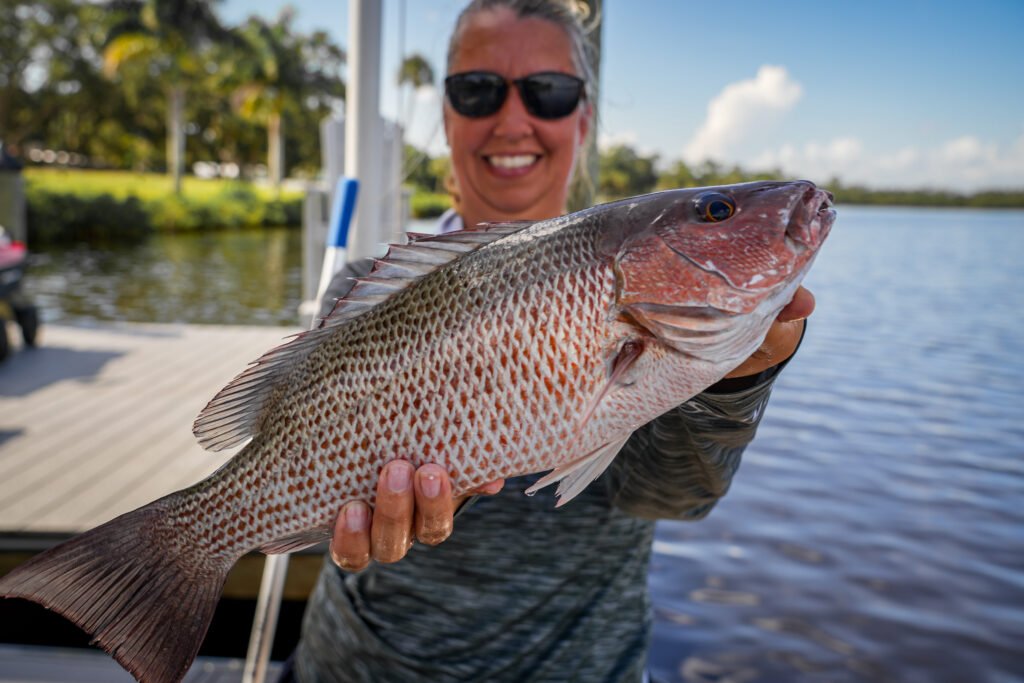
Within only a few casts, rods were bending, and quality mangrove snapper were coming over the rail.
The Tackle That Produced
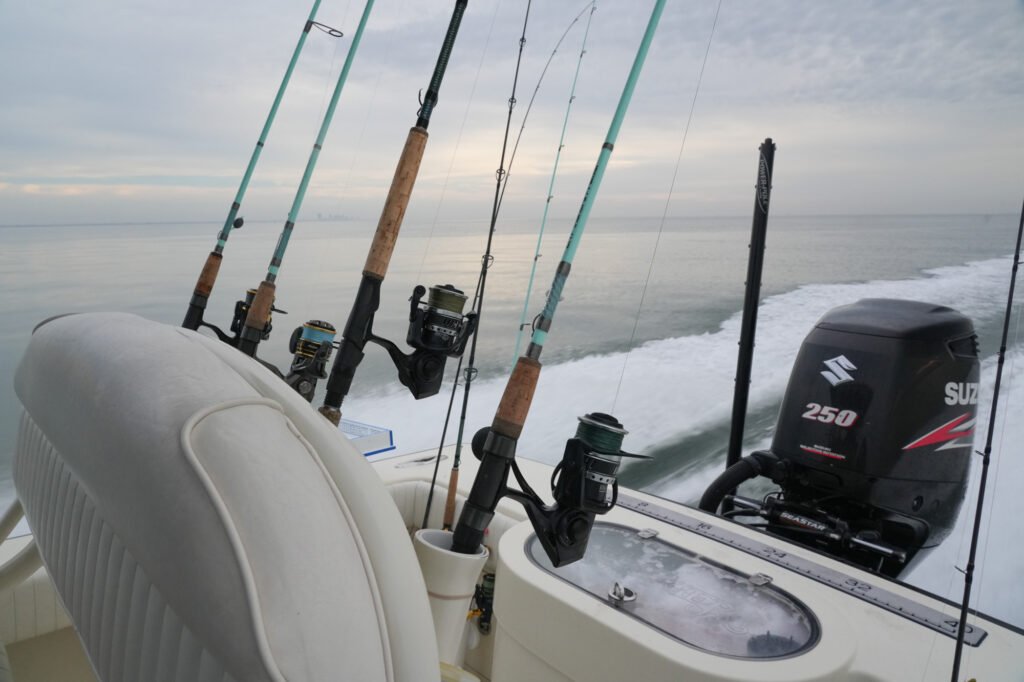
For this trip, Captain Taylor demonstrated one of his favorite setups for Tampa Bay mangrove snapper.
Our combination included:
- Okuma SRT Medium Fast spinning rod
- Okuma Cedros 4000 spinning reel
- 15-pound PowerPro braided line
- 20-pound fluorocarbon leader
- 1/8-ounce JYG jig head
The small JYG jig quickly became one of the stars of the episode. Its compact profile allowed the bait to reach the strike zone naturally without overwhelming cautious fish. Mangrove snappers have exceptional eyesight, and that’s one of the reasons so many anglers struggle to catch larger fish. They’re not necessarily smarter than other species. They simply have more time to inspect your presentation.
Captain Mike explained that downsizing both your hook and fluorocarbon leader often produces significantly more bites, especially when fish become pressured.
More Than Just Snapper
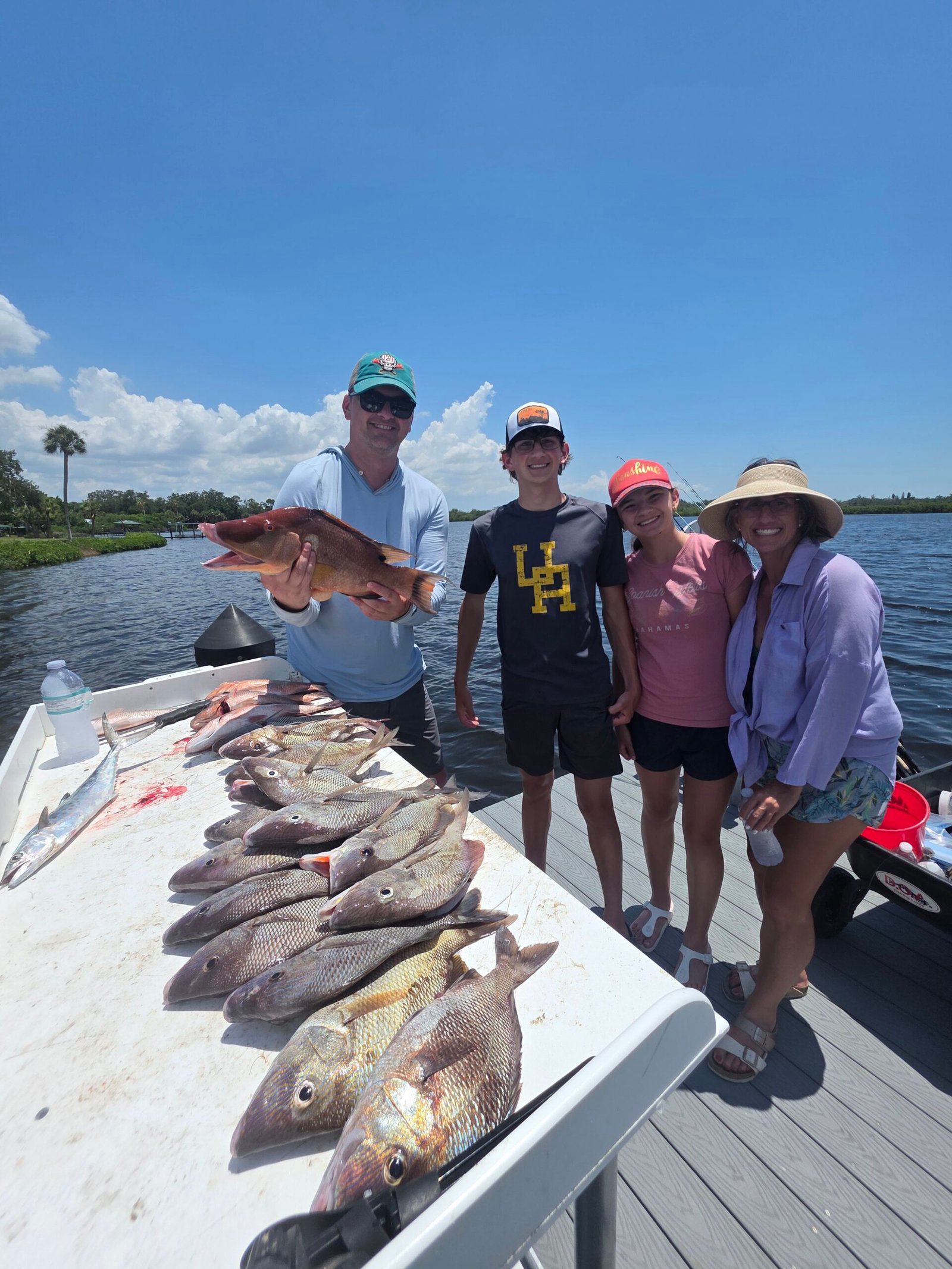
One of the best things about fishing Tampa Bay’s offshore structure is the variety of species that call it home. Along with mangrove snapper, we caught several grunts while larger fish repeatedly tried stealing hooked snapper before they reached the surface. We also hooked multiple gag grouper, although a few managed to dive back into the ledges before we could turn them.
That’s simply part of fishing heavy structure. Sometimes the fish win.
The Second Spot Seals the Deal
After the first location slowed down, we made a short move to another ledge. Again, the process remained the same.
Chum first.
Observe the electronics.
Allow the fish to rise.
Present the bait naturally.
This time, the bite was even faster.
Using either a freelined pilchard or the light JYG jig, we quickly filled our one-man keeper limit before continuing to catch and release additional fish for the camera. Within only an hour and a half, we’d landed enough quality mangrove snapper to call the morning a complete success.
Why Right Now Is One of the Best Times to Fish
As we approach the full moon, tidal movement throughout Tampa Bay continues increasing. Those stronger tides push baitfish across reefs, bridges, and ledges while creating feeding opportunities for hungry mangrove snapper. Although many anglers prefer fishing directly on the full moon, I’ve found that the several days leading into the full moon often produce the most consistent action because fish remain concentrated while the current steadily increases. Pair that with early morning low-light conditions, healthy live bait, and a steady chum line, and you’ve created the perfect recipe for outstanding mangrove snapper fishing.
Final Thoughts
Our first Captain’s Corner episode wasn’t about showing off a cooler full of fish. It was about sharing proven techniques that everyday anglers can use to become more successful on the water. Captain Mike Fields brought years of experience, practical tips, and simple adjustments that consistently produce fish throughout the summer. Whether it’s selecting the right cast net, using every piece of bait, downsizing your tackle, or understanding how currents position fish, every small detail contributes to success. If you’ve been waiting for the perfect opportunity to target mangrove snapper in Tampa Bay, now is one of the best times of the year. Fresh bait is abundant, tidal movement is increasing, and fish are feeding aggressively around bridges, ledges, reefs, and hard bottom. If you’d like to experience this incredible fishery firsthand, book a trip with Captain Mike Fields or join me aboard Salty Scales Fishing Charters. We’d love the opportunity to show you exactly how we approach one of Tampa Bay’s most exciting summer fisheries.
Be sure to subscribe and watch the video here: