 Skip to content

Stop Losing Fish: How to Set Your Spinning Reel Drag the Right Way
Hey guys, welcome back. Joshua here with Salty Scales. First off, I want to say thank you to everyone who has been booking fishing trips. It has been a busy spring, and the fishing in Tampa Bay has been excellent.
If you are looking to get on the water and experience one of the most diverse fisheries in Florida, be sure to check out Salty Scales Charter. Whether you are targeting snook, redfish, or trout, there is always something biting here in Tampa Bay.
Today, we are talking about one of the most important fundamentals in fishing, how to properly set the drag on a spinning reel. This is a simple concept, but it is often overlooked, especially by beginners, and it can be the difference between landing a fish and losing one.
Why Setting Your Drag Correctly Matters
Your drag system controls how much pressure is applied to the fish when it pulls line from your reel. If your drag is too tight, you risk breaking your line. If it is too loose, you will not be able to control the fish.
Finding the right balance is key. A properly set drag allows you to fight fish efficiently, protect your line, and land more fish consistently.
Understanding How a Spinning Reel Drag Works
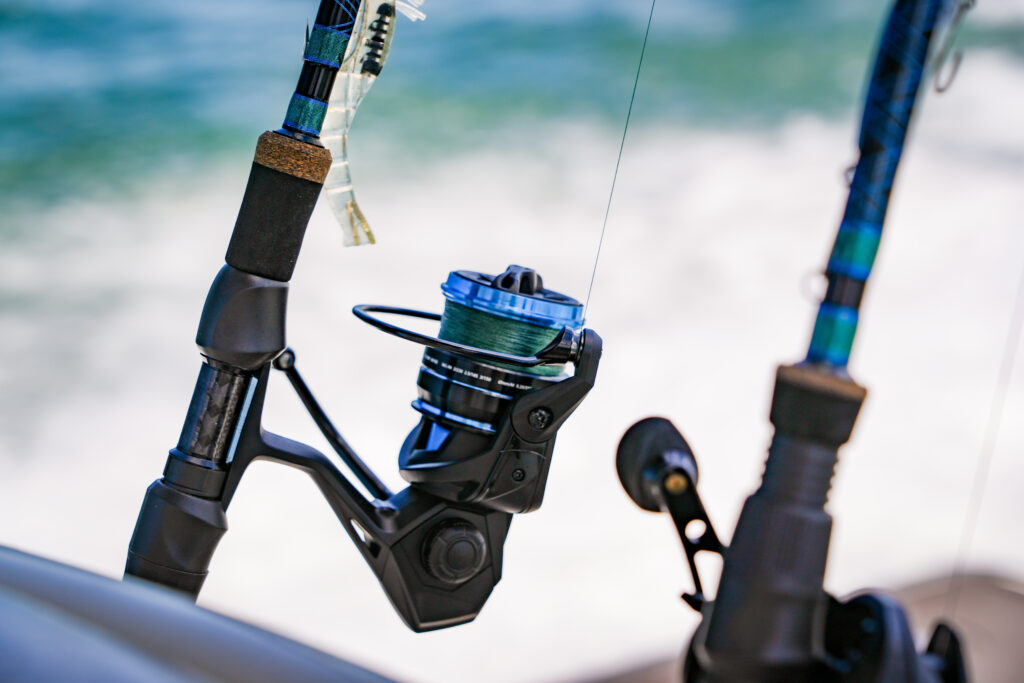
Every spinning reel has a drag knob located on the top of the spool. Turning it clockwise tightens the drag, while turning it counterclockwise loosens it.
The goal is to create steady, controlled resistance. You want the drag to slip under pressure, but not too easily. This is what allows you to maintain tension without snapping your line.
The Ideal Drag Setting for Spinning Reels
A good rule of thumb is to set your drag at 20 to 30 percent of your line’s breaking strength.
For example:
- If you are using 20 pound braid, your drag should be set between 4 and 6 pounds
- This range gives you enough pressure to control the fish while still protecting your line
This simple formula is one of the most effective ways to improve your success on the water.
Method 1: Using a Scale for Accuracy
The most accurate way to set your drag is by using a fish scale.
To do this:
- Attach your lure or line to the scale
- Pull steadily until the drag begins to slip
- Adjust the drag until it falls within your target range
This method gives you a precise measurement and helps you understand exactly what the correct drag pressure feels like.
Method 2: Setting Drag by Feel
Once you gain experience, you can set your drag by feel.
Start by pulling line off the reel with steady pressure. Over time, you will learn what the correct resistance feels like. Practicing this regularly will help you make quick adjustments without needing a scale.
Many experienced anglers rely on this method because it allows for faster adjustments while fishing.
Adjusting Drag While Fishing
One of the most important things to understand is that your drag is not fixed. You can adjust it at any time.
- When fishing near structure, tighten your drag slightly to keep fish from reaching cover
- When fishing in open water, loosen your drag to reduce the risk of breaking off
Being able to adapt to different situations will make you a much more effective angler.
Common Mistakes to Avoid
Many anglers make simple mistakes when setting their drag:
- Setting the drag too tight and breaking off fish
- Setting it too loose and losing control during the fight
- Not adjusting drag based on conditions
Avoiding these mistakes will immediately improve your catch rate.
Final Thoughts on Spinning Reel Drag Setup
Setting the drag on a spinning reel is one of the most important skills you can learn as an angler. It may seem basic, but it plays a huge role in your overall success.
Take the time to practice, whether that is using a scale or learning by feel. The more comfortable you become, the more confident you will be when fighting fish.
At the end of the day, fishing is about creating great memories and landing the fish that matter. Do not let something as simple as drag cost you that opportunity.
If you found this helpful, get out there, put it into practice, and start landing more fish. I will see you guys on the water.