Skip to content

Snook Fishing Gear
Hooking a snook is one thing—but when you hang into a big girl, that’s when everything changes. In that moment, you quickly find out if your snook fishing gear is up to the task. You need the right setup to apply pressure, control the fish, and pull her away from structure before she wraps you around mangroves, docks, or pilings. That’s where proper snook fishing gear makes all the difference, especially when targeting trophy snook in Tampa Bay’s complex inshore environments.
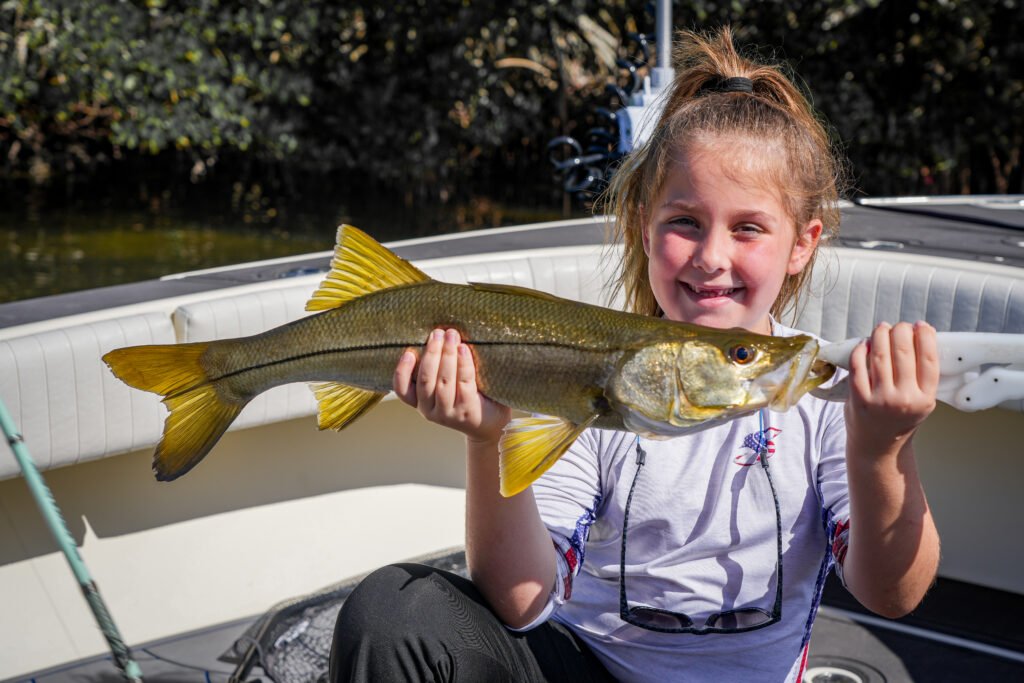
This applies to all species, but here in Tampa Bay, snook are one of our most prized inshore fish—and for good reason. They are incredibly strong, explosive, and smart. They know exactly where to go to break you off, and if your gear isn’t dialed in, it’s game over in seconds. Snook thrive around heavy structure, and that structure is exactly what makes them such a challenge to land consistently.
I think as a beginner, it’s very easy to overcomplicate the gear you need. At the same time, many anglers under complicate it—meaning they’re not using equipment strong enough to consistently land quality fish. There’s a balance, and once you find it, everything starts to click. Dialing in that balance is what separates casual anglers from those who consistently put fish in the boat.
In this article, I’m going to break down the snook fishing gear setups that get the job done time after time here in Tampa Bay. I’ll cover everything from budget-friendly options to mid-range setups, all the way up to what I consider my go-to premium combos for targeting trophy Florida snook. These are setups I personally use and trust when guiding clients on the water.
Whether you’re fishing the flats, working mangrove shorelines, or targeting dock lights at night, having the right gear not only increases your hookup ratio—but more importantly, your landing ratio. That’s what matters at the end of the day—getting the fish to the boat. Let’s get into it.
Best Snook Fishing Gear Setup (Quick Overview)
- Rod: 7’–7’6” Medium Heavy
- Reel: 3000–4000 size spinning
- Line: 10–20lb braid
- Leader: 25–40lb fluorocarbon
Here are some of the important specifications to look for when considering your ideal snook fishing setup, and I want to discuss why. These core components are the foundation of a reliable inshore fishing setup that can handle the power and unpredictability of snook.
Snook Fishing Rod:
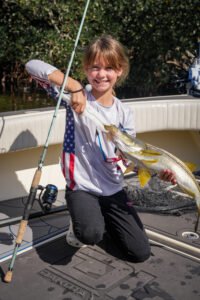 A 7’ to 7’6” medium-heavy rod gives you the ideal balance for snook fishing in Tampa Bay. That extra length allows you to make longer casts to wary fish, especially on clear flats where presentation is everything. Longer casts also help you stay further away from fish, reducing the chances of spooking them in shallow water.
The medium-heavy power provides a perfect combination of sensitivity and strength—you get enough tip to feel subtle bites and work artificials effectively, while still having the backbone needed to turn a strong snook before it reaches structure. This is especially important when fishing tight to mangroves or docks where reaction time is limited.
That parabolic bend helps absorb those hard head shakes, but when it’s time to apply pressure, you’ve got the leverage to pull fish away from mangroves, docks, and oyster bars. A quality rod here makes a huge difference in both casting accuracy and landing percentage. Simply put, your rod is your control tool during the fight.
Okuma SRT Inshore Premier Rods
One of my favorite rods for snook right now is the Okuma SRT 7′ to 7’6″. The rod is limber but strong, and the action is undeniable. I have used this same rod personally and with my clients for the past four years. It has caught thousands of snook, and we have only managed to break one, which is very impressive for a rod that cost $130. That kind of durability speaks volumes when you’re putting gear through daily charter use.
The SRT Custom Inshore Premier is designed with performance and simplicity in mind, featuring a lightweight split-grip cork handle that reduces overall weight while maintaining a clean, balanced feel in your hand. It’s equipped with a Fuji DPS reel seat, providing a secure, dependable connection that keeps your reel locked in place under heavy load. That stability is critical when fighting strong fish like snook.
Built for durability in harsh saltwater conditions, this rod uses SeaGuide 316 stainless steel guides paired with zirconium inserts, allowing for smooth casting and reliable performance with both braided and monofilament lines. A stainless steel hook keeper is also included, giving you a convenient and sturdy place to secure your lure between casts. Every detail on this rod is built with inshore performance in mind.
Snook Fishing Reel:
A 3000 to 4000 size spinning reel is ideal for most inshore snook fishing applications. This size gives you plenty of line capacity while still maintaining a lightweight feel, which is important when you’re casting all day. Balance between rod and reel is key to reducing fatigue.
More importantly, it provides a smooth, reliable drag system that can handle strong runs from quality fish. Now, keep in mind—this setup is tailored more for common-sized snook on the flats and around mangroves. You won’t take this exact setup to the jetty for forty-inch breeders in heavy current, where heavier gear is required.
When flats fishing, especially throwing artificial, weight becomes a big factor. A 3000–4000 size reel is not cumbersome—it’s light, balanced, and allows you to fish longer without fatigue. That means more casts, better focus, and ultimately more opportunities. A smooth drag and solid build quality are key here, because when a snook makes that first run, you need confidence that your reel can handle it without hesitation.
Okuma Cedros Spinning Reel
When I take clients fishing, I have to rely on durable, dependable gear. Many of my clients are new to fishing or don’t get out on the water very often, so it’s not uncommon to see improper technique put extra stress on equipment. Something as simple as reeling down while a fish is pulling drag can damage internal gears and lead to complete reel failure. That’s something I try to prevent from happening at all costs.
That’s exactly why, when you book a Tampa Bay fishing charter with Salty Scales, I take the time to walk you through proper technique and guide you step-by-step through the entire process—from hookset to landing the fish. Good habits not only help you catch more fish, but they also protect the gear we’re using.
For that reason, I’ve consistently relied on the Okuma Cedros spinning reel for my charters. It’s built specifically for saltwater performance and designed to handle real-world abuse. The Cedros features Okuma’s LITECAST™ construction, which reduces weight without sacrificing strength, along with a powerful Dual Force Drag System that delivers serious stopping power. It also uses high-density gearing with a corrosion-resistant coating, which is critical in harsh saltwater environments.
One of the biggest things I look for in a reel is a smooth, consistent drag—and the Cedros delivers. That smooth drag helps prevent break-offs, especially when a snook makes a sudden run. The 4000 size model boasts an impressive 33 pounds of drag, which is more than enough to stop big snook in their tracks and keep them out of structure. That stopping power is what gives you the upper hand in the fight.
At the end of the day, this is a reel I trust not just for performance, but for reliability—trip after trip, fish after fish. When you’re guiding every day, that reliability matters more than anything.
Line:
Braided fishing line dates back hundreds of years, long before modern fishing gear ever existed. Early braided lines were made from natural fibers like linen, cotton, and even silk. While those materials worked for their time, they don’t even compare to what we have today. With the introduction of modern braided lines made from advanced synthetic fibers like Spectra and Dyneema, everything changed.
These modern braids are incredibly strong for their diameter, allowing anglers to fish lighter line without sacrificing power. They cast farther, cut through the water with less resistance, and—most importantly—offer unmatched sensitivity. You can feel everything: subtle bites, changes in bottom structure, and even how your lure is moving through the water column. That level of feedback is critical when targeting snook, especially when they’re feeding lightly or holding tight to structure.
Another huge advantage of braid is the lack of stretch. When a snook eats, you get an immediate connection, which leads to better hooksets—especially when fishing around mangroves or docks where quick reaction time matters.
That being said, I typically recommend spooling up with 15–30 lb braid, depending on where you’re targeting snook. On the flats or in open water, you can get away with lighter braid for longer casts and a more natural presentation. Around heavier structures like docks, bridges, or tight mangroves, stepping up in line strength gives you the added confidence to put pressure on fish and keep them out of trouble.
My Snook Leader:
My go-to leaders have been Soft Steel and SeaGuar. These brands are tried and true and have shown a great track record on the water. A question that I receive frequently is: “Should I use fluorocarbon or monofilament leader? Let’s take a look:
Fluorocarbon Leader (Most Common for Snook)
Pros
- Low visibility: Nearly invisible underwater → huge in clear Tampa Bay water
- High abrasion resistance: Handles docks, mangroves, and oysters better
- More sensitivity: Less stretch = better feel and hooksets
- Sinks naturally: Keeps bait/lure in the strike zone
Cons
- More expensive than mono
- Stiffer → harder to tie knots cleanly
- Less forgiving (less stretch = easier to pull hooks)
Monofilament Leader (Underrated for Snook)
Pros
- More stretch: Absorbs shock from big snook runs
- Better knot strength: Easier to tie and more forgiving
- Floats: Better for topwater fishing
- Cheaper: Great for beginners or frequent re-tying
Cons
- More visible in water (can spook fish)
- Less abrasion resistance around the structure
- More stretch = slightly less sensitivity
Now that we have covered all the essentials on what you need to get started pulling snook from the mangroves, let’s chat about the cost of the snook setups and budget-friendly options that will get you started.
The setup that I recommend above will run you:
- Rod: $130
- Reel: $200
- Line: $25
- Leader: $10
Total: $365
I know what you are thinking: that is a lot of money, and for some, I get it. However, this is a nice combo that will last many, many years with no issues. If you are not ready to invest that much money into a setup, other options that won’t break the bank. Let’s talk about them.
Safyre Spinning Reel
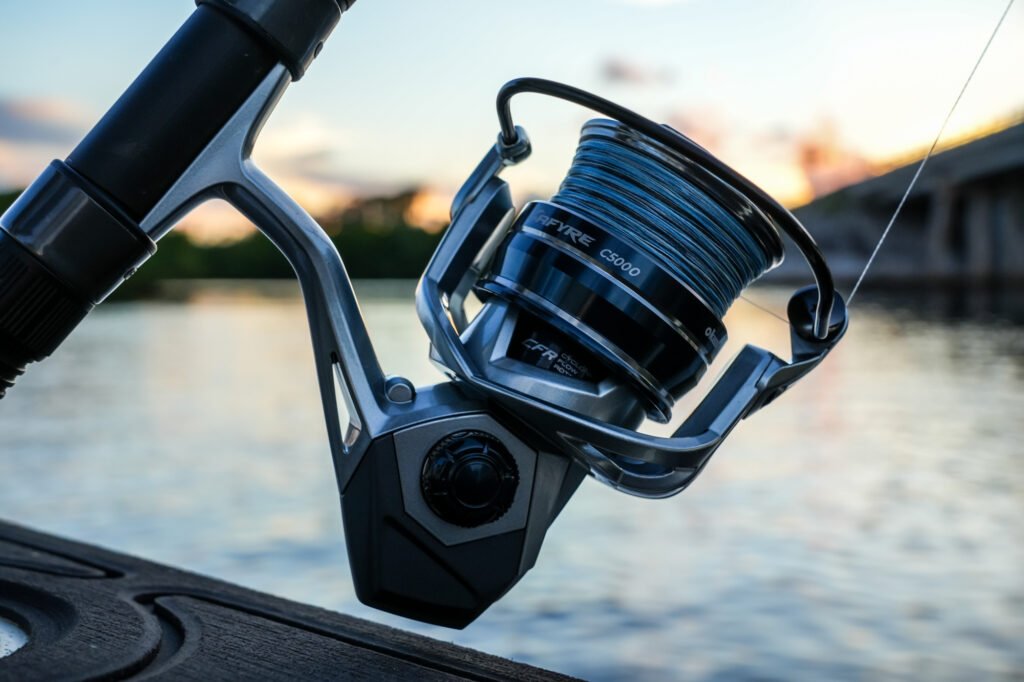
Okuma recently released a solid little spinning reel in the Safyre, and I’ve been impressed with how it’s performed here in Tampa Bay. For a reel that comes in around $90 at the time of this writing, it delivers a lot of value. It’s built tough, feels good in the hand, and holds up well in both freshwater and saltwater applications, which makes it a great all-around option for anglers just getting started.
The Safyre features oversized HDG+ high-density gearing along with a machine-cut brass pinion gear, giving you increased torque and long-term durability. That’s important when you hook into a snook that wants to run straight for the mangroves. It also includes Okuma’s Flite Drive system and Gear Stabilizing System, which help keep everything running smooth and tight under pressure. You don’t get that “sloppy” feel you see in a lot of entry-level reels.
Another thing I like about this reel is its balance. It’s not overly heavy, which makes it comfortable to fish with for long periods, especially when you’re casting artificial. For the price point, it’s hard to beat.
Pulse Wave Rod
Pair that reel with the Okuma Pulse Wave rod, and you’ve got a great setup for snook and backwater fishing. This is a newer rod from Okuma, but it checks all the boxes for inshore applications. It’s lightweight, responsive, and has enough backbone to handle solid fish without feeling like a broomstick.
The Pulse Wave is going to run you about $100, give or take, and for that price, you’re getting a rod that can truly perform. It has a nice balance of sensitivity and strength, which is exactly what you want when working lures or feeling for subtle bites.
When you combine the Safyre reel with the Pulse Wave rod, you’re sitting right around $200 after taxes. That’s a very affordable setup that will absolutely get the job done and give you the confidence to target snook in Tampa Bay.
For someone looking to get into inshore fishing without breaking the bank, this combo is a great starting point—and honestly, it’s more than capable of landing quality fish. This is the kind of setup that can kick off a lifelong snook fishing addiction.
Budget Friendly Combo for Snook Fishing
Tavares Inshore Combos
The Tavares combo is a new rod and reel is all that you need to start snook fishing with confidence. The 4000 sized reel as sufficient line capacity and drag while the 7’6″ MH rod has the backbone to subdue medium to large snook. Each combo is built around a lightweight, one-piece carbon blank constructed from 24/30-ton materials, delivering a strong balance of sensitivity and power. This design allows anglers to feel even the slightest bite while still having the backbone needed to control hard-fighting fish.
Okuma’s reinforced tip technology adds extra lifting strength right where you need it most, without compromising the rod’s responsiveness—making it ideal for both finesse presentations and heavy pressure situations.
The paired reel is engineered for smooth, consistent performance, featuring a precision gear system that keeps everything aligned under load. A sealed stainless steel bearing setup helps protect against saltwater intrusion, ensuring long-lasting durability and reliable operation trip after trip.
Checkout this video catching snook inside the Tampa Bay: